
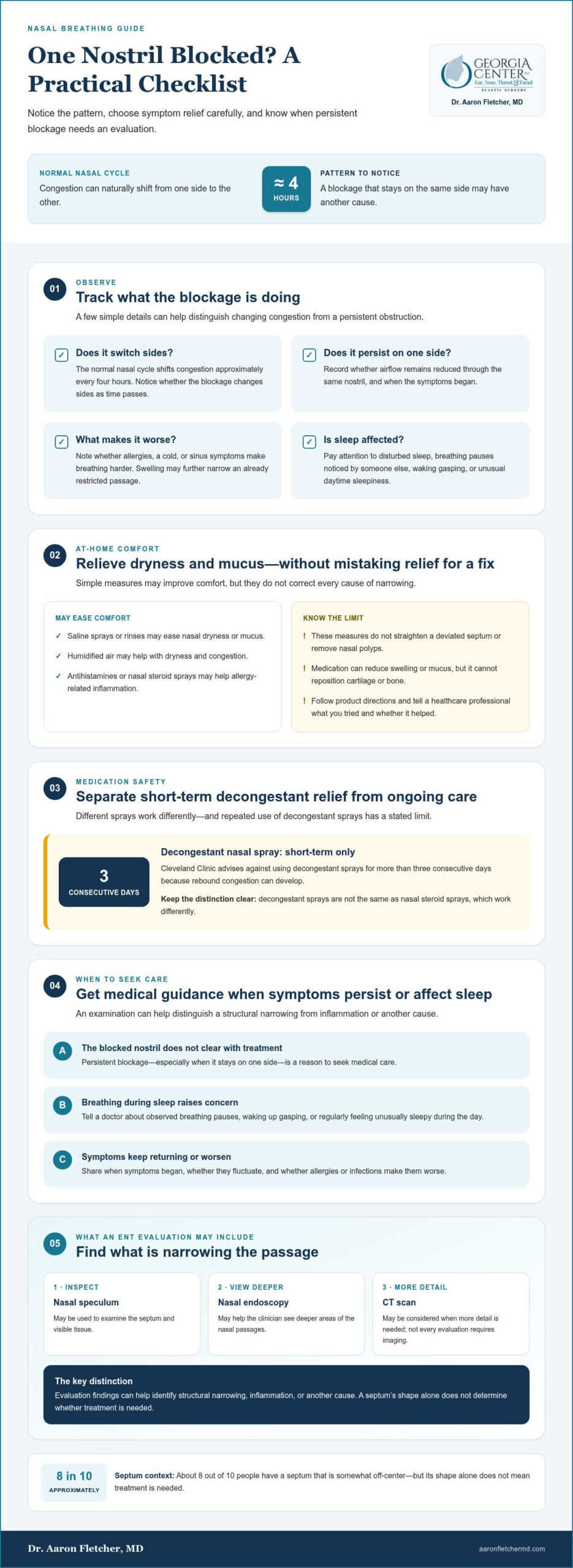
A blocked nostril isn’t always a sign of a structural problem: the normal nasal cycle shifts congestion from one side to the other approximately every four hours. If you can’t breathe through one nostril consistently, however, a deviated septum, allergies, swollen nasal tissues, or another cause may be narrowing that passage. The pattern and duration of the blockage can help distinguish temporary congestion from an issue that needs evaluation.
It’s understandable to feel concerned when nasal breathing becomes difficult, especially if it affects sleep or keeps returning on the same side. This article explains what a deviated septum is, how it can contribute to one-sided blockage, and what other conditions may cause similar symptoms. You’ll also learn which measures may ease congestion, when medical care is appropriate, and how an ENT evaluation can identify the cause and guide next steps.
Key Takeaways
- Nasal congestion can naturally shift sides about every four hours; persistent blockage on the same side may have a different cause.
- A deviated septum can narrow one nasal passage, but its shape alone doesn’t determine whether treatment is needed.
- Notice whether blockage persists, worsens with allergies or illness, or disrupts sleep, and share those patterns during a medical evaluation.
- Seek medical care when a blocked nostril doesn’t clear with treatment, or when sleep brings breathing pauses, gasping, or unusual daytime sleepiness.
Does One Side of Your Nose Always Feel Blocked?
Yes. Allergies, a deviated septum, and nasal polyps can all block one nostril by narrowing its passage. A blockage that stays on the same side differs from the normal nasal cycle, which alternates sides approximately every four hours.
Persistent One-Sided Nasal Blockage
Persistent one-sided nasal obstruction means airflow remains reduced through the same nostril. A lasting narrowing can make breathing and sleep uncomfortable, and swelling from a cold or allergies may further restrict airflow. Notice whether the blockage stays in place or shifts as symptoms change. That pattern can help distinguish temporary congestion from a persistent obstruction.
ENT Evaluation and Nasal Endoscopy
An ENT evaluation examines the nasal passages to identify what is narrowing airflow. A clinician may use a nasal speculum to inspect the septum and visible tissue, then nasal endoscopy to view deeper areas. A CT scan may be considered when more detail is needed, but not every evaluation requires endoscopy or imaging. The findings help distinguish structural narrowing from inflammation or other causes.
Medication for Nasal Inflammation
Medication can ease blockage when swelling or excess mucus narrows the nasal passage. Antihistamines and nasal steroid sprays may help manage mild symptoms associated with allergies or a deviated septum. Decongestant sprays can provide short-term relief, but Cleveland Clinic advises against using them for more than three consecutive days because rebound congestion can develop. Medication may reduce swelling, but it cannot straighten cartilage or bone.
Other Causes of Nasal Obstruction
Several conditions can narrow the nasal airway, so a deviated septum isn’t the only possible cause. Allergies, sinus inflammation, nasal polyps, enlarged turbinates, and adenoid hypertrophy can all contribute. Turbinates warm, clean, and humidify inhaled air, but enlargement can reduce space for airflow. A previous injury may raise the possibility of septal deviation, while dryness along the septum can contribute to nosebleeds. If structural blockage causes persistent symptoms, septoplasty may be considered.
What Is a Deviated Septum?
The nasal septum is the wall of cartilage and bone separating the nostrils. About 8 out of 10 people have a septum that is somewhat off-center, but its shape alone doesn’t mean treatment is needed.
How a Deviated Septum Blocks Airflow
A deviated septum shifts the nasal septum to one side, making that passage smaller. This narrowing can reduce airflow and make breathing harder through the affected nostril, particularly when nearby tissue swells during allergies or a cold. A blockage that stays on one side differs from congestion that shifts. A previous nose injury may cause deviation, though some people don’t recall an injury.
Effects of Leaving a Deviated Septum Untreated
Possible effects depend on how much the deviation narrows the airway and whether other nasal conditions are present. A severely restricted passage can contribute to persistent congestion, dry mouth from mouth breathing, disturbed sleep, or nosebleeds when the septum’s surface becomes dry. A significant deviation may also interfere with sinus drainage and contribute to repeated sinus infections. These effects aren’t inevitable; many people have a deviation without symptoms.
Medicines and Surgery for a Deviated Septum
Medication may ease swelling around a deviated septum, but it can’t straighten cartilage or bone. For mild symptoms, nasal steroid sprays, antihistamines, or decongestants may help, depending on the cause of inflammation. Septoplasty repositions or removes selected cartilage or bone to improve nasal airflow while preserving support. It’s considered when structural narrowing causes troublesome symptoms, not simply because the septum looks off-center.
Reducing injury risk can help protect the nose: helmets or midface masks during contact sports and seat belts in motor vehicles can help prevent nose injuries. If persistent blockage occurs alongside sinus symptoms, sinus surgery care may be relevant to discuss as part of an evaluation; it does not straighten a deviated septum.
When to seek medical care
Seek medical care when a blocked nostril doesn’t clear with treatment, especially if the obstruction stays on one side. Persistent nasal obstruction can have structural or inflammatory causes, and an examination can help distinguish them. Record when symptoms began, whether they fluctuate, and whether allergies or infections make them worse. These details help a clinician understand the pattern.
For home relief, saline sprays or rinses and humidified air can ease nasal dryness or mucus. For individuals seeking integrative guidance on managing allergy triggers and general inflammation, resources like drboamah.com highlight supportive natural health strategies alongside standard care. These measures may improve comfort, but they don’t straighten a deviated septum or remove nasal polyps. If one-sided blockage continues despite simple measures, arrange a medical evaluation rather than repeatedly adding treatments without knowing the cause.
Over-the-counter options include antihistamines or nasal steroid sprays for allergy-related inflammation, and decongestants for short-term symptom relief. Cleveland Clinic advises against using nasal decongestant sprays for more than three consecutive days because they can cause rebound congestion. Follow product directions, and distinguish decongestant sprays from steroid sprays, which work differently.
Mild symptoms that appear with seasonal allergies may respond to allergy medication, while a fixed blockage can have a structural cause. Medication can reduce swelling and mucus around a narrowed passage, but it can’t reposition cartilage or bone. Tell a healthcare professional which treatments you’ve tried and whether they helped. That history can clarify whether inflammation or persistent narrowing is more likely.
Sleep symptoms also matter. Tell your doctor if someone notices breathing pauses, if you wake gasping, or if you regularly feel unusually sleepy during the day. Severe nasal blockage can contribute to mouth breathing, snoring, and disrupted sleep, but those symptoms alone don’t establish sleep apnea. A separate assessment can determine what is causing the sleep-related symptoms.
Seek prompt evaluation for recurring infections or nosebleeds alongside persistent blockage. Your symptom pattern, medication use, and nasal examination help guide the next step. If a blocked nostril continues despite treatment, don’t dismiss it as ordinary congestion.
Difficulty breathing through the nose
Breathing through your nose depends on open passages and coordinated airflow. A deviated septum, swollen turbinates, nasal valve problems, polyps, or sinus disease can narrow those passages. More than one cause may be present at once, so the sensation of blockage alone doesn’t establish a diagnosis. Notice whether symptoms stay on one side or change with allergies, infection, or position.
Allergy-related congestion often appears with sneezing, itching, watery drainage, or irritated eyes. It may vary with seasons or exposure to a trigger. Infection can also swell and irritate the nasal or sinus cavities, making an already narrow passage feel more blocked. Aging can affect nasal structures, while inflammation may temporarily add to a structural restriction.
Reduced airflow can lead to mouth breathing, snoring, or disrupted sleep. These effects can interfere with comfort and rest, but they don’t prove sleep apnea. Tell a clinician if someone notices pauses in your breathing, you wake gasping, or daytime sleepiness becomes a regular problem. Those details help guide a separate assessment of sleep symptoms.
A clinic evaluation can help identify the source of persistent obstruction. An ENT may inspect the nose with a speculum and use nasal endoscopy to view deeper tissue. A CT scan may help when more detail is needed, but not every patient requires imaging or endoscopy. The findings help distinguish inflammation from structural narrowing and guide appropriate treatment.
Medication can reduce swelling and mucus, but it cannot correct a deviated septum or other fixed structural narrowing. Cleveland Clinic advises against using nasal decongestant sprays for more than three consecutive days, because rebound congestion can occur. The useful takeaway is to match treatment to the cause, rather than treating every blocked passage the same way. If nasal breathing remains difficult, seek an ENT evaluation for persistent nasal obstruction.
Dr. Aaron Fletcher, MD: Facelift
Dr. Aaron Fletcher, MD offers facelift surgery, which addresses facial aging rather than blocked nasal airflow. For persistent breathing difficulty, the relevant options may instead include rhinoplasty for nasal concerns or sinus surgery for appropriate sinus conditions. These procedures address different issues, so identifying the cause of obstruction is an important first step.
An evaluation can help determine whether symptoms relate to nasal structure or sinus disease and whether a surgical approach is appropriate. If your concern is one-sided blockage, discuss its pattern, duration, and effect on sleep or daily activities with a qualified medical professional.
For more information about care options, contact Dr. Aaron Fletcher, MD.
Take the Next Step Toward Easier Breathing
If you can’t breathe through one nostril, consider how the blockage affects your sleep, activity, and daily comfort. Bringing those observations to a medical appointment can help focus the conversation on your needs and clarify which treatment approach fits the cause. You can also note what worsens or eases the symptoms, such as seasonal allergies or a recent illness.
Dr. Aaron Fletcher, MD offers rhinoplasty, facelift, and blepharoplasty. These procedures address different concerns; discuss persistent nasal symptoms and whether rhinoplasty is relevant to your situation. A thoughtful conversation can help you understand the options without assuming that surgery is the right answer.
Contact Dr. Aaron Fletcher, MD to discuss your concerns and explore an appropriate next step. Clear information can make it easier to move forward with confidence.
Frequently Asked Questions
What Happens During an ENT Evaluation?
An ENT evaluation usually begins with questions about your symptoms, medical history, previous injuries, and treatments. The clinician examines the nose, often using a nasal speculum to view the septum and surrounding tissue. Nasal endoscopy or imaging may be considered if deeper structures need assessment, but neither is necessary for every patient. Before the visit, note which side feels blocked and what seems to trigger it.
What Should You Know About Septoplasty?
Septoplasty is an operation to improve airflow by repositioning or removing selected areas of septal cartilage or bone. It is generally performed as an outpatient procedure under general anesthesia, with patients going home the same day. Recovery takes about three weeks: plan to take it easy and stay home from work for one week, then restrict activity for two more weeks. Congestion and bloody drainage typically last about a week.
When should I see my healthcare provider?
See a healthcare provider if a blocked nostril doesn’t clear with treatment or keeps interfering with daily life. Mention symptoms such as recurring nosebleeds, repeated sinus infections, or difficulty sleeping. Tell your doctor if someone notices breathing pauses, you wake gasping, or you regularly feel unusually sleepy during the day. These observations help distinguish nasal obstruction from sleep-related concerns that may need separate evaluation.
Will Septoplasty Change How My Nose Looks?
Septoplasty is intended to improve nasal airflow, not change the nose’s appearance like cosmetic rhinoplasty. During the procedure, the surgeon preserves enough septal support to help prevent collapse or changes in shape. Septoplasty can carry risks, including bleeding, infection, scarring, or a hole in the septum, and blockage may remain afterward. Discuss your breathing goals and appearance concerns during the surgical consultation.
What causes one nostril to feel blocked or hard to breathe through?
A nostril may feel blocked because of a deviated septum, swollen turbinates, nasal polyps, allergies, nasal valve problems, or sinus disease. More than one factor can contribute at once. For example, a narrow passage from septal deviation may feel more restricted during a cold. If you can’t breathe through one nostril persistently, note whether symptoms stay on that side or vary with triggers.
Is it normal for nasal congestion to alternate between nostrils?
Yes. The normal nasal cycle shifts congestion and openness between sides approximately every four hours, and people with adequate nasal airflow may not notice it. Alternating stuffiness can be more noticeable when you have a cold or allergies. By contrast, a blockage that remains on one side may reflect persistent narrowing. Pay attention to whether the pattern shifts naturally or stays fixed.