
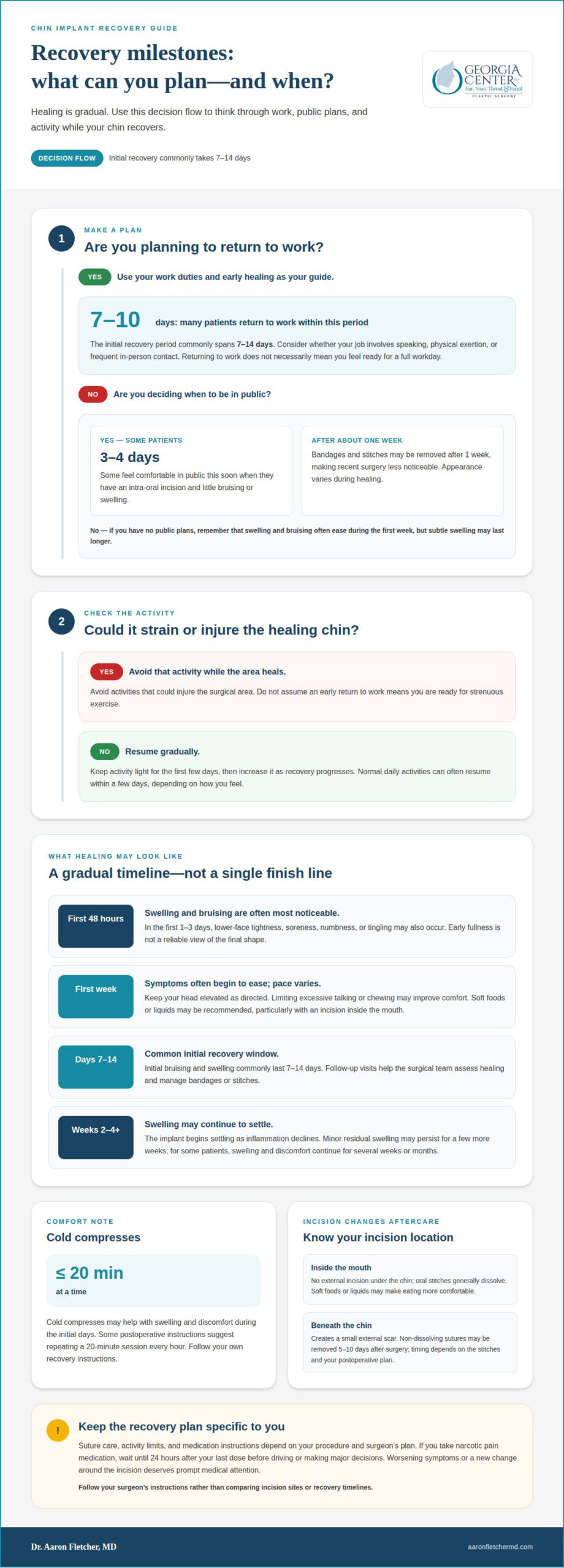
The first week is a milestone, not the finish line. The chin implant recovery timeline for initial healing is commonly 7-14 days, and many patients return to work within seven to 10 days. Swelling and bruising often ease during this period, though subtle swelling may take longer to settle.
It’s understandable to want a clear chin implant recovery timeline, including when you may feel like yourself again and when changes become less noticeable. Healing is gradual: early discomfort and visible swelling often ease over time, while the tissues continue to recover.
This article explains what recovery may involve, including how incision placement affects healing, why head elevation and limiting talking or chewing may help in the early days, and how swelling and bruising can change. You’ll also learn how to plan a return to everyday activities while allowing your chin time to heal.
Key Takeaways
- Plan for an initial recovery period of about 7-14 days; many patients return to work within seven to 10 days, depending on how they feel and the demands of their routine.
- Expect swelling and bruising to be most noticeable during the first few days, then gradually ease. Some residual swelling can remain as healing continues.
- Incision placement affects where stitches are and how they’re managed, while soft foods can make eating more comfortable during early healing.
- Keeping your head elevated and limiting excessive talking or chewing can support comfort in the early days; follow your surgeon’s specific recovery instructions.
How Long Is the Recovery Time After Chin Implant Surgery?
The chin implant recovery timeline commonly includes an initial recovery of 7-14 days. Work and public plans depend on swelling, bruising, and activity demands.
Returning to Work and Public Settings
Returning to work means resuming job duties when early healing allows, while public readiness depends partly on visible swelling. Many patients return to work within seven to 10 days after chin implant surgery. Normal daily activities can often resume within a few days, but this doesn’t necessarily mean you’ll feel ready for a full workday.
Some patients with an intra-oral incision and little bruising or swelling feel comfortable in public after 3-4 days. Once bandages and stitches are removed after 1 week, recent surgery may be less noticeable, although appearance varies during healing. Consider whether your work involves speaking, physical exertion, or frequent in-person contact when planning time away.
Resuming Regular Activities
Resuming regular activities means gradually returning to your usual routine without placing unnecessary strain on the healing chin. Keep activity light for the first few days after chin augmentation, then increase it as recovery progresses. Avoid activities that could injure the healing surgical area.
Recovery differs between chin implant surgery and sliding genioplasty because they involve different surgical approaches and healing needs. A consultation can clarify how your planned procedure may affect activity restrictions. Keep your head elevated as directed, and don’t assume an early return to work means you’re ready for strenuous exercise.
Follow-Up Visits and Medications
Follow-up visits allow the surgical team to assess healing and manage bandages or stitches. Some surgeons advise keeping a strap or bandages in place until the one-week postoperative appointment. Suture care depends on incision placement: stitches beneath the chin may need removal, while those inside the mouth generally dissolve on their own.
Medication instructions depend on the regimen prescribed for your recovery. If you take narcotic pain medication, wait until 24 hours after your last dose before driving or making major decisions. Worsening symptoms or a new change around the incision deserves prompt medical attention, since normal swelling, bruising, tightness, and numbness can occur during the first week.
Swelling and bruising after surgery
Swelling and bruising often become most noticeable during the first 48 hours after chin implant surgery. In the first 1-3 days, you may also notice lower-face tightness, soreness, numbness, or tingling. These changes can make the chin appear fuller than its eventual aesthetic shape, so early appearance isn’t a reliable view of the result.
As the first week progresses, swelling and bruising typically begin to ease, though the pace varies. Cold compresses may help with swelling and discomfort during the initial days. Apply them for no longer than 20 minutes at a time; some postoperative instructions suggest repeating a 20-minute session every hour. Follow the specific instructions provided for your recovery.
During weeks 2-4, swelling can continue to subside, and the implant begins settling as inflammation declines. Initial bruising and swelling commonly last 7-14 days, while minor residual swelling may persist for a few more weeks. Activity can also affect swelling, so a temporary increase after exertion doesn’t necessarily mean the final appearance has changed.
For some patients, swelling and discomfort continue for several weeks or months, and final contours become clearer as swelling resolves. A plastic surgeon evaluates healing in context, including the implant position and overall facial harmony. If you’re considering how chin augmentation may enhance your appearance, a discussion of facial plastic surgery care can help connect recovery expectations with your aesthetic goals.
Chin implant procedure and incision placement
For chin implant surgery, the incision’s location determines how the surgeon accesses the chin and how the wound is managed afterward. The incision may be inside the mouth or beneath the chin. An intraoral approach leaves no external incision under the chin, while an under-chin incision creates a small external scar. The location also affects suture care, so knowing your planned approach helps you understand what recovery involves.
For an incision beneath the chin, non-dissolving sutures may be removed 5-10 days after surgery. Some external stitches are removed around or after day 5, while other instructions place removal within 5-7 days. Sutures inside the mouth generally dissolve on their own. The timing and method depend on the type and location of the stitches, so follow the postoperative plan rather than comparing incision sites.
With an incision inside the mouth, eating and oral care need particular attention during early healing. Soft foods or liquids are often recommended because they require little chewing. Choose textures that feel comfortable, and follow your specific instructions for keeping your mouth and incision clean. Aftercare varies by procedure, and incision location can change the details.
Scar care also depends on whether the incision is external. One postoperative recommendation is to protect chin implant scars from sun exposure for at least 12 months. SPF 30 or higher can help reduce the risk of scar discoloration. Keep in mind that exercise and daily routines should not put the healing area at risk of impact or irritation. The incision’s position, suture type, and healing progress shape the practical care plan.
Head elevation and limiting talking or chewing
During early healing after chin implant surgery, keeping your head elevated and limiting jaw movement may improve comfort and help manage facial swelling. Talking and chewing engage tissues near the chin and jawline, so reducing these activities can help avoid unnecessary movement.
For sleep, patients are commonly advised to lie on their backs with the head elevated for one to two weeks. Some surgeons recommend keeping the head elevated during the first 72 hours. A supportive pillow arrangement can help maintain that position while resting, without placing pressure directly on the chin.
When resting during the day, recline rather than lying flat, and keep your head elevated as instructed. This position may help reduce swelling around the chin and jawline. Follow your postoperative instructions for any support garment, and don’t shift or adjust it unless directed.
Cold compresses may also help manage early swelling and discomfort. Keep each application to 20 minutes or less, and place the compress gently rather than pressing it against the implant area. Head elevation and a cool compress address different aspects of early recovery, so use each only as directed by your surgical team.
Limit excessive talking and chewing during early healing. In the first week, soft foods that require little chewing can reduce jaw movement at mealtimes. Choose a soft meal instead of foods that require prolonged or forceful chewing. This may make eating more comfortable while the tissues recover.
If discomfort affects rest, use pain medication only according to your postoperative instructions. Avoid changing the dose or schedule on your own. A facial plastic surgery recovery discussion can clarify how to position your head, manage compresses, and adapt meals; schedule a chin augmentation consultation to discuss these considerations.
Dr. Aaron Fletcher, MD: Facelift
Dr. Aaron Fletcher, MD offers facelift surgery for patients considering facial rejuvenation beyond chin projection. Chin implant recovery guidance can help you plan for healing, while a facelift addresses a separate concern and may be relevant if your goals extend beyond chin shape.
During a consultation, discuss the changes you hope to see and whether facelift surgery aligns with your goals. The conversation can also help distinguish concerns related to the chin from those that may call for another approach, such as blepharoplasty or rhinoplasty. These procedures address different areas, so the discussion should start with your priorities and an individualized assessment, not assumptions based on recovery alone.
Contact Dr. Aaron Fletcher, MD to discuss your facial surgery questions.
Plan Your Next Step With Clarity
A clear chin implant recovery timeline can help you plan, but the next step is considering your own goals. Think about what you hope to change, what matters most to you about your facial appearance, and what questions you want answered before choosing a procedure. Discussing these priorities can help you understand how different options relate to your concerns.
Dr. Aaron Fletcher, MD offers facelift, blepharoplasty, and rhinoplasty. These procedures address different areas of the face, so a discussion can focus on the approach that fits your concerns. You can also ask about healing expectations and next steps, without feeling rushed into a decision.
Contact Dr. Aaron Fletcher, MD to discuss your goals and questions. A thoughtful conversation can help you move forward with greater confidence.
Frequently Asked Questions
What is chin augmentation?
Chin augmentation is surgery intended to change the chin’s projection or contour. An implant adds structure to the chin, while sliding genioplasty uses a different surgical approach. The choice depends on the desired change and the anatomy being addressed. Discussing your goals and the expected shape during planning can clarify what the procedure is designed to accomplish.
What is the chin implant recovery timeline week by week?
A chin implant recovery timeline often starts with the most noticeable swelling during the first few days. By the end of the first week, swelling and bruising may have eased; the initial recovery period commonly spans 7-14 days. During weeks two through four, swelling continues to resolve. The implant may take up to six months to settle fully, so the early appearance isn’t the final contour.
How long does swelling and bruising last after chin implant surgery?
Swelling and bruising commonly remain noticeable for 7-14 days, although minor swelling can continue for several weeks. They often peak within the first 48 hours, then gradually improve. Some people still have swelling or discomfort for up to six weeks. Changes in appearance during this period can reflect ongoing healing, so compare progress over time rather than judging the result immediately after surgery.
When can you return to work, exercise, and normal activities after a chin implant?
Many patients return to work within seven to 10 days, while normal activities often resume within two weeks. Light exercise may restart after two to three weeks with a gradual increase. Strenuous activity and contact sports should be avoided during healing. The demands of your job and the risk of impact matter when planning activities.
How long does chin implant pain and numbness last?
Soreness, numbness, tingling, or tightness can occur during early healing and may last up to one month. Sensation may change as tissues recover, so gradual change differs from sudden worsening. Track your symptoms and how they progress, especially if discomfort interferes with eating or rest. Use prescribed pain medication only as directed, and contact your surgical team about concerning changes.
What foods can you eat after chin implant surgery, and how should you care for the incision?
Soft foods and liquids are practical choices early on because they require less chewing. For an incision inside the mouth, sutures generally dissolve on their own; sutures beneath the chin may need removal by the surgeon. Follow your specific wound-care instructions, and protect an external scar from sun exposure. SPF 30 or higher can help reduce the risk of scar discoloration.