
Lying flat can increase fluid buildup in the nasal passages, making a chronic stuffy nose at night feel worse just as you’re trying to rest. Bedroom allergens, ongoing sinus inflammation, and structural narrowing can also contribute, so nighttime congestion isn’t always caused by sleeping position alone. When it persists, it may disrupt sleep and deserves attention to its underlying cause.
If your nose seems clearer during the day but blocks up at bedtime, the pattern can be frustrating and exhausting. This guide explains why congestion may worsen when you lie down, how bedding allergens and chronic sinusitis can contribute, and what signs suggest it’s time for medical evaluation. Understanding the possible causes can help you make sense of your symptoms and know what to discuss with a healthcare professional.
Key Takeaways
- Lying flat can make nasal blockage feel worse, while allergies, inflammation, or structural narrowing may also contribute.
- Bedroom triggers such as dust mites, pets, or outdoor allergens carried indoors can affect breathing during sleep; small changes to your bedroom routine may help.
- Persistent sinus inflammation has several possible causes, including allergies, nasal polyps, and a deviated septum.
- Consider medical evaluation when congestion repeatedly disrupts sleep, remains mainly on one side, or occurs alongside loud snoring or gasping.
What is nighttime congestion?
Nighttime congestion can arise from allergies, sinus inflammation, dry indoor air, or narrower nasal passages. A chronic stuffy nose at night may reflect a recurring trigger rather than a temporary illness.
Causes of Nighttime Nasal Congestion
Nighttime nasal congestion is swelling or blockage that makes air move less freely through your nose. Seasonal allergies, dry bedroom air, sinus infections, and structural narrowing can all contribute. The cause matters because the same symptom may call for different responses: reducing allergen exposure is different from addressing persistent inflammation or an obstructed passage. Notice whether symptoms occur only in a particular room or season.
Temporary Congestion and Chronic Rhinosinusitis
Temporary congestion may accompany a short-lived infection or exposure to an irritant, while chronic rhinosinusitis involves ongoing sinus inflammation. According to the American Academy of Otolaryngology-Head and Neck Surgery, chronic rhinosinusitis means the sinuses remain swollen and inflamed for three months or longer despite treatment. This distinction helps explain why recurring symptoms may need assessment beyond temporary relief from medications.
Nasal Narrowing and Sleep Breathing
A deviated septum or naturally narrow nasal passages can restrict airflow, even without a cold or seasonal allergy. When nasal breathing becomes difficult during sleep, you may breathe through your mouth instead. This can contribute to dry mouth, a sore throat in the morning, snoring, or restless sleep. Persistent blockage on one side may make structural narrowing worth discussing during an evaluation.
Sinus Inflammation and Nasal Conditions
Sinus inflammation can obstruct normal drainage, while conditions such as nasal polyps may narrow nearby passages. A deviated septum can also contribute to chronic sinus problems by affecting airflow or drainage. Allergies and recurrent respiratory infections are additional possible causes. These conditions can overlap, so nighttime congestion alone doesn’t identify the source. A clinician can assess the nasal passages and consider which symptoms and conditions fit together.
Allergies and bedroom allergens
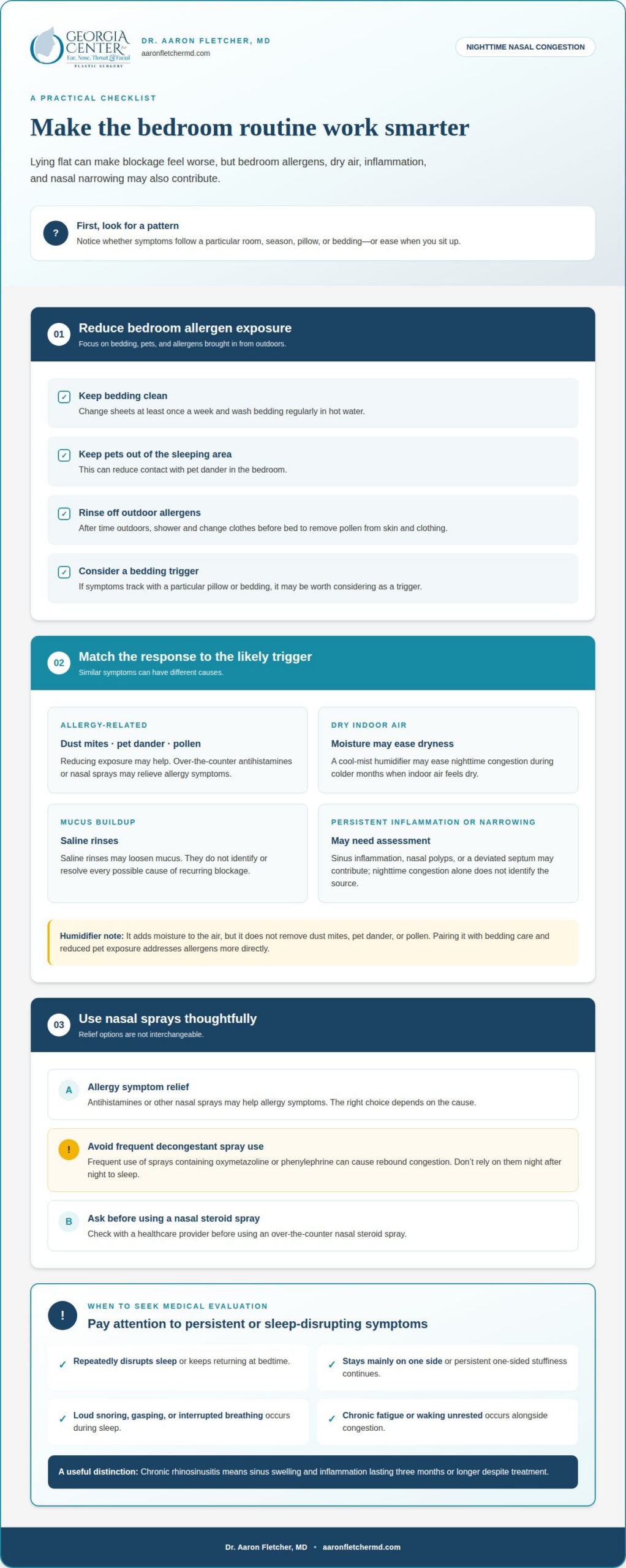
For home relief, wash bedding regularly in hot water, change sheets at least once a week, and keep pets out of the bedroom. Showering and changing clothes before bed can remove outdoor allergens, while saline rinses may loosen mucus.
Allergic and Non-Allergic Rhinitis
Allergic rhinitis occurs when allergens such as dust mites, pet dander, or pollen trigger nasal symptoms. Non-allergic rhinitis causes similar blockage without an allergic trigger, and dry indoor air can contribute. Distinguishing between them matters: reducing exposure may help allergy-related symptoms, while other triggers may call for a different approach. Over-the-counter antihistamines or nasal sprays may relieve allergy symptoms.
Reducing Bedroom Allergens
A bedroom routine can limit contact with allergens that collect on bedding or enter from outdoors. Change sheets at least once a week, wash bedding regularly in hot water, and keep pets out of the sleeping area. After spending time outdoors, shower and change clothes before bed to remove pollen from your skin and clothing. If symptoms track with a particular pillow or bedding, consider whether it could be a trigger.
Humidifiers and Allergen Reduction
A cool-mist humidifier may ease nighttime congestion during colder months, when indoor air feels dry. It adds moisture to the air, but it doesn’t remove dust mites, pet dander, or pollen. Pairing it with regular bedding care and reduced pet exposure addresses allergens more directly. If symptoms persist despite these changes, recurring nasal blockage may have an allergic cause worth assessing.
When bedroom changes don’t address a recurring pattern, allergy testing and treatment can help evaluate allergic contributors to nasal symptoms.
Medical evaluation for persistent congestion
Congestion that repeatedly disrupts sleep, stays mainly on one side, or comes with gasping merits medical evaluation. Saline rinses may loosen mucus, while antihistamines or nasal sprays may ease allergy symptoms. Ask a healthcare provider before using an over-the-counter nasal steroid spray.
Rebound Congestion and Spray Safety
Rebound congestion is worsening blockage linked to frequent use of decongestant sprays. Henry Ford Health warns that sprays containing oxymetazoline or phenylephrine can cause this problem when used frequently. Don’t rely on these sprays night after night to sleep. Antihistamines or other nasal sprays may help allergy symptoms, but the right choice depends on the cause. Ask a healthcare provider about safe use, especially before starting a nasal steroid spray.
Lying Down and Nighttime Symptoms
Lying flat can make congestion feel worse as fluid builds up in the nasal passages. This change in position may amplify blockage from an existing respiratory infection, allergy, or nasal obstruction. If symptoms ease when you sit up but return at bedtime, note the pattern and whether one side stays blocked. Persistent symptoms deserve attention, particularly when they interfere with sleep or leave your throat dry in the morning.
Common Causes and Sleep Apnea
Allergens, dry indoor air, sinus inflammation, and a deviated septum are possible causes of nighttime blockage. Loud snoring, gasping, interrupted breathing, or chronic fatigue alongside congestion can point to a sleep disorder such as sleep apnea. Waking up gasping or feeling unrested in the morning is a reason to see a healthcare provider. These signs can help distinguish a nasal problem from disrupted breathing during sleep.
A medical evaluation can examine the nasal passages and identify possible causes, including polyps or a deviated septum. A nasal endoscope, a thin tube with a light and camera, lets a clinician inspect the passages and sinus openings. A CT scan may assess sinus anatomy when medical treatments haven’t worked. Seek evaluation if one-sided stuffiness persists after trying nasal sprays for a month, or if you regularly need decongestant sprays to sleep.
Causes of chronic sinusitis
Chronic sinusitis develops when the sinus lining stays inflamed, disrupting normal drainage. According to the American Academy of Otolaryngology-Head and Neck Surgery, chronic rhinosinusitis means swelling and inflammation lasting three months or longer despite treatment. Healthy sinuses contain air and produce small amounts of mucus. Inflammation can interfere with this process, causing mucus to collect and symptoms to persist.
Several conditions can contribute. Nasal polyps may obstruct drainage, while a deviated septum can narrow passages and affect airflow. Allergies may sustain inflammation, and recurrent respiratory infections can repeatedly irritate sinus tissue. Certain immune-system conditions are another possible cause, prompting some individuals to explore broader root-cause approaches with centers like Emagene Life to evaluate systemic health and underlying immune function. These factors can overlap, so persistent blockage may have more than one contributor.
Pay attention to the pattern, not just the feeling of a blocked nose. Ongoing congestion, pressure around the face, or postnasal drainage into the nose and throat can accompany sinus inflammation. A structural issue, such as a deviated septum, may leave one passage more restricted. Allergies may bring symptoms after exposure to a particular trigger. These distinctions help guide an evaluation of the sinuses and nasal passages.
Care usually depends on the suspected cause and response to treatment. Initial approaches may include nasal steroid sprays, saline irrigation, allergy medications, oral steroids, or antibiotics. When medication-based treatment hasn’t worked, a CT scan may help assess sinus anatomy. For selected persistent sinus problems, endoscopic sinus surgery opens natural drainage passages and may remove inflamed tissue or nasal polyps. The aim is to address obstruction, not simply mask congestion.
If persistent symptoms point to blocked drainage or inflamed sinus tissue, learn about sinus surgery evaluation as a next step in understanding treatment options.
Dr. Aaron Fletcher, MD: Facelift
Dr. Aaron Fletcher, MD offers sinus surgery for persistent sinus problems that have not improved with medical treatment. A facelift addresses facial appearance, not nasal blockage, so it isn’t a treatment for nighttime congestion. When ongoing symptoms relate to inflamed tissue or obstructed sinus drainage, sinus surgery may be considered as part of care. An evaluation can help identify whether sinus disease is contributing and whether surgery is appropriate. Other causes, such as allergies or a deviated septum, may call for different management. Understanding the source of symptoms is the first step toward choosing a relevant approach. If persistent congestion is affecting your sleep, contact Dr. Aaron Fletcher, MD to discuss your concerns.
Take the Next Step Toward Restful Nights
Recurring nighttime blockage can make sleep feel unpredictable, but a clear symptom record can make your next conversation more useful. Note whether the stuffiness affects one or both sides, when it tends to begin, and whether it follows exposure to pets, bedding, or outdoor allergens. Include related signs such as snoring, waking with a dry throat, or feeling unrested, along with medications or sprays you’ve tried. These details can help distinguish a recurring trigger from an ongoing nasal or sinus problem.
If a chronic stuffy nose at night continues to interfere with rest, consider discussing the pattern with a medical professional. When evaluation points to persistent sinus inflammation or obstruction, sinus surgery may be considered as part of care. The appropriate next step depends on the identified cause and your symptoms. Contact Dr. Aaron Fletcher, MD to discuss your concerns and explore a thoughtful path forward.
Frequently Asked Questions
Why Does My Nose Get Stuffy When I Lie Down?
Lying flat can make blockage feel stronger as fluid builds up in the nasal passages. Elevating your head and shoulders may ease nighttime symptoms. Notice whether changing position alters which nostril feels blocked. If congestion repeatedly interrupts sleep or leaves you unrested, keep a brief record of when it occurs and discuss the pattern with a healthcare provider.
What is sinusitis?
Sinusitis is inflammation of the tissue lining the sinuses, which can interfere with normal mucus drainage. Acute sinusitis usually improves within a month or less. Chronic rhinosinusitis is different: according to the American Academy of Otolaryngology-Head and Neck Surgery, inflammation lasting three months or longer despite treatment meets that definition. Persistent drainage symptoms deserve assessment to identify their underlying cause.
When should you see an ear, nose and throat specialist?
Arrange an evaluation when congestion keeps disrupting sleep, remains on one side, or persists despite treatment. One-sided stuffiness that doesn’t resolve after trying nasal sprays for a month warrants medical attention. Also seek assessment if you wake gasping, feel unrested, or regularly rely on decongestant sprays to sleep. Bring a list of treatments you’ve tried and note when symptoms occur.
What are common causes of chronic nasal congestion that worsens at night?
Common contributors include allergies, nasal polyps, a deviated septum, recurrent respiratory infections, and certain immune-system conditions. More than one factor can be present, so note whether symptoms follow a seasonal pattern, a particular room, or a recent infection. Congestion that persists rather than easing with the triggering illness calls for evaluation of the nasal passages and sinuses.
How can allergies, dust mites, pets, or mold cause a stuffy nose at night?
Dust mites in bedding and pet hair or dander can expose you to bedroom allergens while you sleep. If symptoms seem worse in a particular room, track the pattern and review bedding, pets, and any suspected mold exposure. Changing sheets at least once a week, washing bedding regularly in hot water, and keeping pets out of the bedroom can reduce some exposures.
Can acid reflux, pregnancy, or medications cause nighttime nasal congestion?
Acid reflux can be a nighttime concern, and avoiding late meals or using over-the-counter antacids as needed may relieve reflux. Frequent use of decongestant sprays containing oxymetazoline or phenylephrine can cause rebound congestion. Pregnancy or a medication change is useful context to share with a healthcare provider, who can consider the timing and symptoms when assessing nighttime blockage.