
For many patients, a CPAP machine is treated as the final destination for sleep apnea treatment, yet it often remains a temporary mask for an underlying structural problem. You’ve likely spent years enduring the fog of chronic daytime exhaustion, feeling the strain of loud snoring on your relationships, or the quiet fear of long term health risks. It’s taxing to manage a condition that feels like a constant battle against your own biology, especially when medical equipment feels more like a burden than a benefit.
You deserve a path toward restorative sleep that addresses your unique anatomy rather than just managing symptoms. Dr. Aaron Fletcher, MD believes in a methodical, patient centered approach that prioritizes your quality of life. This guide explores the full spectrum of modern interventions available in 2026, moving beyond simple lifestyle adjustments to advanced surgical solutions that provide permanent structural relief. We will examine how precision diagnostics and airway corrections can finally deliver the uninterrupted breathing and daily energy you’ve been seeking for years.
Key Takeaways
- Identify the specific anatomical factors, such as nasal obstruction or soft palate tissue, that contribute to airway blockages and prevent restorative rest.
- Compare the functional differences between temporary management tools like CPAP and long term sleep apnea treatment options that offer permanent structural relief.
- Explore modern surgical refinements designed to stiffen or remove obstructing tissue, leading to a significant reduction in snoring and chronic exhaustion.
- Learn why a thorough physical airway examination by a board-certified specialist is the most critical step in developing a personalized care plan that fits your anatomy.
Understanding Obstructive Sleep Apnea: More Than Just a Snoring Problem
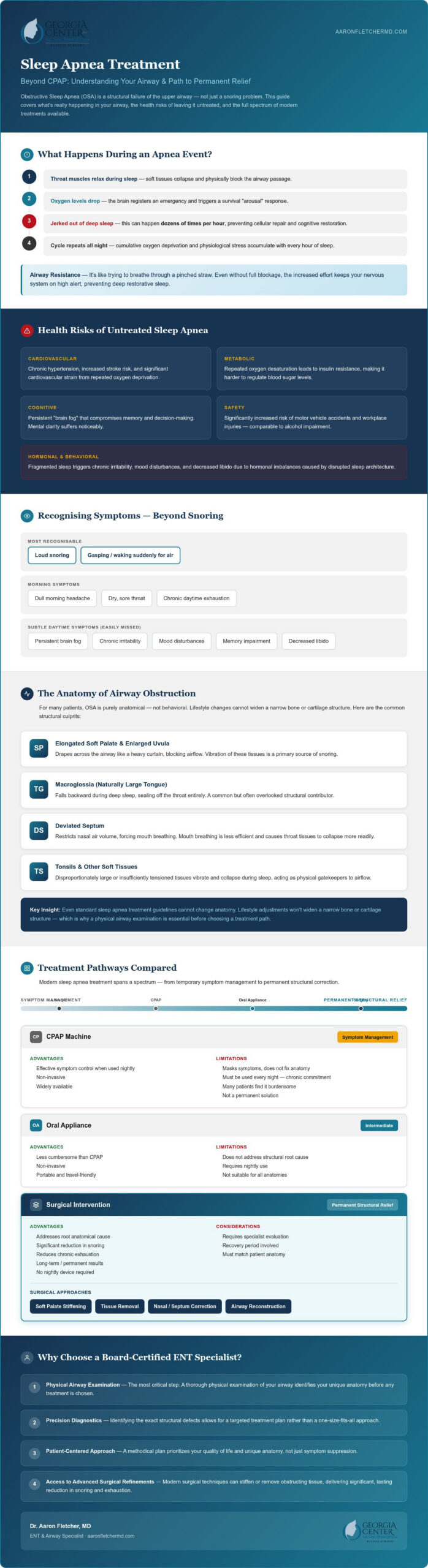
Obstructive sleep apnea (OSA) is far more than a nocturnal nuisance or a source of loud snoring; it’s a structural failure of the upper airway. While you sleep, the muscles in your throat relax, allowing soft tissues to collapse and physically block the passage of air. Obstructive sleep apnea is a chronic condition characterized by the repetitive cessation of breath during sleep, caused by the physical collapse of tissues within the upper airway. This mechanical obstruction forces the brain into a state of emergency. When oxygen levels drop, the nervous system triggers a survival response known as an “arousal,” which yanks you out of deep, restorative sleep just long enough to resume breathing. Because these cycles can occur dozens of times per hour, your body never achieves the deep stages of sleep required for cellular repair and cognitive restoration. Seeking effective sleep apnea treatment is essential because this constant cycle of oxygen deprivation and physiological stress places an immense burden on the cardiovascular system, leading to chronic hypertension, increased stroke risk, and significant cardiovascular strain.
The Health Risks of Untreated Sleep Apnea
The systemic impact of untreated OSA extends deep into your metabolic health. The repeated stress of oxygen desaturation often leads to insulin resistance, making it significantly harder for the body to regulate blood sugar levels. Beyond metabolic concerns, the cognitive toll is equally profound. Many patients describe a persistent “brain fog” that compromises memory and decision making. This lack of mental clarity isn’t just frustrating, it’s dangerous. Research consistently shows that the sleep deprivation caused by untreated airway issues significantly increases the risk of motor vehicle accidents and workplace injuries, comparable to the impairment levels of alcohol intoxication. Ensuring you receive a comprehensive diagnosis is the first step in mitigating these long term risks.
Recognizing the Subtle Symptoms Beyond Snoring
While snoring is the most recognizable sign, other symptoms are often more indicative of a need for professional sleep apnea treatment. You might wake up with a dull morning headache or a painfully dry, sore throat caused by mouth breathing and tissue vibration. Many people also report waking up suddenly, gasping for air as their body fights for oxygen. Other indicators are more subtle and affect your daily temperament. Chronic irritability, mood disturbances, and even a decreased libido are frequent results of the hormonal imbalances triggered by fragmented sleep. Recognizing these signs early allows for a more methodical diagnostic approach to your airway health, ensuring that your treatment plan addresses the root cause of your fatigue.
The Anatomy of Airway Obstruction: Why Structural Issues Matter
Many general health resources focus heavily on weight loss as the primary solution for snoring. While lifestyle is certainly a factor, it doesn’t account for the mechanical reality of the airway. For many patients, the struggle isn’t behavioral; it’s purely anatomical. The soft palate, tongue, and tonsils act as physical gatekeepers. When these tissues are disproportionately large or lack sufficient tension, they vibrate and collapse during sleep. This creates what specialists call Airway Resistance. It’s like trying to breathe through a pinched straw. Even when following standard sleep apnea treatment guidelines, lifestyle adjustments won’t widen a narrow bone or cartilage structure.
Airway Resistance isn’t just about total blockage. It’s about the increased effort your body must exert to move air. This chronic strain keeps your nervous system in a state of high alert, preventing the deep, restorative stages of sleep. Even if you don’t experience full apneas, high resistance can leave you feeling drained and mentally foggy. Understanding these structural defects is the first step toward a more permanent resolution.
Common Anatomical Culprits
Certain structures often dictate the severity of an obstruction. For instance, an elongated soft palate or an enlarged uvula can drape across the airway like a heavy curtain, blocking air flow. Macroglossia, or a naturally large tongue, can easily fall backward during deep sleep, sealing off the throat entirely. A deviated septum is another frequent offender, as it restricts the volume of air entering through the nose. This forces you to breathe through your mouth, which is less efficient and often causes the throat tissues to collapse more readily. These structural defects require a targeted clinical approach to ensure a clear passage.
The Intersection of Sinus Health and Sleep
Your nasal health is the foundation of a quiet night. Chronic sinusitis or turbinate hypertrophy creates constant congestion, which significantly worsens apnea symptoms. If you can’t breathe through your nose, your sleep quality will suffer regardless of other interventions. In some cases, a functional rhinoplasty can address both the external appearance and the internal structural defects that impede airflow. Dr. Fletcher approaches these cases with a meticulous focus on both form and function, ensuring the airway is clear. A thorough evaluation can determine if your sleep apnea treatment should include structural correction for better results. If you’re ready to address the physical root of your exhaustion, consider a comprehensive airway evaluation with a specialist who understands the balance of ENT health.
Comparing Treatment Pathways: CPAP, Oral Appliances, and Surgery
Determining the most effective sleep apnea treatment requires a methodical evaluation of your specific airway anatomy and the severity of your condition. There isn’t a universal solution for every patient; instead, a clinical framework helps prioritize interventions based on where the obstruction occurs. For some, the blockage is localized in the nasal passage, while others face collapse at the base of the tongue or the soft palate. By understanding these nuances, you can move away from trial and error and toward a treatment plan that offers a higher probability of long term success. While conservative measures often serve as the first line of defense—and you can check out Peacock Dental Spa to learn more about how dental health supports these efforts—modern clinical expertise allows for a broader range of options, including surgical refinements for those seeking a more permanent, device free existence.
The Gold Standard: CPAP and Its Limitations
Continuous Positive Airway Pressure, commonly known as CPAP, remains the primary recommendation for moderate to severe cases. It works by creating an “air splint” that keeps the throat from collapsing during sleep. Despite its clinical effectiveness, many patients find the reality of nightly use difficult to sustain. Common frustrations include mask leaks that disturb partners, feelings of claustrophobia, and persistent skin irritation from the headgear. These challenges contribute to a significant clinical hurdle. Some industry reports suggest that global compliance rates for CPAP are often lower than 50%, as patients struggle to integrate the bulky equipment into their nightly routines. When the “gold standard” becomes a burden rather than a relief, it’s necessary to explore alternative pathways within modern sleep apnea diagnosis and treatment frameworks.
Non-Surgical Alternatives for Mild to Moderate Cases
For patients with less severe obstruction, Mandibular Advancement Devices (MADs) or Oral Pressure Therapy (OPT) can offer a less invasive solution. These oral appliances work by gently repositioning the lower jaw or tongue forward, which increases the space at the back of the throat. This mechanical shift, often implemented by functional experts like Beyond Dentistry NYC, helps prevent the soft tissues from collapsing and vibrating. Additionally, supportive care such as positional therapy, which encourages side sleeping, and weight management can provide incremental benefits. However, these options often fall short if the obstruction is caused by significant structural defects like a severely deviated septum or an elongated soft palate. While they are excellent tools for managing symptoms in specific candidates, they don’t address the underlying anatomical causes that a board-certified specialist can identify through a comprehensive airway exam.
Surgical Interventions for Sleep Apnea: Permanent Structural Relief
Surgery offers a definitive path for those who cannot tolerate lifelong device dependency or find conservative measures insufficient. The primary objective of surgical sleep apnea treatment is to address the specific site of collapse identified during your diagnostic exam. This involves a meticulous approach to stiffening lax tissues, shrinking enlarged structures, or removing obstructive elements that narrow the airway. Unlike older, more invasive techniques, modern refinements focus on preserving function while maximizing the diameter of the air passage. For example, Uvulopalatopharyngoplasty (UPPP) has evolved from a broad tissue removal to a more precise remodeling of the soft palate and throat, ensuring results that feel natural and function effectively.
Dr. Fletcher views every surgical intervention through a lens of both functional excellence and patient comfort. By focusing on the structural root of the problem, surgery can often provide a level of relief that behavioral changes alone cannot match. This methodical process ensures that each procedure is tailored to the individual’s specific anatomy, avoiding the pitfalls of more generic treatment plans. This commitment to modern excellence allows patients to regain confidence in their ability to breathe naturally throughout the night.
Nasal Surgery: Clearing the Path
A clear nasal passage is the foundation of healthy breathing. Procedures such as septoplasty, which corrects a deviated septum, and turbinate reduction, which shrinks swollen tissues inside the nose, are essential for restoring nasal patency. When you can breathe easily through your nose, the physical effort required to inhale decreases significantly. This shift often makes other interventions more successful. Improving nasal airflow can significantly increase CPAP tolerance by allowing for lower pressure settings, even if the nasal surgery doesn’t completely resolve the apnea on its own. This collaborative approach ensures that even if a device is still needed, it’s far more comfortable and easier to use consistently.
Advanced Airway Procedures
For patients with obstruction at the back of the throat or base of the tongue, more specialized procedures may be necessary. Palatal stiffening, often referred to as the Pillar Procedure, uses small implants to reduce the vibration and collapse of the soft palate in mild cases. More complex issues involving the tongue might require genioglossus advancement or hyoid suspension to physically prevent the tongue from falling backward during sleep. Recovery from these surgical apnea corrections varies depending on the complexity of the procedure, but most patients return to normal activities within one to two weeks. These interventions represent a sophisticated shift toward addressing the physical reality of the airway rather than just managing symptoms. If you’re ready to explore a permanent solution to your airway obstruction, you can consult with a board-certified specialist to discuss which surgical path for sleep apnea treatment aligns with your unique anatomy.
Choosing a Specialist: Why a Board-Certified ENT Makes the Difference
While a primary care physician can identify the signs of fatigue, a board-certified otolaryngologist possesses the specialized training required to address the physical structures causing the blockage. A specialist doesn’t just look at the data from a sleep study; they look at you. By choosing a specialist for your sleep apnea treatment, you ensure that your care is guided by someone who understands the complex interplay between the nasal passages, the soft palate, and the base of the tongue. This level of expertise is essential for moving beyond a generic, one-size-fits-all mask and toward a solution that respects your specific anatomy. It’s about finding a practitioner who functions as both a scholar of the airway and a caring guide through your surgical or clinical journey.
Dr. Fletcher emphasizes a meticulous, diagnostic approach that prioritizes your quality of life. This means moving past symptomatic management and into a territory of permanent structural relief. When your treatment plan is built on a foundation of anatomical expertise, the results are more predictable and the path to recovery is much clearer. You deserve a partner in your health who values transparency and takes the time to answer every question with clinical authority and empathetic reassurance.
The Importance of a Comprehensive Airway Evaluation
A clinical consultation for sleep apnea involves more than a review of your medical history. It requires a physical mapping of your airway to identify the precise points of collapse. One of the most effective tools in this process is drug-induced sleep endoscopy (DISE). During this procedure, you’re placed in a light state of sedation that mimics natural sleep, allowing the surgeon to visualize exactly where the airway fails. This diagnostic precision is what separates a successful outcome from a failed intervention. Structural expertise is critical for surgical success because it allows the practitioner to target the specific site of obstruction with absolute clarity. Without this meticulous evaluation, any treatment plan is merely an educated guess.
Transitioning from Diagnosis to Long-Term Relief
The ultimate goal of any patient-centered approach is to ensure that the chosen treatment fits your lifestyle and your long-term health goals. Whether your path involves advanced surgical refinements or a combination of therapies, the focus remains on achieving restorative sleep and improving your overall quality of life. You shouldn’t have to choose between a bulky machine and chronic exhaustion. By partnering with a meticulous expert who values transparency and education, you can find a resolution that feels stable and sustainable. If you’re ready to move toward a permanent reduction in snoring and a return to daily energy, the next logical step is a professional evaluation of your airway structure.
Take the first step toward reclaiming your nights and your health. Schedule a consultation with Dr. Aaron Fletcher to explore your structural sleep apnea solutions and discover a treatment plan designed specifically for your anatomy.
Reclaiming Your Nights Through Anatomical Precision
Restorative sleep is not merely the absence of snoring; it’s the result of a clear and functional airway. We’ve explored how physical obstructions in the nasal passage or throat can disrupt your systemic health, leading to chronic exhaustion and cardiovascular strain. While devices like CPAP offer a temporary splint, modern surgical refinements provide a methodical path toward permanent structural relief. Choosing a specialist who understands both the functional and aesthetic nuances of the airway is the most critical step in your journey toward wellness.
Dr. Aaron Fletcher, a board-certified otolaryngologist, brings a scholarly precision to every sleep apnea treatment plan. By prioritizing compassionate, patient-centered care and expertise in structural airway correction, he helps you move beyond the frustration of bulky equipment. You don’t have to navigate this path alone or settle for fragmented rest. If you’re ready to address the anatomical root of your condition and restore your daily energy, the next step is a comprehensive evaluation.
Schedule a Consultation for Sleep Apnea Relief today and begin your transition toward a life of uninterrupted, restorative breathing.
Frequently Asked Questions
What is the most effective treatment for sleep apnea?
The most effective approach depends entirely on your specific airway anatomy. While CPAP is often called the gold standard for symptom management, surgical intervention is the most effective way to address the physical root cause. A board-certified specialist uses precision diagnostics to identify the site of collapse. This allows for a tailored plan that might involve stiffening lax tissues or widening the nasal passage for long term success.
Can sleep apnea be cured without a CPAP machine?
Yes, many patients achieve permanent relief through structural airway correction. While CPAP manages symptoms by providing air pressure, it doesn’t fix the underlying anatomical defect. Effective sleep apnea treatment may involve procedures like septoplasty or palatal remodeling to clear physical blockages. These clinical interventions allow you to breathe naturally without the need for nightly equipment, bulky machines, or restrictive external masks.
Is surgery for sleep apnea considered a major procedure?
The complexity of the procedure varies based on your specific needs. Minor interventions like turbinate reduction are relatively straightforward and involve minimal downtime. More comprehensive procedures, such as UPPP or hyoid suspension, require a higher level of surgical expertise and a longer recovery period. Every case is approached with a meticulous focus on safety, ensuring the most conservative path is chosen to achieve functional results.
What happens if sleep apnea is left untreated for years?
Chronic oxygen deprivation places severe strain on the entire body. Over time, untreated airway obstruction increases the risk of systemic issues like hypertension, heart disease, and stroke. It also leads to metabolic disturbances and persistent cognitive impairment. Seeking a professional evaluation is essential to prevent these long term health risks and restore the deep, restorative sleep your body requires for daily cellular repair and cognitive function.
How do I know if my snoring is actually sleep apnea?
Snoring is often the most visible symptom, but it’s not the only indicator of a serious problem. You should look for signs like waking up gasping for air, excessive daytime sleepiness, or frequent morning headaches. A definitive diagnosis requires a clinical evaluation and often a sleep study. A specialist can perform a physical airway exam to determine if your snoring is caused by a dangerous structural blockage.
Are there permanent solutions for sleep apnea that don’t involve masks?
Surgical interventions offer a permanent alternative for those who cannot tolerate masks. By physically altering the structures that collapse during sleep, surgeons can widen the airway and prevent blockages. This methodical approach to sleep apnea treatment addresses issues like an elongated soft palate or a large tongue base. These procedures provide a device free solution that allows for natural, uninterrupted breathing throughout the night.
Does insurance typically cover sleep apnea surgery?
Most insurance providers recognize sleep apnea as a serious medical condition rather than a cosmetic concern. Coverage usually depends on the severity of your apnea and your history with conservative treatments like CPAP. Because these procedures address functional breathing issues and long term health risks, they are often covered under standard health plans. It’s best to consult with your provider to understand the specific requirements for your clinical situation.
How long is the recovery time after sleep apnea surgery?
Recovery times depend on the specific procedure performed. For nasal surgeries like septoplasty, most patients return to light activities within a few days. More extensive throat or palate surgeries typically require one to two weeks for the initial healing phase. You will receive a detailed post operative plan to ensure a smooth transition and manage any discomfort while your airway stabilizes and begins to function properly for restorative sleep.