
The procedure may be over in a day, but healing takes longer. For most people, deviated septum surgery recovery time is 1 to 2 months, with congestion and internal swelling sometimes improving gradually beyond that. Septoplasty straightens the wall of bone and cartilage between the nasal passages to improve airflow.
It’s understandable to want a clear idea of when you’ll feel better and what daily life may look like as your nose heals. Recovery involves more than waiting for discomfort to pass: follow-up care and protecting your nose are also important.
This guide explains what septoplasty involves, what you may experience during the first days and weeks, how follow-up visits and nose care fit into recovery, and when work, exercise, and other activities may need to wait. A general timeline can help you plan, while your surgeon’s specific instructions should guide your care.
Key Takeaways
- Plan for follow-up visits so your surgeon can assess healing and remove splints if needed.
- Protect your nose during recovery by following care instructions and respecting activity restrictions.
- Expect healing to unfold in stages; congestion and breathing changes can take time to settle.
- Know which symptoms, including heavy bleeding or vision changes, warrant prompt medical attention.
Follow-up visits and removal of nasal packing or splints
Septoplasty takes about 1 to 1½ hours, according to Dr. Aaron Fletcher, MD. It is commonly performed as an outpatient procedure, and patients are likely to go home the same day, according to Dr. Aaron Fletcher, MD. Arrange a ride and plan to rest after discharge, since grogginess can affect your ability to travel safely on your own.
During the first 24 hours, congestion, pressure, drainage, mild bleeding, and grogginess can occur. Blood-tinged mucus may continue during the first couple of days. Swelling and congestion can feel more noticeable on days two and three, even as healing progresses. These early symptoms usually ease gradually, while internal swelling may take longer to settle.
A follow-up visit is usually scheduled about a week after surgery. Your ENT can examine the nasal septum, assess healing, and remove splints if needed. Further visits during the 3 to 4 months after surgery allow the clinician to monitor changes inside the nose. Keep these appointments, even if breathing already feels improved.
Nasal packing and splints serve different purposes, and not every patient has both. Packing may support the nose or help manage bleeding, while splints help hold tissues in position as they heal. Your clinician will tell you when any material should be removed. Don’t pull, trim, or adjust anything inside your nose yourself.
If septoplasty is combined with sinus surgery or another nasal procedure, the areas treated can affect swelling, drainage, and follow-up. Follow the instructions for your combined procedure, including how to care for any dressing and when to return. Keeping your head elevated while resting may help you feel more comfortable during early recovery. Contact your care team if bleeding is heavier than expected or symptoms worsen instead of easing.
Nose care and activity restrictions during recovery
Avoid blowing your nose, strenuous activity, and pressure on your nose during early healing. Timing varies by activity, so follow the instructions for your procedure.
Postoperative Activity Limits
Activity limits reduce strain on healing nasal tissue and help lower bleeding risk. Avoid bending over or lifting more than 10 pounds for 1 week. Avoid strenuous activity for 1 week or until your surgeon says it’s okay; heavy lifting and strenuous exercise may remain restricted for up to six weeks. Avoid swimming for six weeks after surgery.
Don’t blow your nose during the first week, or longer if your surgeon directs. Sneeze with your mouth open to reduce pressure. Don’t move, trim, or remove anything inside your nose. A saline wash may help clear mucus and dried blood and keep nasal passages open; use it only as directed. Rest with your head elevated on two or three pillows.
Returning to Work and Daily Activities
Returning to work means resuming your duties without overloading your recovery. Some people may return to work or school in a few days, while desk work and light routines may be more manageable during the second week. Most people can resume light activities about a week after septoplasty, according to Dr. Aaron Fletcher, MD.
Your job matters: desk work places different demands on your body than lifting, bending, or strenuous labor. Return to your normal routine gradually, and don’t assume that improved breathing means internal healing is complete. Keep your follow-up appointment and let your surgeon guide your return to activity.
For travel, fly only after your surgeon confirms early healing is stable. If your care also involves sinus surgery, follow the recovery instructions for the combined procedure, since they may shape your activity plan.
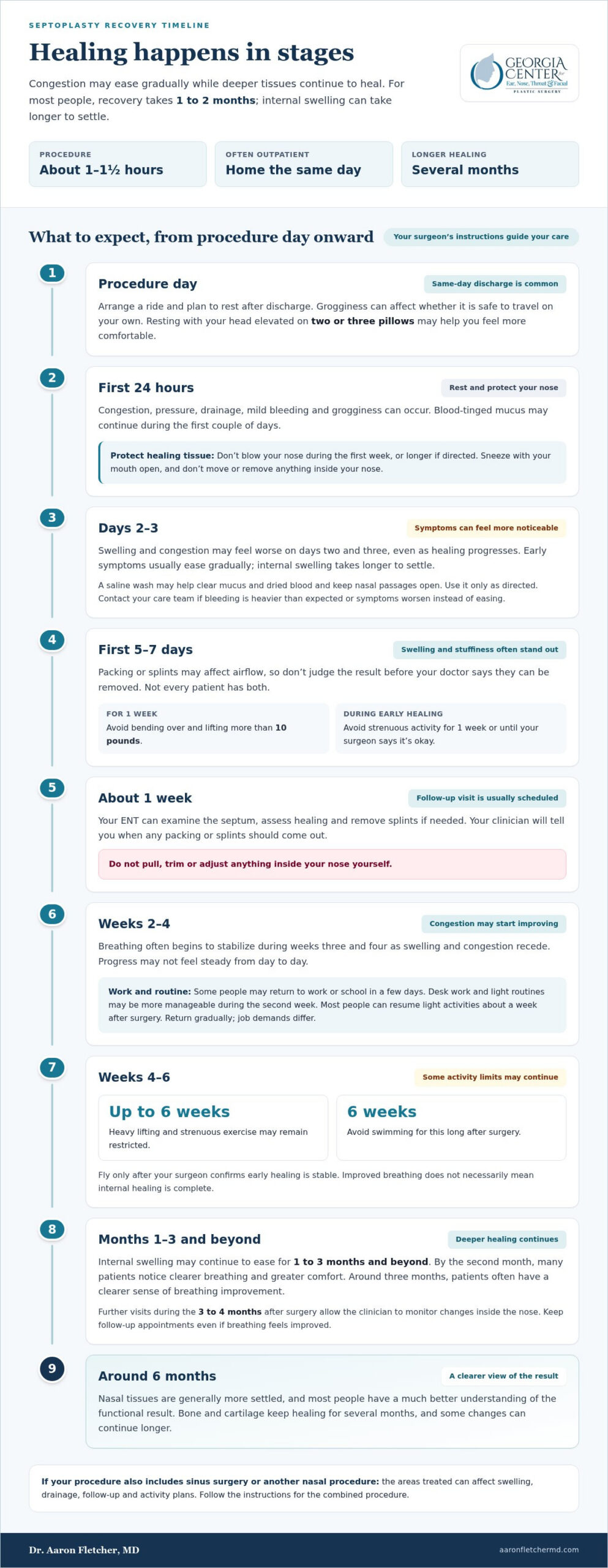
What to expect after deviated septum surgery?
Your deviated septum surgery recovery time unfolds in stages. Early congestion gradually eases, while deeper tissues continue healing. The first few days can feel quite different from the gradual breathing changes that follow.
Healing From the First Day Through Six Months
During the first 24 hours, rest and protect your nose. Grogginess, pressure, drainage, congestion, and mild bleeding can occur. The first 5 to 7 days often bring the most noticeable swelling and stuffiness. Packing or splints may affect airflow, so don’t judge the result before your doctor says they can be removed.
Congestion often starts improving during weeks two to four, while internal swelling may continue to ease for one to three months and beyond. Bone and cartilage keep healing for several months. By six months, nasal tissues are generally more settled, although some changes can continue longer. Deviated septum surgery recovery time includes both early comfort and slower internal healing.
Breathing Improvement During Recovery
Breathing often begins to stabilize during weeks three and four as swelling and congestion recede. Progress may not feel steady from day to day: temporary stuffiness can obscure improvement while tissues remain swollen. Follow your postoperative care plan and attend follow-up visits so your doctor can assess healing and any persistent blockage.
By the second month, many patients notice clearer breathing and greater comfort. Around three months, patients often have a clearer sense of their breathing improvement; by six months, most have a much better understanding of the functional result. These milestones help set expectations, but they don’t mean the tissues have completely healed. If airflow still feels limited, discuss the pattern with your doctor instead of changing your treatment or trying to remove anything inside your nose yourself.
Keep a simple record of changes, such as whether congestion is easing or discomfort is worsening. This timeline can help you describe symptoms clearly at follow-up and distinguish gradual healing from a new concern.
Can fixing a deviated septum change my life?
Septoplasty can improve nasal airflow, but it’s still important to monitor recovery symptoms. Mild congestion, pressure, and blood-tinged mucus during the first couple of days can occur. Pay attention to whether symptoms remain manageable or become severe, worsen, or interfere with breathing.
Contact your clinician about heavy bleeding, worsening pain, increasing swelling, severe headache, unusual drainage, shortness of breath, or splints or packing that shift. If gauze becomes soaked and needs changing hourly, contact your surgeon. A fever lasting two days also warrants a call. These signs need attention rather than waiting for a routine appointment.
Some symptoms call for immediate medical care. A fever higher than 102 degrees Fahrenheit during recovery is a reason to contact a healthcare provider immediately. Seek immediate care for vision changes or substantial, sudden swelling around the eyes. These symptoms are different from ordinary nasal stuffiness and should not be managed by adjusting splints or packing yourself.
Keep track of what changes and when. Note whether bleeding is light or heavy, pain is worsening, or swelling is increasing. Mild congestion for a few days can be part of early healing; a clear shift toward more severe symptoms needs prompt attention. Tell your clinician when the symptom began and whether it is getting worse.
Follow your postoperative instructions even when you feel ready to return to your normal routine. Strenuous activity can put added strain on your body during healing, so resume it only as directed. If symptoms remain strong six months after surgery, further evaluation may be needed. A concise symptom record can help your clinician assess the pattern and decide what care is appropriate.
For guidance about ongoing nasal or sinus concerns, connect with the practice.
Dr. Aaron Fletcher, MD: Facelift
A facelift is a separate option for people concerned about visible facial aging, not a treatment for a deviated septum or nasal breathing problems. Septoplasty focuses on healing inside the nose; a facelift addresses facial appearance. If your main concern is congestion or airflow, follow your ENT’s recovery plan and attend follow-up visits.
Consider discussing a facelift if facial aging, rather than nasal function, is the concern you want to address. Dr. Aaron Fletcher, MD also offers rhinoplasty, a procedure involving the nose that is distinct from septoplasty’s focus on the nasal septum. An appointment can help clarify which procedure aligns with your goals and whether it is appropriate for your concerns. Contact Dr. Aaron Fletcher, MD to discuss facial surgery options.
Make Your Next Step a Clear One
Planning for your deviated septum surgery recovery time is also an opportunity to clarify what you want from treatment. Consider the breathing concerns you hope to address, the questions you still have, and what would help you feel prepared for the next conversation. A focused discussion can connect your goals with a suitable procedure, recovery expectations, and follow-up plan.
If you’re considering nasal surgery or have questions about your options, discuss your priorities with Dr. Aaron Fletcher, MD. The aim is to understand the concern you want addressed and discuss an appropriate path forward, recognizing that recovery is not the same for everyone.
Contact Dr. Aaron Fletcher, MD to discuss your questions and next steps. With a clearer plan, you can approach the decision with greater confidence and focus on the care that supports your goals.
Frequently Asked Questions
What is septoplasty?
Septoplasty is surgery to straighten the nasal septum, the wall of bone and cartilage that separates the nasal passages. It addresses a structural deviation that can obstruct airflow. The procedure focuses on the internal partition, not every cause of nasal congestion. If several factors contribute to blockage, septoplasty may address the structural component, while other causes may need separate assessment.
What is the recovery time?
Most people recover fully within 1 to 2 months after nasal septum repair surgery. That overall period doesn’t mean every symptom follows the same schedule: comfort and daily function may improve before internal tissues finish healing. If you’re planning work or caregiving, arrange flexibility where possible, especially if your duties involve physical exertion or your procedure includes additional nasal work.
Does septoplasty change nose shape?
Septoplasty focuses on straightening the internal nasal septum and does not intentionally change the nose’s external appearance. Temporary swelling can affect how the nose looks during healing. Rhinoplasty is a separate procedure associated with changes to nasal appearance. If both appearance and airflow are concerns, discuss them together so the treatment plan distinguishes structural goals from cosmetic ones.
How can you care for yourself at home?
Follow your surgeon’s written instructions, and don’t change medicines without approval. For a homemade saline wash, mix 1 teaspoon of salt and 1 teaspoon of baking soda into 2 cups of distilled water, or water that has been boiled and cooled. Use the rinse as directed. Avoid aspirin or ibuprofen unless your surgeon approves or prescribes them, since they may increase bleeding.
How long does this procedure take?
Septoplasty takes about 1 to 1½ hours, according to Dr. Aaron Fletcher, MD. The time spent in surgery is separate from the healing period, which unfolds over weeks and months. If another nasal or sinus procedure is performed at the same time, the overall plan may differ from septoplasty alone. Your surgical instructions will reflect the procedure you undergo.
Is it normal to feel congested after septoplasty?
Yes, congestion is common during early healing because swelling and changes to internal tissues can temporarily narrow airflow. It often starts to improve two to four weeks after surgery, though symptoms may fluctuate rather than disappear all at once. Use only the nasal rinses or medicines recommended for you, and contact your clinician if congestion comes with heavy bleeding, worsening pain, or difficulty breathing.