
Could a hearing concern, recurring sinus problem, or persistent voice change lead you to the same kind of specialist? It can. The ENT meaning is “ear, nose, and throat,” but the specialty covers more than those three areas. If you’re unsure whether an ENT is the right clinician for your symptoms, that uncertainty is understandable.
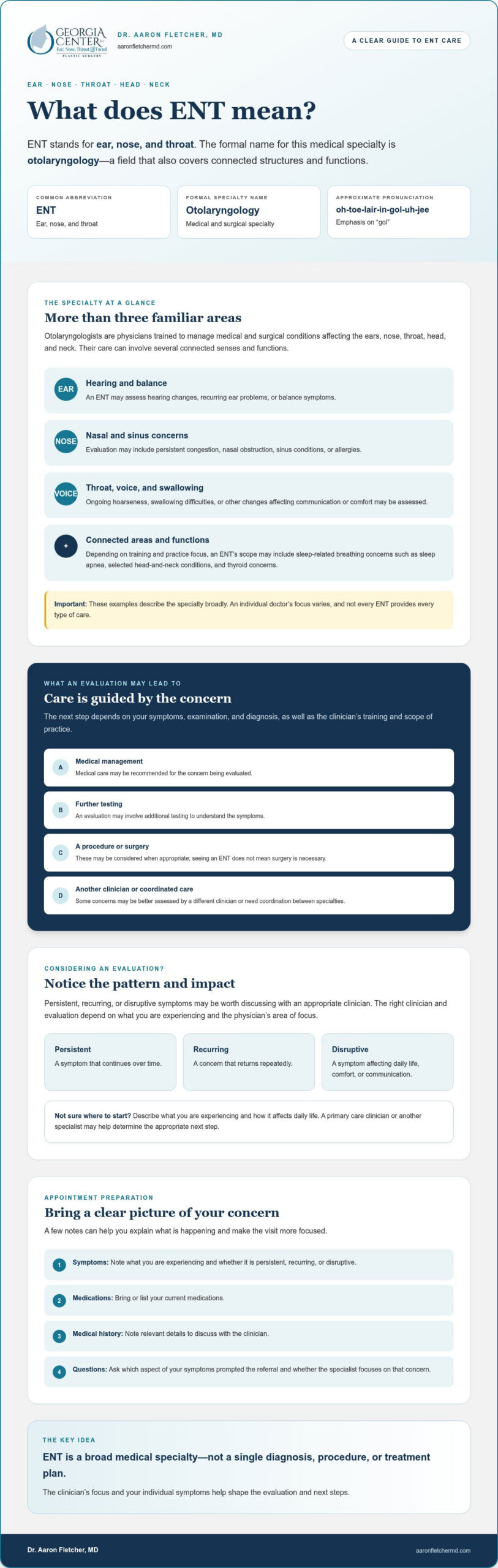
ENT doctors, formally called otolaryngologists, are physicians trained to manage medical and surgical conditions affecting the ears, nose, throat, head, and neck. Otolaryngology is pronounced roughly “oh-toe-lair-in-gol-uh-jee.” The specialty includes concerns ranging from allergies and sinus conditions to hearing, voice, and swallowing problems. An individual doctor’s focus can vary, though, and not every ENT provides every type of care.
This guide explains what ENT stands for, what these specialists treat, and how their areas of focus shape the care available. You’ll also learn when an ENT evaluation may be appropriate, what to discuss with a clinician, and how to prepare for a visit so you can take a clearer next step.
Key Takeaways
- Clarify the ent meaning and learn the formal name for the specialty, otolaryngology.
- See how ENT care can address concerns across several connected areas, not just the ears, nose, and throat.
- Understand why an evaluation may lead to different next steps, from testing or medical care to a procedure or surgery.
- Recognize when persistent, recurring, or disruptive symptoms may be worth discussing with an appropriate clinician.
- Prepare for an appointment by noting your symptoms, medications, medical history, and questions.
What Does ENT Mean? The Definition Behind the Medical Abbreviation
ENT stands for ear, nose, and throat. An ENT doctor is a physician specializing in medical and surgical conditions affecting these areas and related structures of the head and neck. The formal name for the specialty is otolaryngology. So, if you’re searching for the ent meaning, you’re looking for a broad field of medicine, not the name of a particular treatment.
What does the abbreviation ENT stand for?
The abbreviation comes from “ear, nose, and throat,” the three familiar areas central to the specialty. An otolaryngologist’s training can also cover connected structures, such as the sinuses and voice box, as well as parts of the head and neck. The name Otorhinolaryngology reflects this wider scope, which includes different areas of practice and subspecialties.
That breadth helps explain why an ENT may evaluate concerns that don’t seem related at first. One patient might seek care for recurring sinus symptoms, while another may need an assessment of a voice or swallowing problem. The appropriate clinician and evaluation depend on the concern and the physician’s area of focus.
How do you pronounce and use otolaryngology?
Otolaryngology is commonly pronounced oh-toe-lair-in-gol-uh-jee, with emphasis on “gol.” The word combines medical roots associated with the ear, nose, and throat. Patients and clinicians often use the shorter term “ENT” because it’s easier to say and widely recognized.
In everyday conversation, “ENT” and “otolaryngology” usually refer to the same specialty. One is a convenient abbreviation; the other is its formal name. They don’t signal different levels of care or different types of physician. You may see “ENT” in appointment information or hear “otolaryngologist” used to describe the specialist’s professional role.
ENT is a specialty, not a single procedure, diagnosis, or treatment plan. Otolaryngologists can provide medical care and, when appropriate, perform procedures or surgery. Seeing an ENT does not mean surgery is necessary. The recommended care depends on your symptoms, examination, and diagnosis, as well as the clinician’s training and scope of practice.
Understanding the terminology can make it easier to interpret a referral or ask informed questions. If a clinician recommends an ENT evaluation, ask which aspect of your symptoms prompted the referral and whether the specialist focuses on that concern. The abbreviation may be brief, but the specialty encompasses a diverse range of care.
What Does an Otolaryngologist Treat Beyond the Ears, Nose, and Throat?
The specialty’s name points to familiar body areas, but its clinical scope also includes connected structures and functions. Otolaryngology brings together care for hearing, balance, breathing through the nose, voice, swallowing, and related head-and-neck concerns. The conditions an ENT evaluates vary according to the physician’s training and practice focus.
Which ear, nose, and throat concerns may an ENT evaluate?
For ear-related concerns, an ENT may assess hearing changes, recurring ear problems, or balance symptoms. Nasal and sinus care can involve persistent congestion, nasal obstruction, sinus conditions, or allergies. In the throat and voice, evaluation may be considered for ongoing hoarseness, swallowing difficulties, or other changes that affect communication or comfort. These examples describe the specialty broadly, not services available from every ENT.
Sleep-related breathing concerns, including sleep apnea, may also fall within an ENT’s scope. The reasons to visit an ENT specialist can include symptoms involving several of these areas. Some concerns, however, are better assessed first by a primary care clinician or another specialist, who can help determine the appropriate next step.
Why does ENT care sometimes include the head and neck?
The ears, nose, and throat are connected to structures involved in breathing, speaking, swallowing, and other functions. ENT training can therefore extend to selected head-and-neck conditions, including thyroid concerns. Dr. Aaron Fletcher’s practice includes thyroid care among its areas of service. This is a practice-specific example, not an indication that every ENT physician evaluates or treats thyroid conditions.
How does the concern shape the evaluation?
An ENT evaluation may lead to medical management, further testing, a procedure, or surgery, depending on the symptoms and diagnosis. Some concerns may require care from a different clinician or coordination between specialties. If you’re unsure which clinician fits your needs, start by describing what you’re experiencing and how it affects daily life. For details about the practice’s ENT focus, you can review Dr. Fletcher’s ENT care information.
ENT Care Explained: Medical Treatment, Surgery, and Subspecialties
An ENT visit doesn’t automatically lead to surgery. Otolaryngologists can assess concerns and provide medical care, and some also perform procedures or surgery. The next step depends on your symptoms, examination findings, diagnosis, and the clinician’s area of expertise. Understanding the ent meaning includes recognizing this range of possible care rather than assuming one standard treatment path.
Is an ENT doctor a surgeon or a medical doctor?
An otolaryngologist is a medical doctor trained to address conditions affecting the ears, nose, throat, and related structures. Depending on the concern and their practice, they may recommend observation, medication, testing, an in-office procedure, or surgery. Sometimes the first step is simply to monitor a symptom or gather more information. Recommendations should follow an individual assessment. You can ask what a proposed treatment is intended to address and what alternatives may be appropriate.
For example, an ENT evaluating a nasal or sinus concern might discuss medical management or further evaluation before considering a procedure. Surgery may be an option for some diagnoses, but seeing a specialist does not make it inevitable.
What is the connection between ENT and facial plastic surgery?
Some otolaryngologists pursue focused expertise in facial plastic and reconstructive surgery, which may involve procedures related to the face and its structures. This additional focus is not part of every ENT physician’s practice. If you’re considering care in this area, ask about the clinician’s experience with the procedure and how it relates to your goals and health needs.
For instance, rhinoplasty concerns the nose and can involve both appearance and function. Blepharoplasty, or eyelid surgery, addresses a different area. These examples illustrate why a physician’s particular training matters. They don’t mean every ENT performs facial plastic surgery.
Dr. Aaron Fletcher is a board-certified otolaryngologist and facial plastic surgeon. His background reflects one pathway within the specialty, not the scope of all ENT practices. Before proceeding with a treatment plan, confirm whether the clinician regularly evaluates your concern and discuss the reasoning behind the recommended approach.
When Should You Consider Seeing an ENT Specialist?
Persistent or recurring symptoms affecting your ears, nose, throat, or related functions may be worth discussing with a clinician, particularly if they interfere with sleep, communication, breathing, or daily activities. That doesn’t mean a particular condition is present or that specialist care is always required. The next step depends on your symptoms, health history, and any initial evaluation.
Which ongoing symptoms may prompt an ENT evaluation?
Consider asking a healthcare professional whether an ENT assessment may help if you experience concerns such as:
- Nasal blockage or recurring sinus problems that continue or return
- Ongoing hoarseness or another persistent change in your voice
- Hearing changes, recurring ear concerns, or balance difficulties
- Swallowing problems or sleep-related breathing concerns
These are examples to discuss, not a checklist for self-diagnosis. A primary care clinician may assess the concern, begin initial care, or recommend a specialist based on your circumstances. If symptoms persist despite treatment, recur, or affect your ability to function comfortably, ask what further evaluation may be appropriate. Sudden, severe, or rapidly worsening symptoms may need immediate medical attention. Seek urgent care suited to the situation rather than waiting for a routine appointment.
Before speaking with a clinician, note when the symptom began, whether it comes and goes, what seems to affect it, and how it changes your daily activities. Include treatments you’ve tried and whether they helped. These details can help the clinician decide whether an ENT evaluation is a suitable next step.
Do you need a referral to see an ENT?
There isn’t one referral rule for every patient. Requirements can depend on your insurance coverage and how your care is arranged. Some plans may require a referral from a primary care clinician, while other arrangements may allow you to contact a specialist directly. Check your plan’s terms or call the relevant office to confirm what applies before scheduling.
If you’re uncertain, ask your primary care clinician whether a referral is appropriate and what information or records may be useful. This can clarify the path to care without assuming that every concern needs specialist assessment.
If ongoing sinus, allergy, sleep-related breathing, or other ENT concerns are affecting you, explore Dr. Fletcher’s ENT care information and consider discussing your symptoms with an appropriate clinician.
What to Expect at an ENT Visit and How to Prepare
An ENT appointment is shaped by the concern that brings you in. The clinician will generally ask about your symptoms and health history, then decide what examination or testing may be useful. You may not need testing. Understanding the ent meaning can clarify the specialist’s role, while a little preparation can help you make the most of the conversation.
How can you prepare for an ENT appointment?
A few notes can make it easier to describe what’s been happening, especially if symptoms come and go. Before your visit, consider writing down:
- When the symptoms began, how often they occur, and whether they’ve changed over time
- How they affect sleep, communication, breathing, or other daily activities
- Medications you take, along with treatments you’ve already tried and their effects
- Relevant health history, prior test results, and questions you want answered
Bring any requested insurance information and records that may help explain your concern. If you’re unsure whether a previous test or treatment is relevant, bring the details or ask the office what to provide. You might also note questions about what the clinician is evaluating and what possible next steps could involve.
What happens after an ENT evaluation?
After discussing your symptoms and conducting an examination appropriate to your concern, the clinician may explain their findings and whether follow-up or additional testing is useful. Recommendations vary. They may involve monitoring, medical treatment, a procedure, or a discussion of surgical options, depending on the diagnosis. Ask why a particular approach is being considered and how it relates to your symptoms.
Before deciding on recommended care, ask about its purpose, potential benefits and risks, and whether alternatives are available. If something isn’t clear, request an explanation in everyday language. A careful discussion can help you understand how the plan relates to your symptoms and what to expect next.
Dr. Aaron Fletcher is a board-certified otolaryngologist and facial plastic surgeon. His practice’s stated ENT areas include sinus conditions, allergies, sleep apnea, and thyroid conditions. The appropriate care depends on an individual evaluation. To take a practical next step, review the practice’s published ENT services and contact the office with questions about whether its care may fit your concern. Confirm appointment arrangements and service availability directly.
Take the Next Step With Greater Clarity
Understanding the ent meaning gives you a clearer starting point: ENT refers to a broad medical specialty, formally called otolaryngology, that can address concerns affecting the ears, nose, throat, and related structures. An ENT evaluation doesn’t automatically mean surgery. Depending on your symptoms and findings, next steps may involve discussion, testing, medical treatment, or another approach.
If symptoms persist, recur, or interfere with daily life, note what you’re experiencing and discuss whether specialist care may be appropriate. Dr. Fletcher’s practice provides evaluation and treatment for sinus, allergy, sleep apnea, and thyroid concerns, with recommendations based on individual assessment.
To learn more about the practice and its services, explore ENT care and request an appointment. A thoughtful conversation with a qualified clinician can help you understand your options and choose a reasonable next step.
Frequently Asked Questions
What does ENT stand for in a doctor’s title?
ENT stands for ear, nose, and throat, the areas that give this medical specialty its common name. A physician with ENT training evaluates and manages conditions affecting these areas and related structures of the head and neck. The formal name for the specialty is otolaryngology. The abbreviation describes a field of medicine, not a particular procedure or treatment.
Is an ENT doctor the same as an otolaryngologist?
Yes. “ENT doctor” is the familiar term for an otolaryngologist, a physician specializing in conditions involving the ears, nose, throat, and related structures. The terms are generally used interchangeably and don’t indicate different levels of care. Individual physicians may focus on different conditions or procedures, so it’s reasonable to ask whether a specialist regularly evaluates the concern that prompted your visit.
What does an ENT specialist treat besides ear, nose, and throat problems?
Depending on their training and practice, an ENT may evaluate concerns involving hearing, balance, sinuses, allergies, voice, swallowing, sleep-related breathing, or other head-and-neck structures. Some otolaryngologists also focus on thyroid conditions or facial plastic and reconstructive surgery. This breadth doesn’t mean every ENT treats every condition. The appropriate specialist depends on your symptoms and the clinician’s expertise.
Can an ENT doctor treat sinus problems and allergies?
Yes. Sinus conditions and allergies can fall within an ENT’s scope, although the evaluation and treatment plan depend on the individual concern and the physician’s practice. Care may involve assessment, medical treatment, allergy testing, or discussion of other options. Dr. Aaron Fletcher’s practice provides evaluation and treatment for sinus and allergy concerns. Ask the clinician which approaches may be appropriate for your symptoms.
Can an ENT doctor perform surgery?
Yes. Otolaryngologists are physicians trained in medical and surgical care, and some perform procedures or surgery within their area of expertise. Surgery isn’t an automatic result of an ENT visit. Depending on the diagnosis, recommendations may instead include observation, medication, testing, or follow-up. If surgery is discussed, ask about its purpose, potential benefits and risks, and whether other options may be suitable.
Do you need a referral to see an ENT specialist?
Not always, but referral requirements vary. Whether you need one may depend on your insurance plan and how your care is arranged. Check your plan’s specialist-access rules, or ask a primary care clinician or the specialist’s office about the next step. If a referral is needed, your primary care clinician can help determine whether an ENT evaluation is appropriate and what records may be useful.
What should I expect during my first ENT appointment?
Your first visit typically begins with a discussion of your symptoms, medical history, medications, and prior treatments. The clinician may examine the area related to your concern and decide whether testing or follow-up is useful. The evaluation varies by symptoms, so not everyone needs the same examination or tests. Bring relevant records and questions, including what findings mean and what treatment options may be considered.