
Could facial reconstruction surgery address a structural or functional concern while still respecting the features and expressions that feel like you? It’s understandable to wonder what the term includes, how it differs from elective cosmetic surgery, and how a plan can account for both appearance and function.
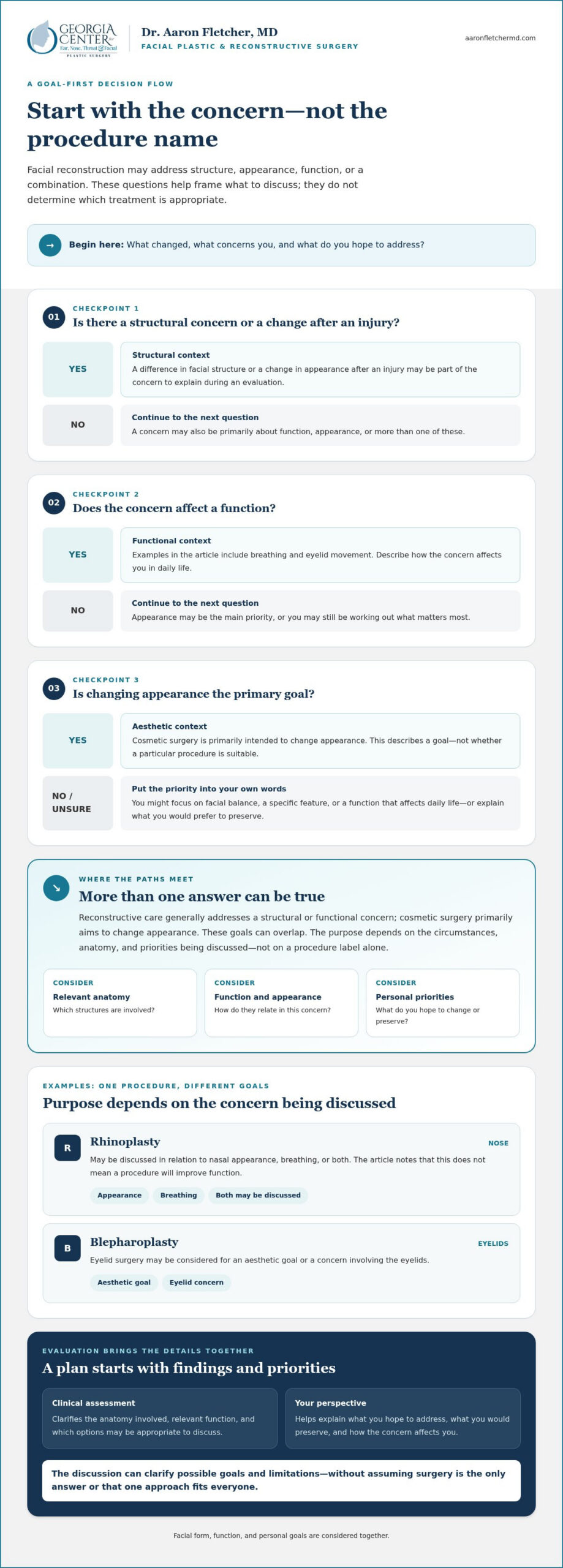
Facial reconstruction can involve different procedures depending on a person’s anatomy, concerns, and goals. Some focus on restoring or improving function or facial structure; others are primarily intended to change appearance. The distinction can depend on the circumstances. Understanding the goal of care is a useful first step, before deciding whether a particular procedure is worth discussing.
This article explains concerns facial reconstruction may address, how surgeons consider facial structure and function when planning care, and what to discuss in a consultation. You’ll also learn how procedures such as rhinoplasty, blepharoplasty, and otoplasty may fit into facial plastic and reconstructive surgery. Dr. Aaron Fletcher is a board-certified otolaryngologist and facial plastic surgeon with nearly a decade of surgical experience. His practice offers facial plastic and reconstructive procedures, including rhinoplasty, blepharoplasty, and otoplasty, alongside ENT care. The goal is to help you approach a next step with clearer questions and a better understanding of your options.
Key Takeaways
- Facial reconstruction surgery can address concerns involving facial structure, appearance, function, or a combination of these.
- An individualized assessment of facial anatomy and functions such as breathing or eyelid movement can inform planning.
- Reconstructive and aesthetic goals may differ, but they can also overlap in the same treatment discussion.
- Prepare for a consultation by organizing your concerns, relevant medical history, prior procedures, and medication information.
- Dr. Aaron Fletcher’s background in otolaryngology and facial plastic surgery informs discussions of facial concerns and goals.
What Is Facial Reconstruction Surgery, and What Can It Address?
Facial reconstruction surgery is not one specific operation. It describes surgical care planned around a concern involving facial form, appearance, function, or a combination of these. The right approach depends on what needs attention and how the relevant structures work together. A procedure’s name alone doesn’t explain its purpose: the same type of surgery may be considered for different goals in different people.
In patient-friendly terms, facial reconstruction surgery is surgery planned to address a facial concern while considering how the face looks, is structured, and functions. This broader view helps explain why the specialty includes a range of procedures and discussions. The Facial Plastic and Reconstructive Surgery Overview describes the breadth of the specialty, though its procedures and concerns don’t necessarily apply to every individual.
Which concerns may lead someone to explore facial reconstruction?
People may seek an evaluation for a difference in facial structure, a change in appearance after an injury, or a concern that affects a function such as breathing or eyelid movement. Sometimes the concern is primarily functional; sometimes appearance is central, or both matter. The starting point is the concern itself, not an assumption that a particular procedure is appropriate.
A clinical evaluation helps clarify the anatomy involved, the effect on daily life, and the goals a person hopes to address. Two people with a similar visible concern may have different underlying anatomy or priorities, so their options may differ. The discussion can help identify which aspects might be addressed surgically and which expectations need further consideration. If an injury changed your facial appearance or function, describe what changed and how it affects you. That information can help frame an evaluation, but it does not by itself determine which treatment is appropriate.
How is reconstruction different from cosmetic surgery?
The distinction usually comes down to the primary goal. Reconstructive care generally aims to address a structural or functional concern, while cosmetic surgery is primarily intended to change appearance. These aims can overlap, and they aren’t fixed labels attached to a procedure. The context, anatomy, and priorities being discussed all matter.
Rhinoplasty, for instance, may be discussed in relation to nasal appearance, breathing, or both. Eyelid surgery, also called blepharoplasty, may be considered for an aesthetic goal or a concern involving the eyelids. Neither procedure is exclusively reconstructive or cosmetic in every case. What matters is why it is being considered and what an evaluation shows.
It’s reasonable to have questions about expression, function, or whether a change will still feel true to you. Sharing those priorities makes the conversation more specific. An evaluation can clarify the concern and goals under consideration without assuming surgery is the only answer or that one approach fits everyone.
How Facial Anatomy and Function Shape a Reconstruction Plan
The face is made up of connected structures, so a concern in one area may involve more than appearance. The nose, for example, contributes to facial proportions and is also involved in breathing. The eyelids frame the eyes and move to protect them. A thoughtful assessment considers relevant anatomy and function together rather than treating a visible feature in isolation.
A sound reconstruction plan considers how facial form and function relate, then weighs those clinical findings alongside the patient’s priorities. Your goals matter, but they are one part of planning. An examination helps clarify which structures are involved and what options may be appropriate to discuss. MedlinePlus offers general background on the scope of head and face reconstruction, while an individual evaluation focuses on the person’s own anatomy and concerns.
Why function and appearance may need to be considered together
A person may notice a change in facial appearance and also have a functional concern, or may have one priority more than the other. Nasal structure illustrates how these aspects can intersect: it contributes to the face’s overall profile and is part of the passage involved in breathing. This doesn’t mean that a procedure will improve function. It shows why the concern needs to be understood in context.
In a clinical discussion, the surgeon considers the findings and hears what the patient hopes to address. The conversation can cover which goals may be relevant to treatment, what limitations may apply, and how appearance-related priorities relate to function. Clear expectations matter. A plan should reflect the evaluation, not assume that changing one feature will resolve every concern.
How personal goals inform treatment planning
Before discussing options, consider what you hope to change and what you would prefer to preserve. Describe the concern in practical terms: is your main focus facial balance, a specific feature, or a function that affects daily life? These priorities give the discussion direction, while the clinical assessment helps establish what is feasible to consider.
Facial balance is individual. The same feature can look and function differently in the context of different facial structures, so planning should take your proportions and distinctive features into account. Rather than aiming for a standard appearance, the discussion can clarify possible changes and trade-offs. No plan can guarantee a particular result, so ask questions until the options and limitations are clear.
- Describe the concern that matters most to you.
- Share any functional issues you’ve noticed, such as breathing or eyelid movement concerns.
- Explain which features or aspects of your appearance you want to preserve.
If you’re considering facial reconstruction surgery, you can discuss your facial concerns and goals as part of a conversation about anatomy, function, and possible next steps.
How Reconstructive and Facial Plastic Procedures Differ
The distinction between reconstructive and aesthetic surgery often comes down to the main goal. Reconstructive care focuses on a structural or functional concern; aesthetic care focuses primarily on a desired change in appearance. These aims can overlap, and a procedure’s name alone doesn’t determine which goal matters in a particular case. The American Academy of Facial Plastic and Reconstructive Surgery provides broader information about the specialty and its procedures.
| Discussion point | Reconstructive emphasis | Aesthetic emphasis |
|---|---|---|
| Primary goal | Address a structural or functional concern. | Change an aspect of appearance. |
| Concerns discussed | How facial structure relates to a concern or function. | Which features the patient hopes to change or preserve. |
| Example procedure categories | Rhinoplasty or eyelid surgery, depending on the individual concern. | Rhinoplasty, eyelid surgery, otoplasty, or facial contouring, depending on personal goals. |
This is a framework for understanding goals, not a rigid classification or a recommendation. An evaluation considers the person’s concerns and clinical findings. The American Academy of Facial Plastic and Reconstructive Surgery also offers general information about facial plastic surgery; an individual treatment discussion is shaped by the patient’s circumstances.
Which facial procedures may be discussed?
Rhinoplasty, blepharoplasty, otoplasty, and facial contouring are distinct procedure categories, not interchangeable versions of reconstruction. Facial contouring may involve procedures such as cheek or chin augmentation. Which category is relevant depends on the concern and goals under discussion. Dr. Fletcher’s facial plastic surgery services include rhinoplasty, blepharoplasty, otoplasty, cheek augmentation, and chin augmentation. For an overview focused on nasal surgery, explore this rhinoplasty guide.
When may more than one goal be part of the discussion?
A patient may have both an appearance-related priority and a functional concern, or may want to focus on only one. Describe each concern separately, then clarify which matters most and what should be preserved. This helps organize the conversation without presuming a particular operation or outcome. For questions centered on the eyelids, the blepharoplasty guide provides procedure-specific context.
For example, someone considering a change to the nose can explain whether their priority is appearance, function, or both. That distinction guides discussion, but it doesn’t establish what treatment may be suitable. Similarly, eyelid concerns can be described in terms of the feature a person wants to address and any functional issues they have noticed. An individualized assessment helps put these priorities in context.
In short, facial reconstruction surgery and other facial plastic procedures are best understood through the purpose of care, rather than labels alone. Clear priorities help patients and surgeons discuss which goals may be addressed, which may not align, and what questions deserve attention before a decision is made.
What to Discuss Before Deciding on Facial Reconstruction Surgery
A consultation is a chance to describe what concerns you, understand what the clinical assessment shows, and consider whether a proposed approach aligns with your priorities. You don’t need to arrive with a procedure already chosen. A little preparation can help focus the conversation and leave you with a clearer sense of possible next steps.
Before deciding on facial reconstruction surgery, organize what you want the surgeon to understand. Then use the discussion to review options, benefits, limitations, risks, and alternatives. Recommendations depend on an examination and your individual clinical circumstances, so ask questions throughout the process.
How can you prepare for a consultation?
Start with your own experience. Note the concern, how it affects you, and what you hope might change. Include what you want to preserve, such as a feature, expression, or aspect of function. A clear description of your priorities can help distinguish your goals from assumptions about what a procedure might accomplish.
Bring relevant medical history, information about prior procedures, and an up-to-date list of medications. If you have questions or find it difficult to explain what you mean, write them down in advance. You may find it helpful to group your notes under three headings: the concern, its impact on daily life, and the changes you hope to discuss. This creates a useful starting point without limiting the conversation to a predetermined solution.
Which questions can help clarify a proposed plan?
Ask for a plain-language explanation of the recommendation and how it relates to the findings from your examination. You can also ask what the proposed procedure is intended to address, what it cannot change, and whether there are alternatives to consider. Understanding these points can help set realistic expectations and show where your goals and the clinical plan align.
- What concern is this approach intended to address?
- What are its potential benefits, limitations, and risks in my circumstances?
- What alternatives are available, including no surgery at this time?
- What recovery expectations should I plan for, and what factors could affect them?
- What follow-up care is involved, and whom should I contact with questions?
These questions aren’t a test, and you don’t need to cover everything at once. If an answer is unclear, ask for clarification or note it for follow-up. Recovery expectations should be discussed in relation to the specific procedure and your health, rather than relying on a general timeline.
A considered decision can take time. You should understand the purpose of a recommendation, the uncertainties and trade-offs involved, and how it relates to what you hope to change or preserve. If you’re ready to discuss your concerns and possible next steps, schedule a consultation with Dr. Aaron Fletcher.
Facial Reconstruction Care With Dr. Aaron Fletcher: Understanding Your Next Step
General information can help you understand facial reconstruction surgery, but it can’t determine which options may suit your circumstances. That requires a conversation grounded in your concerns, an examination, and your priorities. A consultation is an opportunity to bring those pieces together, clarify what matters most to you, and discuss whether a surgical approach is appropriate to consider.
Dr. Aaron Fletcher is a board-certified otolaryngologist and facial plastic surgeon with nearly a decade of surgical experience. His practice provides facial plastic and reconstructive surgery as well as ENT care. This background brings facial structure and appearance into the discussion alongside relevant functional concerns, with recommendations based on an individual assessment rather than general assumptions.
How an ENT and facial plastic surgery perspective informs discussion
Facial features and their functions can be closely related. A concern involving the nose, for example, may prompt questions about both facial appearance and breathing. An ENT perspective can inform how relevant functional concerns are understood, while facial plastic surgery expertise supports discussion of the face’s structure and appearance. Neither perspective replaces an individualized examination.
The goal is not to presume that every concern calls for surgery or that one procedure can address several priorities. Instead, a careful conversation can clarify what the examination shows, which goals are relevant to discuss, and what limitations may apply. Your own experience matters too: explaining what you notice and what you hope to preserve gives the discussion important context.
What is a reasonable next step?
Use educational information as a starting point, not a substitute for an assessment. Before drawing conclusions about suitability, consider whether you’re ready to talk through the concern, its effect on your life, and the questions you still have. Recommendations depend on clinical evaluation, including your anatomy and relevant functional considerations. A consultation can help distinguish what is known from what needs further discussion, without requiring you to decide on a procedure in advance.
You can use that conversation to understand the reasoning behind a recommendation and how it relates to your priorities. If surgery is discussed, make sure you understand its intended purpose, relevant limitations, and the considerations involved in deciding whether to proceed. Taking time to reflect is a reasonable part of the process.
If you’re ready to begin an individualized conversation about your concerns and goals, Explore care with Dr. Aaron Fletcher.
Take the Next Step at Your Own Pace
Considering facial reconstruction surgery doesn’t mean you need every answer before speaking with a surgeon. A thoughtful next step can simply be a conversation that helps you understand your concern more clearly and decide what information you still need. Take time to reflect on the discussion, weigh the options, and consider whether they align with what matters to you.
Dr. Aaron Fletcher’s practice provides facial plastic surgery and ENT care. An individualized discussion can connect your questions with your priorities and clinical evaluation, without requiring you to make a decision before you feel ready.
If you’d like to explore that conversation, explore care with Dr. Aaron Fletcher. A clear next step can help you move forward with greater understanding.
Frequently Asked Questions
What is facial reconstruction surgery?
Facial reconstruction surgery is a broad category of procedures that may address facial structure, appearance, function, or a combination of these concerns. The term doesn’t refer to one specific operation. For example, someone may want to discuss a structural concern that affects how a facial feature looks or works. The appropriate approach depends on individual clinical findings and goals, which can be explored during an examination and consultation.
Can facial reconstruction surgery improve both appearance and function?
Some treatment discussions include both appearance and function, but the type and degree of change depend on the procedure and the person. For example, a concern involving nasal structure may raise questions about both facial appearance and breathing. That doesn’t establish that a particular procedure will improve either. An individualized assessment can clarify what a proposed treatment is intended to address, its limitations, and what alternatives may be appropriate to discuss.
Is facial reconstruction surgery the same as cosmetic surgery?
Not exactly. Reconstructive procedures generally focus on a structural or functional concern, while cosmetic procedures are primarily pursued to change appearance. In practice, goals can overlap, and a procedure’s label alone doesn’t establish what a person needs. Consider what concerns you, what an examination shows, and which goals are discussed with the surgeon. Those details provide more useful context than trying to classify a procedure in isolation.
How long does facial reconstruction surgery take?
There isn’t one standard duration for facial reconstruction surgery. Operating time depends on the specific procedure, its scope, and individual circumstances, so a general estimate may not apply to your plan. During consultation, ask what schedule is anticipated for the proposed treatment and what factors could affect it. You can also clarify what the planned day involves, including any preparation or monitoring relevant to your procedure.
Is facial reconstruction surgery painful?
Discomfort and recovery experiences vary by procedure and individual factors, so no single description applies to everyone. Ask the surgeon what symptoms are commonly expected with the specific operation being discussed and what instructions will guide pain management. Your care team can explain how to follow those directions and when to seek guidance about a concern. It’s helpful to discuss pain openly rather than assume the experience will be pain-free or identical to someone else’s.
Does facial reconstruction surgery leave visible scars?
Scarring can vary with the procedure, incision placement, individual anatomy, and healing. The visibility of a scar can’t be guaranteed in advance, and it’s best not to assume an incision will be imperceptible. During consultation, ask where incisions may be placed for the proposed treatment, what scar care involves, and what appearance is realistic to expect as healing progresses. The surgeon can address these questions in relation to your specific plan.
How do I know whether facial reconstruction surgery is right for me?
Only an individualized clinical evaluation can help determine whether a procedure may be appropriate to consider. The discussion may account for your concern, medical history, examination findings, goals, and alternatives, along with potential risks and benefits. Online information can help you prepare, but it can’t determine candidacy. Bring relevant history and questions to a consultation, and ask what a proposed plan may address, what it may not, and why it is being considered.