
A receding chin isn’t always a concern that can be addressed by adding volume alone. How to fix a receding chin depends on whether its appearance comes from the lower jaw’s position, the chin bone’s shape, or the surrounding soft tissue. Dermal fillers can add projection and refine contour, but they don’t change jaw position. Structural concerns may call for surgical treatment.
If your chin feels out of balance with the rest of your face, it’s natural to want to understand what may be causing the difference and which options fit your needs. This article explains how jaw position and soft tissue affect chin appearance, how clinicians assess a receding chin, and what to expect from filler-based augmentation. It also clarifies when a contour change may be enough and when the underlying structure matters, so you can distinguish added definition from a change to the jaw itself.
Key Takeaways
- A recessed chin can reflect jaw position, bone structure, or soft tissue, so identifying the cause helps clarify which options may address it.
- Chin projection contributes to facial balance, while jaw-related concerns can also affect functions such as chewing or breathing.
- Dermal fillers can add chin projection and refine contour, but they don’t change underlying jaw structure; results typically last several months to a year.
- A physical examination and, when needed, imaging can help distinguish an aesthetic concern from a jaw or bite issue and guide the next steps.
Definition and causes of a receding chin
A receding chin may reflect the position of the mandible, or lower jawbone, or the soft tissue over it. Retrognathia describes a lower jaw that sits farther back than the upper jaw. It may be congenital or acquired and can involve bone structure, soft tissue, or both. Angle’s Class II malocclusion may also occur alongside a recessed chin, although appearance alone cannot establish a bite diagnosis.
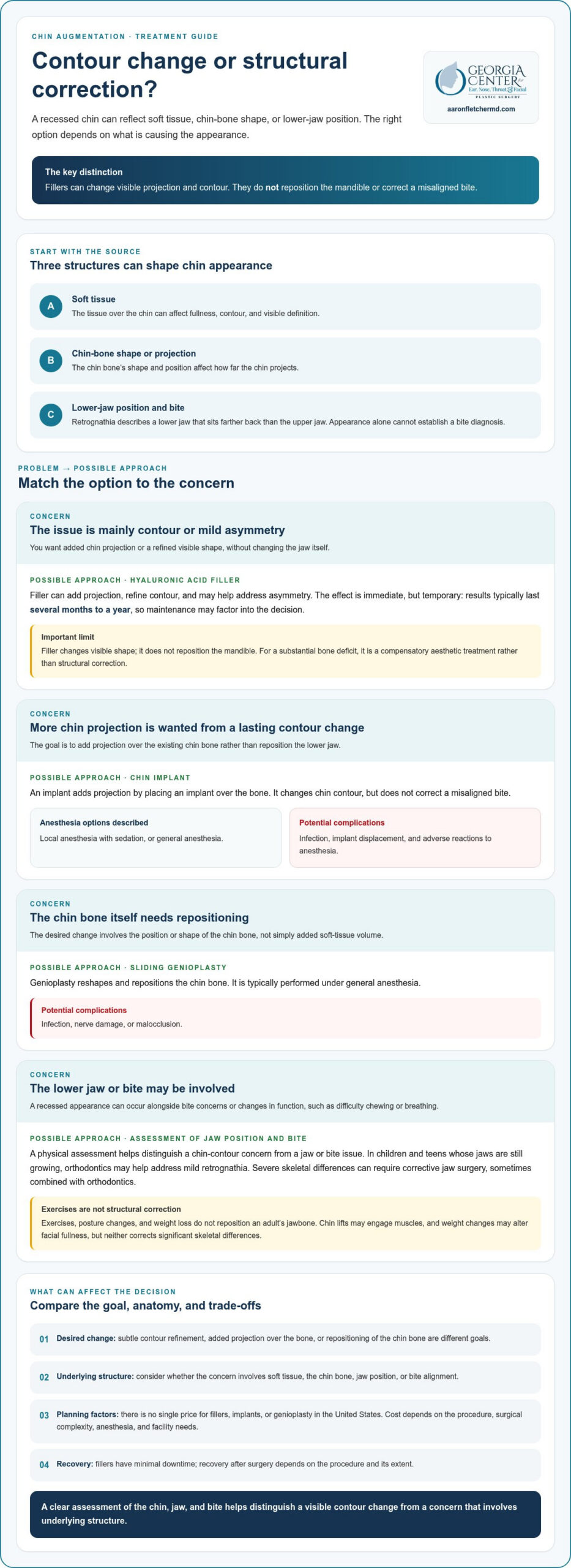
Exercises, posture changes, and weight loss don’t reposition an adult’s jawbone. Chin lifts may engage muscles, and weight changes can alter facial fullness, but neither corrects significant skeletal differences. For example, when the lower jaw sits behind the upper jaw, an assessment of jaw position is more relevant than an exercise routine alone.
Orthodontics can help address mild retrognathia in children and teens while their jaws are still growing. Specialized practices such as Fun Valley Kids Dental Group utilize braces or functional appliances to guide bite and jaw development, while severe skeletal differences can require corrective jaw surgery. Treatment may combine orthodontics and surgery, depending on whether the main concern is dental alignment or jaw structure.
Sliding genioplasty reshapes and repositions the chin bone, while a chin implant adds projection by placing an implant over the bone. Genioplasty is typically performed under general anesthesia. Because the procedures change projection in different ways, the underlying bone position and desired contour help determine which approach is relevant.
Chin implant surgery adds projection by placing an implant. It may be performed with local anesthesia and sedation or with general anesthesia. Possible complications include infection, implant displacement, and adverse reactions to anesthesia. The procedure changes chin contour rather than correcting a misaligned bite.
To choose a surgeon in the United States, focus on relevant experience with chin and facial skeletal procedures. Discuss whether the finding involves the chin alone or the bite and jaw, and ask how the proposed procedure addresses that specific anatomy. A clear explanation of alternatives, surgical risks, and expected changes helps you compare the plan with your goals.
Facial balance and self-confidence
The chin defines part of the lower face and influences how the profile appears alongside the nose and lips. A chin that sits farther back, for example, may make the nose appear more prominent even when its size has not changed. From the front, asymmetry or a retrusive contour may be more noticeable than in profile. Facial balance depends on how features relate, not on one ideal measurement.
Consider what specifically draws your attention: your side-view contour, the way your lips meet, or the relationship between your chin and jawline. These observations help you describe the concern without reducing your face to a single feature. A receding chin may also occur alongside difficulty closing the lips, mouth breathing, or trouble chewing. These functional changes matter because an appearance concern can overlap with jaw function.
Self-confidence is personal. Some people feel self-conscious in photographs or avoid certain camera angles; others notice their chin only after someone comments on it. Neither reaction establishes a medical problem or means treatment is necessary. Consider whether the concern affects daily comfort, facial expression, or social ease, and separate those effects from pressure to match a particular profile.
When considering a change, describe the result you want in practical terms, such as a more defined side profile or better proportion between the chin and lips. Then consider whether the concern is limited to appearance or includes bite, breathing, or jaw symptoms. An assessment of facial proportions can help place chin projection in context with surrounding features and clarify which concerns need further evaluation.
Dermal fillers for chin augmentation
Hyaluronic acid filler can add projection and refine chin contour, with an immediate effect. It may also help address asymmetry. This option changes visible shape, not the mandible’s position. For a substantial bone deficit, aesthetic treatment is compensatory, while surgery addresses the underlying structure. Filler results typically last several months to a year, so maintenance may factor into your decision.
Understanding how to fix a receding chin starts with distinguishing a contour concern from a structural one. The choice between filler, an implant, and genioplasty depends on the change you want. Filler offers temporary contour adjustment without surgery. A chin implant adds projection over the bone, while genioplasty repositions the chin bone. Each approach addresses a different anatomical concern, so it’s important to distinguish soft-tissue contour from skeletal position.
There is no single price for fillers, implants, or genioplasty in the United States. The cost of chin augmentation depends on the case and is provided after a quote request. Factors include the procedure, surgical complexity, anesthesia, and facility needs.
Risks vary by procedure. Chin implants can involve infection, implant displacement, or adverse reactions to anesthesia; genioplasty can involve infection, nerve damage, or malocclusion. Fillers provide immediate results with minimal downtime, while recovery after surgery depends on the procedure and its extent. Your recovery plan should reflect the treatment performed.
Someone seeking subtle contour refinement may consider filler, while someone with a marked skeletal deficit may need to discuss structural options. Neither is a universal fix: filler does not reposition bone, and surgical procedures involve different risks. Deciding how to fix a receding chin means weighing the desired projection, asymmetry, and underlying chin structure before choosing an approach.
How is a receding chin diagnosed, and when should you see a doctor?
A clinician assesses chin position in relation to the upper jaw, lower jaw, and bite. A physical examination can help show whether the chin appears recessed because of bone position, soft tissue, or dental alignment. The evaluation also considers facial proportions from the front and side. A profile photograph may help describe the concern, but it cannot establish the cause on its own.
A bite assessment looks at how the upper and lower teeth meet. A cephalometric X-ray may help measure the relationship between the jaws. Clinicians can also evaluate stomatognathic function, including chewing, swallowing, and other coordinated mouth and jaw movements. A recessed-looking chin with an uneven bite, for example, calls for a different assessment than an isolated contour concern.
Arrange an evaluation if you have trouble biting, chewing, or swallowing, or difficulty closing your lips comfortably. Jaw pain, mouth breathing, snoring, or speech changes can also accompany retrognathia. These symptoms help clarify whether the concern involves function as well as appearance. Note when they occur, such as during meals or sleep, so you can describe the pattern clearly.
For a child or teen, early assessment matters because orthodontic appliances can guide jaw development while growth continues. Mild retrognathia may respond to orthodontic treatment, while a more pronounced skeletal difference can require further evaluation. Jaw growth usually ends between ages 14 and 18, so age and bite development influence which treatments may be considered. Adults with persistent functional symptoms also benefit from a structured assessment.
Bring specific examples to an appointment: difficulty biting into food, recurring jaw discomfort, or trouble keeping the lips closed at rest. Those details, combined with examination and imaging, help distinguish a cosmetic concern from a bite or jaw-function issue. Schedule an evaluation of your facial concerns to discuss your symptoms and treatment goals.
Dr. Aaron Fletcher, MD: Facelift
Dr. Aaron Fletcher, MD offers facelifts for patients concerned with facial aging and lower-face skin laxity. A facelift addresses facial tissues, not a recessed jawbone, so it isn’t a permanent correction for skeletal chin position. Understanding this distinction helps match the procedure to your concern rather than expecting one treatment to change unrelated anatomy.
If your priority is chin projection, use your assessment findings to discuss options that address the chin itself. If loose facial tissue also affects your appearance, a facelift may be relevant as part of broader facial planning. Dr. Aaron Fletcher, MD can help you understand how facial procedures relate to your goals.
Contact Dr. Aaron Fletcher, MD to discuss your facial concerns and possible next steps.
Choose a next step that fits your goals
Deciding how to fix a receding chin starts with identifying the change you want and ensuring the proposed approach addresses it. Bring your questions about chin projection, facial proportions, and treatment trade-offs to a focused clinical discussion. This can help distinguish a chin-specific goal from broader concerns about facial appearance.
Dr. Aaron Fletcher, MD offers chin augmentation, as well as facelifts, blepharoplasty, and rhinoplasty. These procedures address different areas and concerns, so a conversation can clarify which treatment relates to your priorities rather than assuming one option will address everything. Ask how a procedure relates to your anatomy and what considerations shape the plan.
Contact Dr. Aaron Fletcher, MD to discuss your goals and explore a considered next step. Clear information can make it easier to move forward with confidence.
Frequently Asked Questions
What Is a Receding Chin?
A receding chin appears set back in relation to the rest of the face. Its appearance may relate to jaw position, chin bone shape, or soft tissue, so a mirror or photograph cannot identify the cause by itself. A side-profile concern without bite problems, for example, may differ from a recessed chin accompanied by difficulty chewing.
What can I expect if I have this condition?
Your experience depends on whether the concern is mainly about appearance or also affects function. Some people notice profile balance or difficulty closing their lips; others have challenges with biting, chewing, swallowing, breathing, or speech. These effects don’t occur in every case. Tracking when a symptom appears, such as during meals or sleep, can help you explain its impact during an assessment.
What is retrognathia?
Retrognathia describes a lower jaw positioned farther back than the upper jaw. The term refers to jaw position, not simply a chin that looks small in a photograph. A clinician considers how the jaws relate and how the bite functions. Someone may have a recessed-looking chin, for instance, without the same jaw relationship as a person diagnosed with retrognathia.
What questions should I ask my doctor?
Ask what may be causing your chin’s position and whether your bite or jaw function is involved. You can also ask what an examination or cephalometric X-ray may clarify, which options address the underlying concern, and what trade-offs each involves. If chewing, breathing, or speech is affected, describe a specific example and ask how that symptom relates to your jaw assessment.
What’s the difference between retrognathia, micrognathia and overbite?
Retrognathia refers to a lower jaw positioned back relative to the upper jaw. Micrognathia describes a jaw that is smaller than expected, while an overbite describes how the upper teeth overlap the lower teeth. These terms refer to different features, though they can occur together. A dental and jaw assessment can distinguish tooth alignment from jaw size or position.
What causes a receding chin or weak chin?
A recessed chin may be congenital or acquired, and the difference can involve the mandible’s bone structure, soft tissue, or both. Genetics may contribute, particularly when jaw shape runs in a family. A less prominent chin can also occur alongside a bite relationship such as Angle’s Class II malocclusion. Identifying the underlying feature helps distinguish jaw structure from visible contour.