
What if the most critical phase of your surgical journey isn’t the procedure itself, but the meticulous biological management of your recovery? You’ve likely spent mornings examining your reflection, perhaps feeling a quiet anxiety about the persistent fullness in the nasal tip or wondering how to reduce swelling after rhinoplasty to finally see your true profile. It’s entirely natural to feel impatient when your results remain obscured by the body’s inflammatory response, especially when nasal congestion makes the initial weeks feel particularly taxing.
This guide serves as your clinical roadmap, offering a professional perspective on accelerating the healing process through evidence-based strategies. We’ll move beyond basic post-operative care to master the lifestyle and medical protocols that support structural integrity and tissue resolution. By understanding the week-by-week recovery timeline and implementing proven anti-inflammatory methods, you can navigate this transition with confidence. We will explore everything from elevation techniques to specialized dietary considerations, ensuring you have the expertise needed to reveal your refined results with clarity and precision.
Key Takeaways
- Identify why the initial 72 hours represent a critical window for minimizing peak inflammation through precise head elevation protocols.
- Master the dietary adjustments, including sodium restriction and electrolyte balancing, that directly influence how to reduce swelling after rhinoplasty.
- Gain a clear understanding of the “gravity effect” and why nasal tip swelling often persists longer than the bridge during your long-term recovery.
- Learn to recognize when professional interventions, such as therapeutic steroid injections or lymphatic massage, can help resolve stubborn localized edema.
Understanding Post-Rhinoplasty Edema: The Physiology of Nasal Swelling
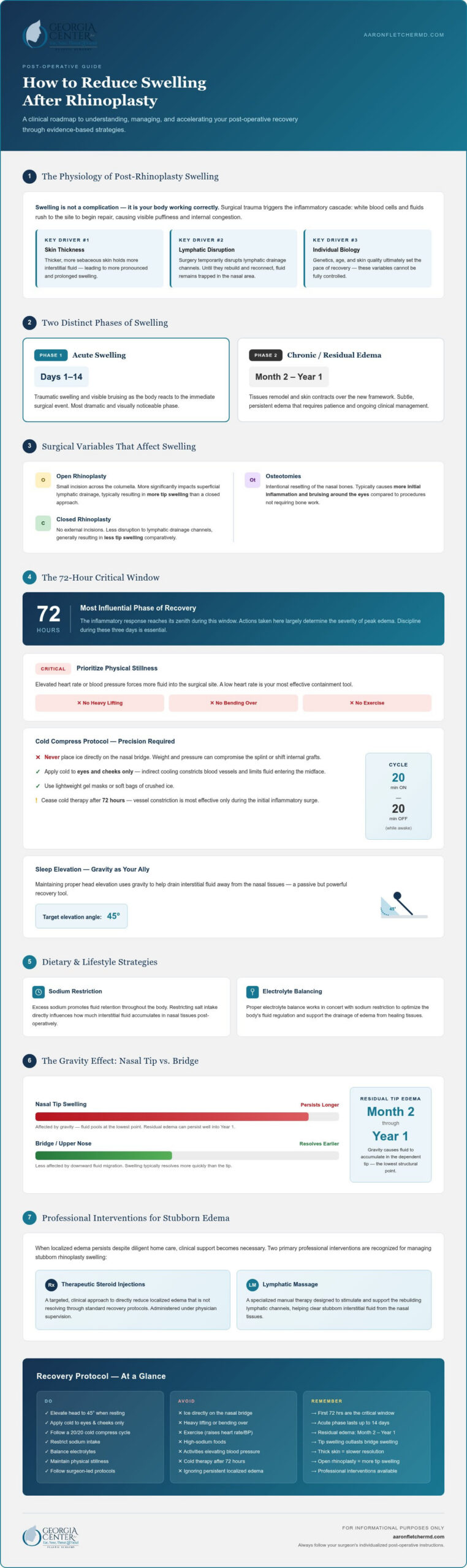
Swelling is not a sign that something has gone wrong; it’s a sign that your body is working exactly as it should. When nasal tissues undergo surgical trauma, the body initiates a complex biological response known as the inflammatory cascade. This process begins the moment the first incision is made. Your immune system dispatches white blood cells and specialized fluids to the site to begin the repair process. This influx of fluid causes the tissues to expand, leading to the visible puffiness and internal congestion that define the early stages of recovery.
The thickness of your skin envelope plays a significant role in how this fluid is managed. Patients with thicker, more sebaceous skin often experience more pronounced and prolonged swelling because these tissues have a greater capacity to hold interstitial fluid. Additionally, surgery temporarily disrupts the delicate lymphatic system, which is responsible for draining fluid from the midface. Until these microscopic channels rebuild and reconnect, fluid remains trapped in the nasal area, requiring patience and specific clinical protocols to manage effectively.
Acute vs. Chronic Swelling
Recovery is divided into two distinct phases of fluid management. The acute phase occurs within the first 14 days, characterized by traumatic swelling and visible bruising as the body reacts to the immediate surgical event. Chronic swelling, or residual edema, persists from month two through the first year as tissues remodel and the skin contracts over the new framework. Edema in the context of rhinoplasty is the localized accumulation of interstitial fluid within the nasal tissues as a direct physiological response to surgical manipulation and structural adjustment.
Factors Influencing Your Swelling Timeline
Several surgical variables dictate the intensity of your inflammatory response. An open rhinoplasty, which involves a small incision across the columella, typically results in more tip swelling than a closed approach because it more significantly impacts the superficial lymphatic drainage. If your procedure required osteotomies, the intentional “breaking” or resetting of the nasal bones, you’ll likely see more initial inflammation and bruising around the eyes. While you may seek advice on rhinoplasty recovery and swelling to speed things up, individual variables like genetics, age, and skin quality ultimately set the pace. Understanding how to reduce swelling after rhinoplasty requires acknowledging these biological constraints while following a methodical, surgeon-led plan to support the body’s natural drainage cycles.
The 72-Hour Critical Window: Immediate Steps to Minimize Inflammation
The first 72 hours after your surgery represent the most influential phase of your recovery. During this period, the inflammatory response reaches its zenith, and the actions you take will largely determine the severity of your peak edema. Adhering to strict nose reshaping surgery recovery guidelines is essential for managing this initial surge. If you want to know how to reduce swelling after rhinoplasty, you must be disciplined during this window.
You must prioritize physical stillness. Any activity that elevates your heart rate or blood pressure can exacerbate swelling by forcing more fluid into the surgical site. This means no heavy lifting, no bending over, and certainly no exercise. Maintaining a low heart rate is your most effective tool for containment during these three days. Even small spikes in blood pressure can lead to increased puffiness or minor bleeding that delays the healing process.
The Proper Way to Use Cold Compresses
Precision is key when applying cold therapy. You should never place ice or cold packs directly on the bridge of the nose. The weight and pressure can compromise the nasal splint or shift internal grafts. Instead, focus on the eyes and cheeks. This indirect cooling constricts blood vessels and limits the volume of fluid entering the midface.
- Follow a cycle of 20 minutes on and 20 minutes off while you’re awake.
- Use lightweight gel masks or soft bags of crushed ice.
- Cease cold therapy after 72 hours, as its ability to constrict vessels is most effective during the initial inflammatory surge.
Sleep Hygiene and Positioning
Gravity is an essential ally in your recovery. To understand how to reduce swelling after rhinoplasty, you must master the art of elevated rest. Maintaining a constant 45-degree angle ensures that lymphatic fluid drains away from the face rather than pooling in the nasal tissues. Using a recliner is often more effective than stacked pillows because it prevents you from rolling onto your side or stomach during the night.
Keeping your head consistently above the level of your heart is a non-negotiable requirement for the first week. While physical positioning is vital, don’t overlook sleep quality. Your body performs its most intensive cellular repair during deep sleep cycles. If you’re struggling with positioning or comfort, discussing your recovery environment with Dr. Aaron Fletcher can provide the reassurance and clinical guidance needed for a smoother transition.
Dietary and Lifestyle Strategies for Accelerated Healing
While physical positioning is vital, your internal biochemistry dictates the speed of fluid resolution. High sodium intake is a primary contributor to persistent nasal puffiness because salt encourages the body to hold onto water within the tissues. By strictly limiting sodium for the first two weeks, you create a physiological environment conducive to drainage and learn how to reduce swelling after rhinoplasty from the inside out. Conversely, maintaining high hydration levels facilitates a “flush” effect. It might seem counterintuitive to drink more water when you feel swollen, but proper hydration helps balance electrolytes and encourages the lymphatic system to move trapped fluid more efficiently.
You must also be mindful of substances that act as vasodilators. Caffeine, alcohol, and spicy foods can cause blood vessels to expand; this increases the volume of blood and fluid reaching the midface. Pausing these for at least 10 to 14 days is a subtle but effective way to manage inflammation. This meticulous approach to your lifestyle ensures that you aren’t inadvertently working against your recovery goals. Each choice you make at the dinner table serves as a building block for your new profile.
The Anti-Inflammatory Post-Op Diet
Your body requires specific building blocks to repair the nasal framework and skin envelope. Focus on high-protein, low-sodium options like Greek yogurt, eggs, or lean poultry to support tissue synthesis. Incorporating fresh pineapple is beneficial because it contains natural Bromelain, an enzyme that assists in reducing swelling. We recommend sticking to soft foods during the first week to minimize the movement of facial muscles around the incision sites. This reduces mechanical stress on the healing tissues and keeps the inflammatory response localized.
Supplements: Clinical vs. Anecdotal Evidence
Many patients ask about botanical aids to support their journey. Arnica Montana is frequently utilized to reduce ecchymosis, the clinical term for bruising, alongside general swelling. Bromelain supplements offer a concentrated enzyme-based approach to breaking down the proteins that contribute to inflammation. While these can be powerful tools in understanding how to reduce swelling after rhinoplasty, you must clear all supplements with your surgical team. Some natural products can interfere with blood clotting or interact with prescribed medications; professional oversight is essential for your safety.
Navigating the Long-Term Recovery Timeline: Managing Persistent Tip Swelling
Transitioning from the acute phase into the long-term healing process requires a shift in perspective. While the bridge of the nose often reveals its new contour relatively quickly, the nasal tip remains the final frontier of resolution. This is largely due to the “Gravity Effect,” where interstitial fluid naturally settles in the lowest point of the nasal structure as it drains from the midface. Understanding how to reduce swelling after rhinoplasty during these later months is less about cold compresses and more about patience and consistent mechanical support.
Between months three and six, many patients enter what’s often called the “awkward phase.” During this time, the nose may actually look larger or less defined than it did immediately after the cast removal. This is a normal part of the tissue remodeling process. For a deeper look at how these structural changes align with your aesthetic goals, you may find our guide on Rhinoplasty Mastery: Balancing Form and Function particularly insightful.
Why the Tip is the Last to Heal
The lower third of the nose possesses a unique anatomical profile that complicates fluid drainage. The skin here is often denser and more sebaceous, meaning it has a higher capacity for retention than the thinner skin over the bridge. Additionally, the blood supply and lymphatic channels in the tip are more easily disrupted and slower to reform. Recognizing this allows you to manage the psychological journey of the 12-month reveal. It’s helpful to remember that a lack of definition at month four isn’t indicative of your final result.
Compression and Taping Protocols
Nighttime nasal taping is a highly effective clinical strategy to manage persistent edema. This technique provides gentle, consistent mechanical compression, which encourages the skin envelope to “shrink-wrap” more precisely to the underlying cartilage and bone framework. When you learn how to reduce swelling after rhinoplasty through taping, you’re essentially providing the external support your lymphatic system needs during the night.
- Apply medical-grade paper tape across the supratip area to prevent fluid from pooling while you sleep.
- Ensure the tape is snug enough to provide pressure but not so tight that it distorts the tip’s position or pinches the skin.
- Transition from constant support to nighttime-only taping as the skin begins to stabilize, typically around the three-month mark.
Mastering these long-term habits is the key to seeing your final profile sooner. If you have concerns about your specific healing timeline or the symmetry of your results, schedule a consultation with Dr. Aaron Fletcher to ensure your recovery is progressing with the precision your procedure deserves.
Professional Interventions: When Clinical Support is Necessary
While the majority of fluid resolution occurs through the body’s natural healing processes and diligent home care, some patients require specialized clinical interventions to achieve their final aesthetic goals. Your surgeon possesses a range of professional tools designed to address stubborn edema that doesn’t respond to elevation or dietary changes alone. Understanding how to reduce swelling after rhinoplasty at this stage involves a partnership with your clinical team to ensure the skin envelope settles precisely over the underlying framework. For those curious about how these timelines compare to other facial procedures, you can explore our guide on Understanding the Facelift Recovery Timeline to see the commonalities in midface tissue resolution.
One effective professional method is manual lymphatic drainage or specialized lymphatic massage. This technique utilizes light, rhythmic pressure to encourage the movement of lymph fluid away from the nasal tissues and toward the functional drainage sites in the neck. Unlike standard massage, this approach is highly specific and should only be performed by a professional trained in post-surgical care. By manually clearing the “logjam” of fluid, these sessions can noticeably refine the nasal contours during the mid-stages of recovery.
The Role of Corticosteroid Injections
In cases where localized swelling persists, particularly in the “supratip break” area just above the nasal tip, your surgeon might recommend a targeted corticosteroid injection, such as Kenalog. These injections are powerful tools for managing the body’s inflammatory response and preventing the formation of dense scar tissue. If the skin envelope remains too thick for too long, the body may deposit collagen in a way that creates a permanent fullness. By injecting a small, precise amount of steroid, we can thin the subcutaneous tissue and encourage a more refined definition.
Timing is critical for these interventions. We typically wait until the third or fourth month of recovery to allow the initial traumatic edema to subside naturally. While highly effective, steroid injections carry risks such as skin thinning or pigment changes, which is why they must be administered with meticulous precision by an expert who understands the internal nasal architecture. This isn’t a standard part of every journey, but it’s a valuable option for patients with thicker skin or a history of prolonged inflammation.
Warning Signs: When to Contact Your Surgeon
It’s vital to distinguish between normal, fluctuating edema and genuine surgical complications. While you’re focused on how to reduce swelling after rhinoplasty, you must remain vigilant for “red flags” that require immediate attention. Normal swelling is typically symmetrical and slowly improves over time. If you experience a sudden, painful increase in swelling on only one side of the nose, it could indicate a hematoma or a localized infection.
- Monitor for any fever or chills, which are systemic signs of infection.
- Watch for unusual redness, heat, or skin tenderness that spreads beyond the immediate surgical site.
- Ensure you’re adhering to every appointment on your rhinoplasty recovery follow-up calendar.
These scheduled visits allow your surgeon to monitor the internal structural integrity and the external skin envelope’s progress. Open communication with your surgical team ensures that any deviations from the expected healing path are addressed immediately, preserving both the functional and aesthetic success of your procedure.
Embracing the Journey to Your Final Result
The path to your final profile is a deliberate process of biological resolution and structural refinement. By mastering the immediate 72-hour window and maintaining an anti-inflammatory lifestyle, you gain significant control over your body’s recovery. Patience is your most vital asset. You must navigate the gradual settling of the nasal tip throughout the first year. Understanding how to reduce swelling after rhinoplasty isn’t just about following instructions; it’s about forming a partnership with a surgical team that prioritizes both functional integrity and aesthetic excellence.
Dr. Aaron Fletcher brings nearly a decade of specialized experience. His dual board certification in ENT and Facial Plastic Surgery ensures your recovery is monitored with meticulous detail. We focus on natural-looking outcomes that harmonize with your unique features. You aren’t just a patient. You’re an individual deserving of comprehensive post-operative support and expert guidance at every step of the healing process.
Schedule a consultation with Dr. Aaron Fletcher to discuss your aesthetic goals and take the first step toward a confident, refined new chapter. Your transformation is a journey we’re honored to guide with precision and care.
Frequently Asked Questions
How long does swelling last after rhinoplasty?
Most traumatic swelling resolves within the first two to three weeks, allowing you to return to daily social activities. However, residual edema persists much longer as the delicate tissues remodel. You can expect roughly 90% of the swelling to dissipate within the first three months. The final 10%, which typically concentrates in the nasal tip, may take up to a full year to completely resolve and reveal the final, meticulous surgical refinement you expect.
Can I use a straw after rhinoplasty, or will it increase swelling?
You should avoid using straws for at least the first two weeks following your procedure. The repetitive sucking motion requires significant contraction of the facial muscles around the mouth and nose. This muscular activity can increase blood flow to the surgical site and potentially exacerbate localized swelling or cause minor bleeding. Sticking to open-cup sipping ensures the midface remains as still as possible during the critical early stages of your structural tissue healing.
Will my nose look bigger before it looks smaller?
It is quite common for the nose to appear larger or less defined immediately after the surgical splint is removed. This phenomenon, often called rebound swelling, occurs because the external pressure of the cast is no longer containing the tissue. As the inflammatory cascade continues, the nose may look wider or puffy before the skin begins to shrink-wrap to the new framework. This is a normal, temporary phase that requires patience as the tissues stabilize.
Is it normal for one side of my nose to be more swollen than the other?
Asymmetrical swelling is a standard part of the healing process and rarely indicates an issue with the underlying structure. One side may appear more swollen because of your sleeping position or because more extensive work was performed on that specific side. While you are learning how to reduce swelling after rhinoplasty, remember that symmetry often fluctuates during the first few months. True results only become apparent once the interstitial fluid resolves evenly across the entire nasal envelope.
When can I start exercising again without causing more swelling?
Light walking is encouraged within days, but you must avoid strenuous exercise for three to four weeks. Activities that elevate your heart rate or require bending over increase blood pressure, which forces more fluid into the healing nasal tissues. Resuming heavy lifting or high-impact cardio too early can cause a noticeable surge in swelling and potentially delay your final results. Always consult your surgeon before returning to your full fitness routine to ensure structural stability is maintained.
Does salt intake really affect my nose swelling?
Sodium intake has a direct and measurable impact on the level of edema you experience. Salt encourages the body to retain water within the interstitial spaces of the tissues, which manifests as visible puffiness in the midface. To understand how to reduce swelling after rhinoplasty, you should maintain a low-sodium diet for the first several weeks. Combining salt restriction with high water intake helps flush the system and facilitates a more efficient lymphatic drainage process for your nose.
Can I wear glasses during the swelling phase?
You should avoid resting glasses or sunglasses directly on the bridge of the nose for approximately four to six weeks. The weight of the frames can indent the softened nasal bones or shift the underlying grafts while they are still stabilizing. If you must wear corrective lenses, we recommend taping them to your forehead or using a specialized support device. This precaution ensures the aesthetic refinement of your bridge remains protected during the most vulnerable phase of your recovery.
What happens if I accidentally bump my nose while it is still swollen?
A minor, accidental bump typically causes a temporary spike in swelling and some discomfort but rarely compromises the long-term results. However, because the nasal bones and cartilage are still setting, a significant impact should be reported to your surgeon immediately. We can perform a clinical assessment to ensure the internal structural integrity remains intact. Protecting your nose from pets, small children, and crowded environments is essential during the first few months of your healing journey.