
What if the change that worries you is part of healing, but the breathing problem you’ve noticed needs attention now? Sorting through the signs of a botched nose job can be difficult because swelling, tenderness, and changes in shape may evolve for months after rhinoplasty. It’s understandable to wonder whether what you’re seeing is temporary or a lasting concern, especially when your nose doesn’t look or feel as expected.
A single appearance concern doesn’t necessarily mean something went wrong. The timing of your symptoms, how they’re changing, and whether your nasal function is affected all matter. This article explains which changes may occur during recovery, which symptoms warrant prompt medical evaluation, and when it may help to discuss persistent concerns with your original surgeon or seek another assessment. You’ll also learn how to track symptoms, prepare for an evaluation, and understand why a clinical review considers both nasal structure and breathing.
Key Takeaways
- The phrase “signs of a botched nose job” isn’t a formal diagnosis; concerns may involve appearance, breathing, or both.
- Track whether changes are improving, persisting, or worsening, and note how they affect daily life.
- Record when symptoms began, what has changed, and what seems to affect them before an appointment.
- Know when to seek prompt medical attention and when to arrange routine follow-up.
- A thoughtful assessment considers your history, goals, nasal appearance, and function before discussing possible next steps.
Signs of a Botched Nose Job: What Counts as a Concerning Result?
The phrase “botched nose job” is a common way to describe an outcome that feels wrong, but it isn’t a formal medical diagnosis. A result may be disappointing without a medical complication, and concerns about appearance don’t automatically indicate surgical error. A change in nasal function may deserve attention even if the nose looks as expected. The common risks and complications associated with nasal surgery vary, so a concern needs to be considered in its clinical context.
A useful definition: Persistent or worsening changes in nasal appearance, breathing, or comfort after rhinoplasty warrant clinical assessment, but only an evaluation can determine what they mean. Online checklists and photographs can help you describe a concern, but they can’t diagnose your surgical outcome. Lighting, camera angle, swelling, and the stage of healing can all affect how your nose appears in pictures.
Which appearance changes may warrant an evaluation?
Consider an evaluation if asymmetry, an uneven contour, or an unexpected change in shape persists or becomes more noticeable over time. Early swelling can make the nose look uneven or less defined, and healing may progress gradually. One feature, particularly during recovery, doesn’t prove that something went wrong. The pattern of change and the time since surgery provide important context.
Which breathing or health symptoms deserve attention?
Ongoing or worsening nasal obstruction, or a noticeable change in airflow, is worth discussing with a clinician, particularly if it affects sleep or daily activities. Persistent pain, recurrent bleeding, or unusual discharge also merits medical advice. These symptoms can have different explanations, and none identifies the cause on its own. Note when each symptom began and whether it is changing.
Some concerns involve appearance and function together, while others affect only one. You may be troubled by a persistent contour irregularity but breathe comfortably, or notice airflow changes without a visible difference. Both concerns are worth discussing. A fuller assessment considers nasal structure and function rather than appearance alone.
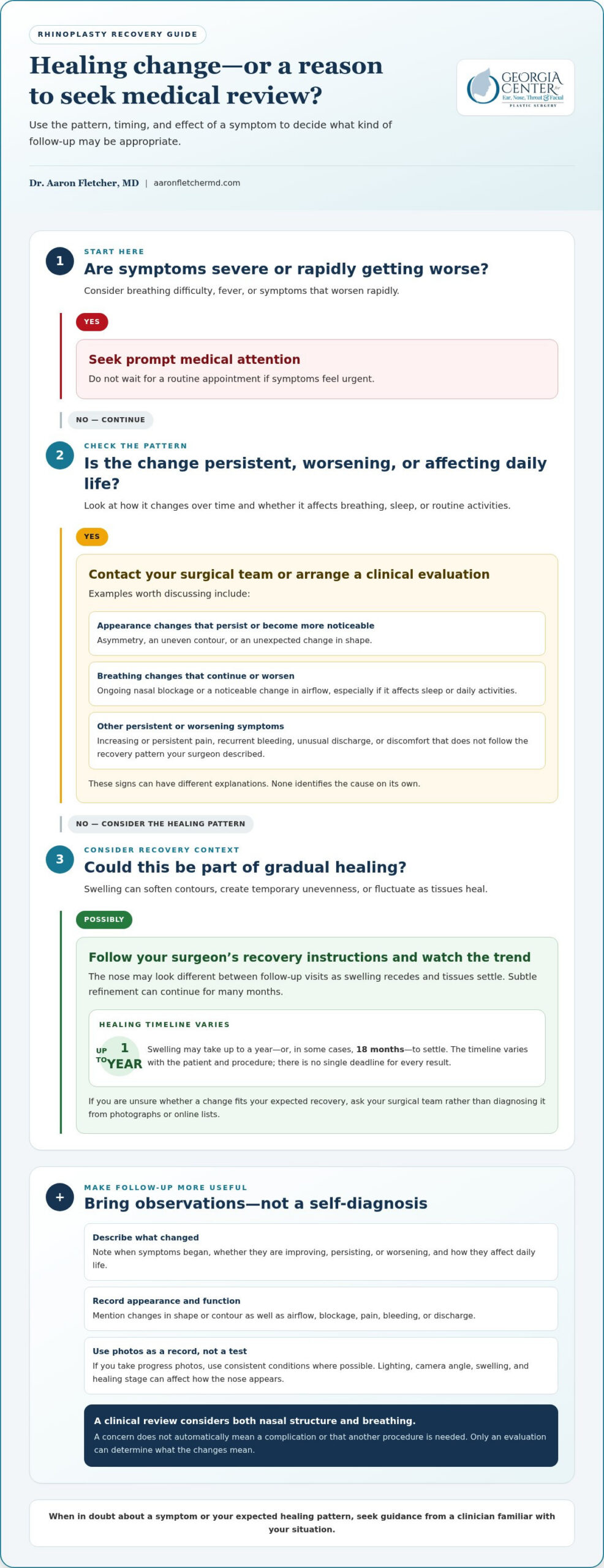
Seek prompt medical attention for severe breathing difficulty, fever, or symptoms that worsen rapidly. For less urgent but persistent concerns, contact your surgical team or arrange a clinical evaluation through a healthcare provider such as Kingsford Medical Services. You don’t need to decide for yourself whether a symptom counts as a complication. Clear details about what has changed can help a clinician assess it appropriately.
Normal Rhinoplasty Healing vs. Signs That May Need Medical Review
Rhinoplasty recovery is gradual, and the nose can look or feel different as tissues heal. Swelling may obscure definition, make one side appear fuller, or fluctuate over time. The shape seen in early photographs may not reflect the eventual result, and subtle refinement can continue for many months. Swelling can take up to a year or, in some cases, 18 months to settle; the timeline varies with the patient and procedure. There isn’t a single deadline that determines when every result is final.
Follow your surgeon’s aftercare and follow-up instructions, which are tailored to your operation and recovery. If you’re unsure whether a change fits your expected healing pattern, ask the surgical team rather than trying to diagnose it from pictures or online lists. The American Society of Plastic Surgeons outlines potential complications of rhinoplasty, but only a clinician familiar with your situation can assess your symptoms.
How does healing affect the appearance of the nose?
Swelling can soften contours and create temporary unevenness. As it recedes, tissues gradually settle, so your nose may look different between follow-up visits. Comparing photographs taken in different lighting or from different angles can be misleading. If you take progress photos, use consistent conditions where possible and share them with your surgeon as a record, not as a diagnostic test.
When is a symptom more concerning than a temporary change?
Consider how long a symptom has lasted, whether it is improving or worsening, and how it affects daily life. A change that persists, worsens, or disrupts breathing deserves clinical guidance. Contact your surgical team about concerns such as:
- Persistent: swelling or discomfort that doesn’t follow the recovery pattern your surgeon described, or nasal blockage that continues.
- Worsening: increasing pain, recurrent bleeding, unusual discharge, or a new change in airflow.
- Affecting daily life: obstruction that interferes with sleep, exercise, or routine activities.
These examples don’t establish a diagnosis. They can help you identify what to report during routine follow-up or when seeking professional guidance. The signs of a botched nose job can’t be confirmed by symptom lists alone, and a concern doesn’t automatically mean another procedure is needed.
Seek prompt medical attention for severe breathing difficulty, fever, or rapidly worsening symptoms. Don’t wait for a routine appointment if symptoms feel urgent, and don’t change prescribed medication without medical advice. If concerns persist, a rhinoplasty evaluation can help assess healing, nasal structure, and breathing together.
A Practical Checklist for Evaluating a Possible Rhinoplasty Problem
Before an appointment, organize what you’ve noticed instead of trying to decide what it means. A concise record can help a clinician understand how your recovery has changed and which concerns matter most to you. The signs of a botched nose job can’t be confirmed with a checklist, but clear observations can make an assessment more focused.
What details should you document before an appointment?
Write down when each concern began, how often it occurs, whether it is improving or worsening, and what seems to trigger or relieve it. Include any effects on sleep, exercise, and everyday activities. For an appearance change, note where it is and when you first noticed it.
- Breathing: Note whether obstruction or reduced airflow affects one or both sides, and whether it varies during the day or with activity.
- Comfort and other symptoms: Record pain, recurrent bleeding, or unusual discharge, including when it occurs and whether it is changing.
- Appearance: Take dated photographs from consistent angles and in similar lighting. Images can help show changes over time, but they can’t replace an in-person examination.
- Records: Bring available operative details, aftercare instructions, and follow-up notes. Don’t delay urgent evaluation while gathering paperwork.
- Questions and goals: List what you want clarified, such as whether healing may explain a change or whether breathing needs further assessment.
A dated timeline of symptoms, changes, and daily effects gives a clinician useful context for assessing your concerns. Your notes don’t need to be perfect; even a brief timeline can help you describe the issue accurately.
What can a clinical examination help clarify?
A clinician may consider your surgical and symptom history alongside an examination of the external nose, the septum, and nasal airflow. If breathing is a concern, the assessment may also include nasal valve function, which relates to how air moves through the nasal passages. The approach depends on your symptoms and examination findings.
An examination helps distinguish what can be observed from what may need closer evaluation. Findings can guide whether continued observation, treatment, or further assessment is appropriate; they don’t automatically mean another operation is needed. Explain which changes affect your quality of life and bring your questions. If symptoms are severe or rapidly worsening, seek prompt medical attention rather than waiting to complete your checklist.
What to Do if You Notice Signs of a Botched Nose Job
Concern after rhinoplasty can feel unsettling, but you don’t need to determine the cause before seeking guidance. Take a measured approach: assess whether symptoms are urgent, contact your surgical team about new or persistent changes, and keep a clear record of what you’ve noticed. Attend scheduled follow-up appointments, even if a concern seems minor, so your healing and questions can be reviewed over time.
When should you contact a surgeon or seek urgent care?
Contact the treating surgeon about changes that persist, worsen, or affect breathing. Describe what has changed, when it began, and how it is affecting you. Symptoms alone can’t confirm infection, structural damage, or surgical negligence, so avoid drawing conclusions before an examination.
Seek urgent medical care for severe breathing difficulty, signs of serious illness, or rapidly worsening symptoms. Don’t wait for a routine follow-up in these situations. For concerns that aren’t urgent, the surgical team can advise whether you should be seen sooner or discuss the issue at your next appointment.
How can you prepare for a second medical opinion?
If your concerns remain unresolved or you would value another clinical perspective, a second opinion may help clarify what is happening and which options are appropriate. Bring a timeline of symptoms, dated photographs taken under consistent conditions, and notes about changes in breathing, comfort, or appearance. Include available operative records and follow-up notes, but don’t delay urgent assessment to collect them.
At the appointment, explain your priorities and ask how the evaluation will consider nasal appearance, septal structure, and function. An assessment by a facial plastic surgeon with an otolaryngology background can be useful when both the external shape and breathing are concerns. You may also find it helpful to review this guide to rhinoplasty and nasal function before your visit.
A second opinion doesn’t mean revision surgery is inevitable. Whether treatment is appropriate depends on examination findings, healing, symptoms, and your individual goals. In some cases, continued observation or a non-surgical approach to care may be considered; a procedure is not automatic. If you’re still concerned about the signs of a botched nose job, learn about a rhinoplasty evaluation.
How a Rhinoplasty Specialist Assesses Persistent Concerns and Next Steps
An assessment of persistent concerns after rhinoplasty should begin with your experience, not an assumption about what caused the change. A specialist will want to understand what you’ve noticed, how it has affected you, and what you hope to clarify. The signs of a botched nose job aren’t established by a checklist alone; recommendations depend on your history, symptoms, goals, and examination findings.
What happens during an individualized evaluation?
You may be asked about your prior surgery, recovery, and any changes in breathing, comfort, or appearance. Explain which concern matters most to you, such as a contour that looks different than expected or airflow that feels restricted. Share your goals, too. They help frame the discussion without presuming that surgery is the answer.
The specialist may examine the external nose and relevant internal structures, including the septum, and assess nasal airflow when appropriate. Appearance and function are considered together if both are part of your concern. A photo or symptom list can help guide the conversation, but it cannot replace an examination. Ask questions as they arise, and make sure you understand the findings and proposed options before deciding on care.
When might revision rhinoplasty be discussed?
Revision rhinoplasty may be discussed if concerns persist and the clinical assessment identifies a reason to consider further surgery. Suitability and timing depend on factors such as healing, overall health, nasal anatomy, symptoms, and personal goals. Previous surgery can alter the tissues and structure of the nose, so planning requires careful consideration. Wanting a different appearance, by itself, doesn’t determine whether revision is appropriate.
Depending on the findings, next steps may include continued observation, treatment for a specific issue, or a discussion of revision options. A specialist should explain the reasoning, potential benefits, limitations, and alternatives relevant to your situation. You don’t need to commit to a treatment plan during an initial conversation; the purpose is to understand your concerns and make an informed decision.
If changes in appearance or breathing continue to affect your comfort or quality of life, consider arranging an individualized evaluation. A measured discussion can help clarify what may be happening and which next steps, if any, align with your needs.
Take the Next Step Toward Clarity
Changes after rhinoplasty can be difficult to interpret, especially while healing is still underway. The signs of a botched nose job aren’t determined by appearance alone: persistent symptoms, their progression, and any effect on breathing all help guide whether a clinical assessment is appropriate. Keep a clear record of your concerns, follow your aftercare guidance, and seek prompt medical attention for severe or rapidly worsening symptoms.
If questions remain, an individualized evaluation can help clarify what may be related to healing and what next steps make sense. Dr. Fletcher is a board-certified otolaryngologist and facial plastic surgeon with nearly a decade of surgical experience. His rhinoplasty perspective considers both facial aesthetics and nasal function. An assessment doesn’t mean revision surgery is inevitable; recommendations depend on your findings, health, and goals.
Discuss your rhinoplasty concerns with Dr. Fletcher and take a thoughtful step toward understanding your options.
Frequently Asked Questions
Is an uneven nose after rhinoplasty a sign of a botched nose job?
Not necessarily. Swelling, differences in healing, and the timing or angle of photographs can affect how your nose appears, particularly during recovery. Persistent or worsening asymmetry is worth discussing with a qualified clinician, but appearance alone can’t establish its cause or whether treatment is needed. A physical examination and review of your surgical history offer more useful context than comparing your results with another person’s.
How long should I wait before judging my rhinoplasty results?
There’s no single timeline that applies to every patient or procedure. Swelling and gradual tissue changes can continue to affect the nose’s appearance during recovery, so follow the schedule and guidance provided by your surgeon rather than relying on a universal deadline. If symptoms become severe, worsen quickly, or interfere with breathing, seek medical guidance promptly instead of waiting for the appearance to settle.
Can a botched nose job cause breathing problems?
Breathing difficulty after rhinoplasty can have several possible explanations, and the symptom alone can’t identify the cause or prove that surgery failed. A clinician may assess the septum, nasal valve, healing, and other relevant factors. Persistent or worsening obstruction deserves evaluation, while severe breathing difficulty needs prompt medical attention. Revision isn’t automatically the answer; next steps depend on examination findings and individual circumstances.
What are urgent warning signs after rhinoplasty?
Seek prompt medical advice for severe or rapidly worsening symptoms, including significant breathing difficulty, fever, or concerning discharge. Persistent bleeding or increasing pain should also be discussed with a medical professional. An online list can’t determine the cause or urgency of your individual symptoms. If you feel seriously unwell, symptoms are severe, or you’re unsure whether immediate care is needed, contact appropriate urgent medical services rather than relying on online guidance.
Can a second surgeon tell whether my nose job was botched?
A second opinion can provide another clinical assessment of your concerns, nasal structure, breathing, and recovery history. However, photographs or a short symptom list can’t replace an examination, and an evaluation may not establish fault. Bring available surgical records, a symptom timeline, and consistent photographs. Ask the clinician to explain the findings, reasonable options, and any uncertainty so you can make informed decisions without assuming a particular outcome.
Does a bad rhinoplasty result always require revision surgery?
No. Revision surgery isn’t automatic; some concerns may be monitored or managed without another operation. Whether revision is appropriate depends on examination findings, symptoms, healing, health, nasal anatomy, and your goals. A clinician should discuss relevant benefits, limitations, and risks before a procedure is considered. Seek an individualized evaluation rather than deciding from appearance alone or assuming every imperfection needs correction.
Should I contact my original surgeon if I am unhappy with my nose job?
Yes, contacting your original surgical team can help clarify expected recovery and arrange appropriate follow-up. Describe your concerns specifically, including when they began and whether they’re changing. If concerns persist or you want another perspective, you may also seek an independent medical assessment. Don’t wait for a routine appointment if symptoms are severe or worsening quickly; seek timely medical attention based on their urgency.