A refined nasal tip can remain difficult to see when thick skin covers the underlying structure. The main thick skin rhinoplasty challenges are that the skin can mask definition and swelling can take longer to settle: tip definition often becomes more visible between 6-12 months after surgery, while swelling may persist for one to two years during recovery. The surgical plan therefore focuses on shaping and supporting the nose beneath the skin, rather than simply trying to make the skin thinner.
It’s understandable to want a clear sense of what your result may look like and how long healing could take. Thick skin does not prevent a successful rhinoplasty, but it can affect which changes are visible, how the tip is supported, and how long swelling takes to settle. This article explains how nasal skin thickness affects planning, structural support, recovery, and visible refinement, so you can approach surgery with realistic expectations.
Key Takeaways
- Thicker nasal skin can conceal refinement, particularly at the tip, so surgical planning considers how the underlying structure will show through the skin.
- Healing can take longer than expected: swelling may persist for one to two years, and tip definition often becomes more visible between 6-12 months after surgery.
- Cartilage grafts and careful structural support can help create projection without removing too much tissue.
- Follow-up care may include strategies such as taping or splinting to manage swelling and support skin adaptation.
- Set goals around balanced, visible improvement rather than assuming the nose can be made very small or narrow.
Challenges of rhinoplasty in patients with thick nasal skin
Thick nasal skin is often denser and oilier, with a heavier lower dermal layer around the tip. These thick skin rhinoplasty challenges matter because skin covers the cartilage and bone the surgeon reshapes. It can make the tip look bulbous even when the underlying structure is well defined. After surgery, the skin may conceal subtle changes rather than reveal every contour right away.
Skin thickness can affect tip definition more than changes to a dorsal hump, a long or projecting nose, or a wide bridge. A carefully shaped framework may therefore look less refined beneath thicker skin than beneath thinner skin. This does not mean rhinoplasty cannot produce a successful result. It means planning should account for the skin’s coverage and the visible changes that are realistically achievable.
How do surgeons assess whether someone is a good candidate for thick skin rhinoplasty? They consider skin thickness and oiliness alongside facial anatomy, nasal structure, and your goals. The assessment also considers which changes are likely to show through the skin, especially at the tip, to set practical expectations and guide the plan.
Experience with different nasal anatomies matters because skin characteristics and underlying structures vary between patients. Ethnic rhinoplasty is a broad term, not a single technique or skin type. Thick nasal skin can occur in people of any ethnicity. It is often seen in people of Middle Eastern, African, Hispanic, and Southeast Asian descent, but ethnicity alone does not determine a person’s anatomy or surgical plan.
Can thick skin be thinned safely during rhinoplasty? In selected cases, surgeons may carefully reduce tissue beneath the skin, but over-thinning can compromise its blood supply. Rhinoplasty generally focuses on reshaping the underlying nasal structures rather than changing the skin itself. Thinning too much can risk external scarring and damage to the skin’s blood supply.
Some surgeons recommend skin-conditioning treatments before or after surgery to improve skin quality and reduce oiliness. Corticosteroid injections may be used during the first several months after surgery to address swelling in thick-skinned patients. Taping and splinting can also help reduce swelling and encourage the skin to adapt to the reshaped framework. These treatments need an individualized clinical plan.
Does thick skin rhinoplasty cost more than standard rhinoplasty in the United States? There is no universal price comparison. The cost depends on the case and is provided after a quote request. Factors include the planned surgical work, the complexity of the nasal anatomy, and whether the procedure also addresses functional concerns.
The central decision is whether the proposed structural changes suit your anatomy and goals. Surgeons may shape cartilage and bone more assertively to create definition beneath thicker skin while protecting the tissue and its blood supply. Discussing specific priorities, such as a more defined tip rather than a very small nose, helps align the plan with the changes most likely to be visible.
Prolonged swelling and recovery
Thicker nasal tissue can prolong swelling because the skin and soft tissue need time to settle over the reshaped framework. The tip often holds swelling longer than the bridge, so early photographs may not show its eventual contour. During recovery, the nose can appear rounded even as internal healing progresses. This gradual change is why follow-up focuses on healing over time, not just one early view.
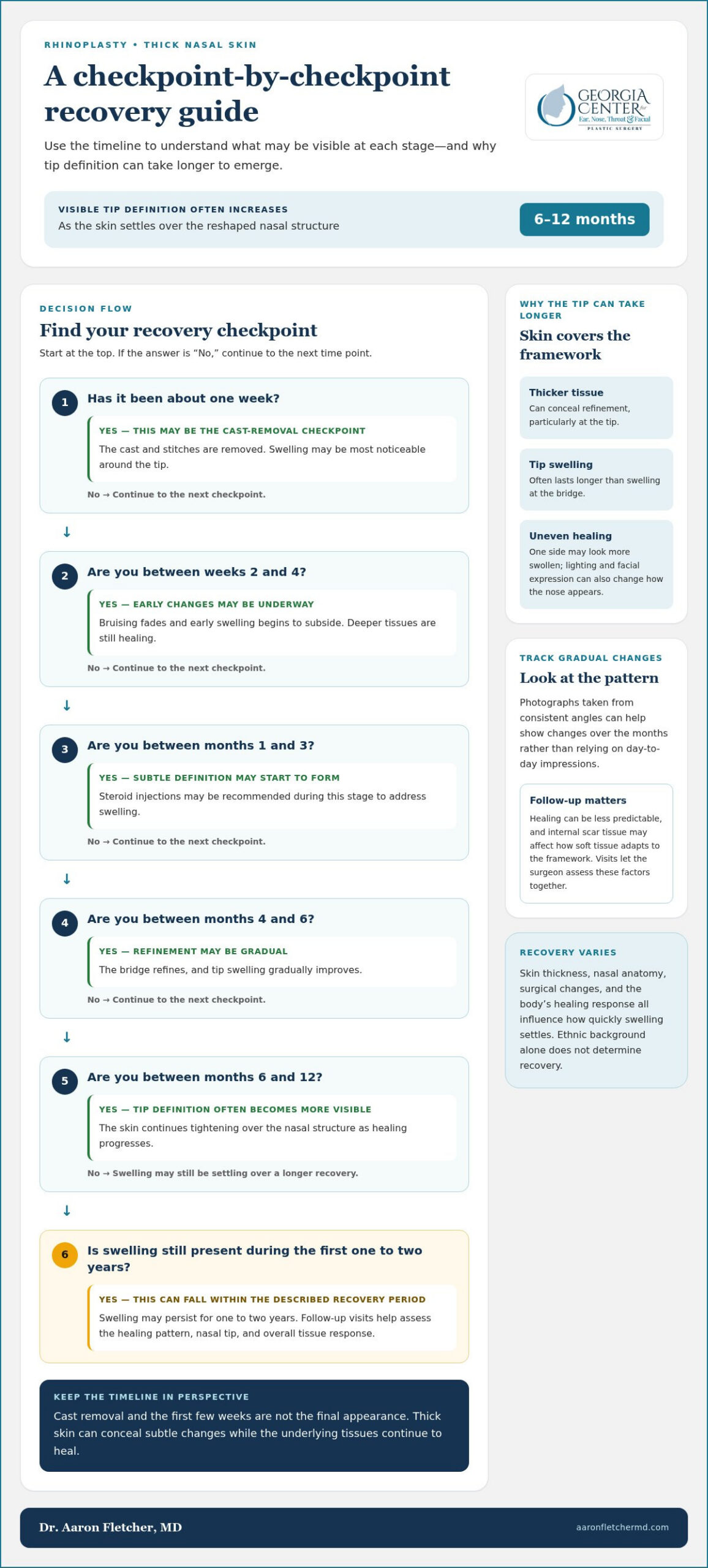
The recovery timeline offers useful reference points. At one week after surgery, the cast and stitches are removed, and swelling may be most noticeable around the tip. Between weeks 2-4, bruising fades and early swelling begins to subside. These stages mark visible changes, but they don’t mean the deeper tissues have finished healing.
Between months 1 and 3 after thick-skin rhinoplasty, subtle definition may start to form, and steroid injections may be recommended. From months 4-6, the bridge refines and tip swelling gradually improves. Between 6-12 months after surgery, tip definition often becomes more visible as the skin tightens over the nasal structure. Swelling may persist for one to two years during recovery.
The extended healing process can make progress feel uneven. For example, one side of the tip may look more swollen than the other as tissue settles. Changes in lighting or facial expression can also make a healing nose look different from one day to the next. Comparing photographs taken from consistent angles can help reveal gradual changes over the months, rather than relying on daily impressions.
Thick-skinned patients can also experience less predictable healing and internal scar tissue formation. Scar tissue may affect how smoothly soft tissue adapts to the underlying framework, while persistent swelling can obscure definition. Follow-up visits matter because they allow the surgeon to assess the healing pattern, nasal tip, and overall tissue response together, rather than treating swelling as an isolated sign.
Ethnic background alone does not determine recovery. Skin thickness, nasal anatomy, surgical changes, and the body’s healing response all influence how quickly swelling settles. A consultation should include discussion of the expected healing stages, the visible changes that may emerge gradually, and how postoperative care supports skin adaptation. Avoid judging the final appearance at cast removal or in the first few weeks.
For a clearer picture of how recovery fits into your goals, a rhinoplasty consultation can address your anatomy, healing timeline, and concerns. Follow the postoperative instructions provided for your procedure, and raise new or worsening symptoms during follow-up. Patience is part of recovery: the nasal tip can continue changing well beyond the early healing period, especially when thicker skin covers the framework.
Structural support and cartilage reinforcement
Thick nasal skin can obscure changes beneath it, so planning often emphasizes a stable framework. Structural rhinoplasty reshapes and supports the nose rather than removing excessive tissue.
Cartilage Grafts for Structural Support
A cartilage graft adds support to the nasal framework and can build projection beneath thicker skin. This matters because a stronger underlying structure can make planned changes more apparent through the soft tissue. The goal is not simply a smaller nose, but a balanced structure that supports the intended contour while accounting for the skin covering it.
Grafting for Tip Support
At the tip, cartilage grafts can provide projection and structural support. This can help the tip maintain its shape beneath thicker skin, which might otherwise conceal definition. The operative plan considers how added support relates to the rest of the nose and your facial proportions. The aim is a supported, coherent contour, not an isolated change to the tip.
Thick-skin rhinoplasty typically emphasizes augmentation with cartilage grafts rather than reduction. Adding structure can help create projection where the skin’s weight makes definition harder to see. The surgeon considers the nasal framework and desired outcome together, rather than treating the tip as a separate feature. This approach helps preserve support while shaping the nose beneath its soft-tissue covering.
Excessive cartilage reduction can create another problem. If the framework is made too small or narrow, the nose may lose support, collapse, or appear undefined after swelling resolves. These risks make conservative tissue removal important, particularly if you want a very small nose. The operative plan must balance visible refinement with the strength needed to maintain nasal shape.
For example, a surgeon may preserve or increase nasal tip height to account for soft-tissue settling during healing. The tip may also be positioned with some over-rotation because it can move downward as healing progresses. These structural choices anticipate how the nose may change after surgery, rather than relying only on its immediate postoperative position.
Internal support techniques can help maintain nasal shape over time and reduce complications related to swelling or skin thickness. Their purpose is to reinforce the framework, not guarantee a particular appearance. The exact design depends on the anatomy being reshaped and the support required. A specialized plan links each graft or structural adjustment to a specific goal, such as improved projection or stable tip support.
During planning, discuss which changes depend on added support and which involve reducing existing structure. This distinction explains why cartilage grafting may be central to thick-skin rhinoplasty, even when the desired result looks more refined. A sound plan prioritizes facial balance and durable support while avoiding excessive reduction that could undermine the intended contour as swelling settles.
Follow-up care and realistic expectations
Thicker-skinned patients should expect the nasal contour to emerge gradually, not look fully refined as soon as the cast comes off. Healing can be less predictable, and the tip may remain rounded or show limited definition after surgery. That appearance reflects how the skin and soft tissue cover the reshaped framework. By itself, it does not show the final outcome.
Use follow-up visits to discuss specific changes, such as tip definition, profile balance, and ongoing swelling. Between 6-12 months after surgery, tip definition often becomes more visible as skin tightens over the nasal structure. Swelling may persist for one to two years during recovery. These milestones help frame progress, but each describes a stage, not a deadline for judging the result.
At each appointment, describe what you notice and discuss it with the surgeon during the examination. For example, a rounded tip could reflect persistent swelling, the underlying structure, or both. These causes have different implications. A clear discussion of the contour and healing stage helps distinguish gradual refinement from a concern that needs closer assessment.
Postoperative techniques may support skin adaptation. Taping and splinting can help reduce swelling and encourage the skin to settle over the nasal framework. Surgeons may also use specialized aftercare protocols to improve skin adhesion. Follow the instructions provided for these measures, since their use and timing depend on the surgical plan.
Some patients receive corticosteroid injections during the first several months after surgery to address swelling. Other postoperative treatments may include ultrasound or radiofrequency energy-based approaches to promote soft-tissue contraction. These treatments are not interchangeable: the choice depends on the tissue response and recovery plan. Discuss the purpose and risks of any recommended treatment before it begins.
Skin-directed treatments require care. Postoperative treatments for thick nasal skin can carry risks, including skin thinning or burns. A rhinoplasty surgeon should guide their use. Do not start a topical or energy-based treatment on your own, since an approach intended to refine the contour can also affect the skin.
Realistic expectations include accepting that subtle refinement may take time and that a very small, narrow nose is harder to achieve beneath thick skin. The aim is a balanced contour that suits your facial features, not maximal reduction. Avoid smoking during recovery. Patience, consistent follow-up, and a shared understanding of the target result help keep attention on meaningful changes throughout healing.
How thicker skin affects visible rhinoplasty changes
Thicker nasal skin affects how the result appears because the outer layer can hide contours created beneath it. This is especially noticeable at the nasal tip, where carefully arranged cartilage may still look less defined. For example, a surgeon may refine the underlying tip framework, yet the visible change can seem subtle while the skin remains thick or swollen. The key distinction is between the structure changed during surgery and the contour visible through the skin.
That difference can shape expectations for individual features. Thick skin tends to affect tip definition more than changes to a dorsal hump, a long or projecting nose, or a wide bridge. You might notice a smoother profile while the tip still looks rounded. These outcomes are not contradictory: each feature sits beneath soft tissue differently, so the same surgical change may show more clearly in one area than another.
Skin may also contract less around new cartilage than thinner skin does. As a result, a small change to the framework may not translate into an equally noticeable surface change. Surgeons consider this relationship when planning the amount and direction of structural refinement. A stronger tip framework can create support and projection, while excessive reduction can leave the result less defined once swelling settles.
Time affects what becomes visible. Between 6-12 months after surgery, tip definition often becomes more apparent as the skin tightens over the nasal structure. Swelling may persist for one to two years during recovery, so early photographs can understate later refinement. Compare images taken at similar angles and lighting, and focus on gradual contour changes rather than judging the result from one early view.
Achieving a very small, narrow nose is harder for patients with thick skin than for patients with thin skin. This matters when setting goals: a balanced profile or improved tip projection may be more realistic than dramatic narrowing. A useful planning conversation identifies the features you want changed, then considers how much of each change can show through your skin and facial anatomy.
Visible results depend on both the surgical framework and the tissue covering it. That doesn’t make thick skin a barrier to successful rhinoplasty; it makes the relationship between structure and surface central to planning. Treatments after surgery may address swelling or soft-tissue contraction, but they don’t replace sound structural decisions. To discuss how your anatomy may shape visible changes, schedule a rhinoplasty consultation.
Dr. Aaron Fletcher, MD: Facelift
Dr. Aaron Fletcher, MD offers rhinoplasty for people considering changes to their nose and wanting to discuss how skin thickness may affect visible definition. A consultation can address your nasal anatomy, desired contour, structural support, and expectations for gradual healing. Thick skin does not rule out surgery, but it can influence the approach and the refinement that becomes visible. A facelift addresses facial aging, not nasal skin, so it is not a substitute for rhinoplasty. To discuss rhinoplasty and your goals, contact Dr. Aaron Fletcher, MD.
Make Your Next Step an Informed One
Understanding thick skin rhinoplasty challenges can help you frame the next conversation around your priorities. Consider which feature matters most, what kind of change would feel meaningful, and how you will evaluate progress as your appearance evolves. Bringing those thoughts to a consultation can make it easier to discuss a plan that reflects your anatomy and personal goals.
Dr. Aaron Fletcher, MD offers rhinoplasty, as well as facelift and blepharoplasty for patients considering other facial procedures. If you’re ready to discuss whether rhinoplasty aligns with your goals, contact Dr. Aaron Fletcher, MD. A thoughtful conversation can help you move forward with greater clarity and confidence.
Frequently Asked Questions
What Does It Mean To Have Thick Nasal Skin?
Thick nasal skin is generally denser and oilier, with a heavier lower dermal layer, often around the tip. You may notice that the tip looks rounded even when the cartilage beneath it has a clear shape. Skin thickness varies among individuals and can occur across ethnic backgrounds. Appearance or ancestry alone does not establish how your nasal tissue will respond to surgery.
Will I need more than one surgery?
Often, one surgical procedure is enough when rhinoplasty is performed appropriately. That does not mean every patient will need only one operation. The initial plan should account for your goals and the limits created by your skin and nasal structure. For example, wanting a natural contour rather than extreme narrowing can help set a goal that fits your anatomy.
What makes thick skin rhinoplasty more challenging?
The challenge is shaping the underlying framework while preserving the tissue that covers it. If too much cartilage is removed, the nose can lose support. If tissue is thinned excessively, its blood supply may be compromised. Surgeons must balance structural changes, skin characteristics, and your goals. These considerations make careful planning especially important when changes focus on the nasal tip.
How does thick nasal skin affect rhinoplasty results and definition?
Thicker skin can soften the appearance of changes made to cartilage and bone, particularly at the tip. For instance, a refined framework may still look rounded beneath the skin, while a change to the bridge may appear more distinct. The visible result depends on both the structure and its soft-tissue covering, so improvement may look subtler than the surgical changes themselves.
What techniques do surgeons use for thick skin rhinoplasty?
Techniques may include cartilage grafting to strengthen nasal support, careful shaping of the underlying framework, and postoperative taping or splinting. Some patients may receive corticosteroid injections during the first several months to address swelling. Skin-conditioning treatments can also be considered around surgery. These approaches serve different purposes. Excessive tissue thinning is avoided because it can threaten blood supply or cause scarring.
How long does swelling last after rhinoplasty with thick skin?
Swelling may persist for one to two years during recovery, although visible changes continue during that period. Tip definition often becomes more apparent between 6-12 months after surgery. A useful practical approach is to assess progress through scheduled follow-up and photographs taken under similar conditions, rather than comparing the nose with changing lighting or angles from day to day.
What are the risks and complications of thick skin rhinoplasty?
Potential concerns include prolonged swelling, internal scar tissue, limited tip definition, and loss of support if too much cartilage is removed. Excessive tissue thinning can compromise blood supply and risk external scarring. Some postoperative treatments can also cause skin thinning or burns. These risks make precise surgical planning and careful supervision of skin-directed treatments important parts of recovery.
How can patients improve healing after thick skin rhinoplasty?
Follow your postoperative instructions for taping, splinting, and any prescribed treatment, and avoid smoking during recovery. Keep follow-up appointments so the surgeon can assess how the tissue is settling and whether swelling or scar tissue needs attention. Do not add skin treatments or change your care routine on your own, since some treatments can thin or burn the skin.