
A truly successful thyroid surgery is defined as much by what is meticulously preserved as by what is removed. If you’re confronting a diagnosis involving persistent thyroid nodules, compressive goiters, or suspected malignancy, it’s entirely understandable to feel apprehensive. Lingering questions regarding vocal cord integrity, visible neck scarring, and the prospect of lifelong hormone replacement therapy can make the surgical path feel daunting.
You deserve absolute clarity and expert guidance at every stage of your care. This guide provides a thorough clinical understanding of modern thyroid surgery, detailing when surgical intervention is medically necessary and how advanced surgical techniques protect your quality of life. We’ll examine how continuous intraoperative nerve monitoring safeguards your natural speaking voice, why refined wound handling minimizes cervical scarring, and how surgeons determine whether a partial lobectomy or total thyroidectomy is required.
Ahead, explore clear surgical criteria, parathyroid preservation protocols, and a transparent timeline for hospital stay and at-home recovery, providing you with the knowledge to move forward with complete confidence.
Key Takeaways
- Understand the precise clinical criteria that determine when thyroid surgery is medically necessary for suspicious nodules, compressive goiters, or confirmed malignancies.
- Compare the practical differences between a partial lobectomy and total gland excision, including recurrence considerations and long-term reliance on hormone therapy.
- Discover how intraoperative nerve monitoring and advanced parathyroid preservation protocols safeguard your natural speaking voice and systemic calcium balance.
- Follow a transparent, step-by-step recovery pathway that details what to expect from immediate hospital discharge through full healing at two weeks.
- Learn how individualized levothyroxine replacement therapy effectively restores your metabolic vitality and supports long-term well-being after glandular removal.
Understanding Thyroid Surgery: Clinical Indications and Medical Necessity
A thyroidectomy is the surgical excision of all or part of the thyroid gland, performed to treat structural compression, glandular hyperfunction, or suspected and confirmed malignancies. Deciding to undergo thyroid surgery isn’t a rushed choice; it’s a methodical process guided by specific clinical thresholds. When a nodule or enlarged gland impairs daily swallowing, threatens airway stability, or raises oncologic concern, surgical excision establishes definitive pathology and restores comfort.
Diagnostic Triggers: From Ultrasound to Biopsy Evaluation
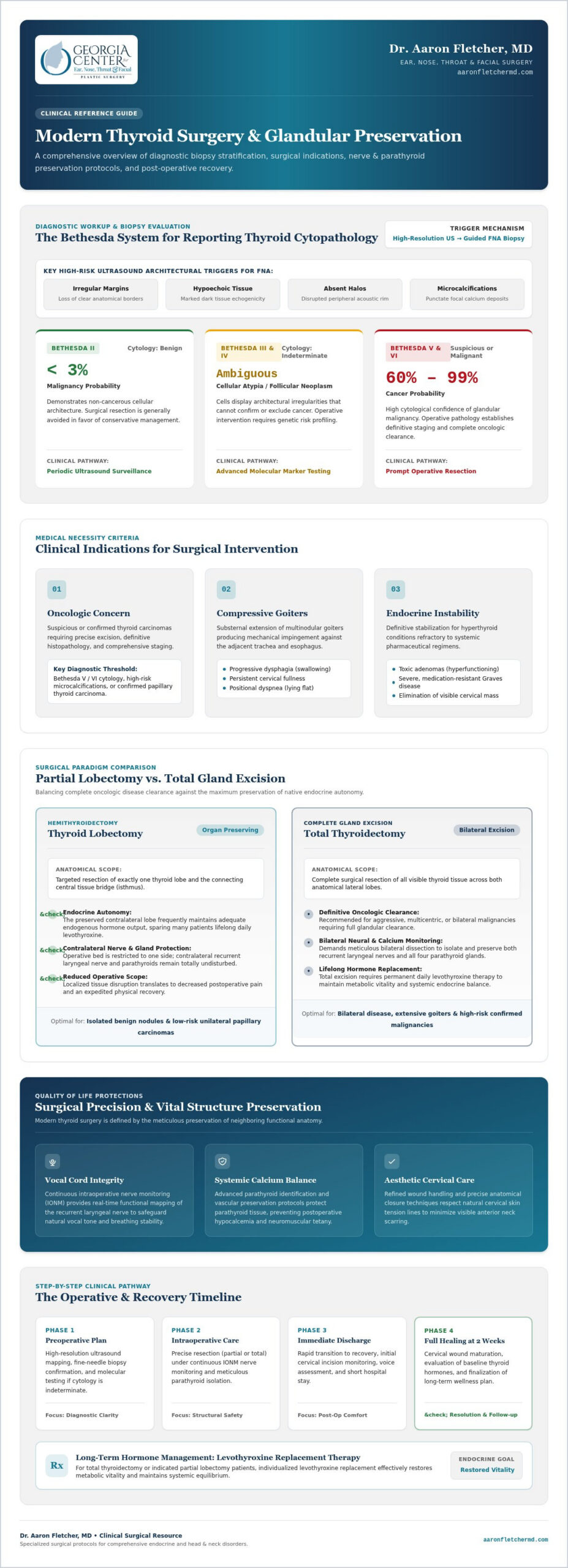
Modern clinical workups begin with high-resolution ultrasound to map glandular topography and identify high-risk features. Irregular margins, hypoechoic tissue architecture, absent halos, and punctate microcalcifications immediately warrant ultrasound-guided fine-needle aspiration (FNA).
Cytopathologists evaluate these aspirated cellular samples using the Bethesda System for Reporting Thyroid Cytopathology, assigning risk across distinct categories:
- Bethesda II (Benign): Carries less than a 3% risk of malignancy, typically requiring periodic ultrasound surveillance rather than operative resection.
- Bethesda III and IV (Indeterminate): Cellular atypia or follicular neoplasms with ambiguous risk. Advanced molecular marker testing evaluates genetic alterations, preventing premature operations for truly benign lesions.
- Bethesda V and VI (Suspicious or Malignant): Carries a 60% to 99% probability of cancer, establishing clear indications for prompt operative intervention.
Symptomatic Compressive Goiters and Hyperthyroidism
Beyond oncologic concerns, benign structural growth can significantly impair head and neck mechanics. Multinodular goiters often extend caudally toward the substernal space, compressing the adjacent trachea and esophagus. Patients frequently describe progressive dysphagia, a persistent sensation of cervical fullness, or positional shortness of breath when lying flat.
Thyroid surgery also provides definitive resolution for hyperthyroidism caused by toxic adenomas or severe Graves disease. When antithyroid medications fail to stabilize hormone levels or cause intolerable side effects, surgical excision rapidly stabilizes systemic endocrine function while simultaneously eliminating visible, aesthetically disruptive cervical masses.
Types of Thyroidectomy: Total Thyroidectomy vs. Thyroid Lobectomy
The optimal extent of thyroid surgery balances oncologic clearance against the preservation of native endocrine function. Rather than applying a uniform approach, surgeons evaluate nodule diameter, cytological risk, contralateral gland architecture, and baseline thyroid-stimulating hormone levels. Modern surgical paradigms increasingly favor de-escalation for localized conditions, reserving extensive tissue clearance for aggressive or bilateral disease.
Thyroid Lobectomy: Benefits of Partial Gland Preservation
A thyroid lobectomy, also known as a hemithyroidectomy, involves the targeted excision of one thyroid lobe along with the tissue bridge connecting both halves, known as the isthmus. This procedure is frequently indicated for isolated, symptomatic benign nodules or low-risk, unilateral papillary carcinomas. Key clinical advantages include:
- Endocrine Autonomy: The preserved contralateral lobe often maintains adequate endogenous hormone production, sparing many patients the need for lifelong daily levothyroxine therapy.
- Minimized Neural and Glandular Exposure: Confining operative dissection to a single cervical bed leaves the contralateral recurrent laryngeal nerve and parathyroid glands entirely undisturbed, significantly lowering surgical risk profiles.
- Reduced Operative Scope: Tissue disruption remains localized, resulting in lower postoperative pain and expedited physical recovery.
Total Thyroidectomy: Complete Gland Excision for Comprehensive Control
Total thyroidectomy requires the complete resection of all visible thyroid tissue across both anatomical lobes. As outlined in established protocols for Thyroid Cancer Treatment, total excision is medically necessary for bilateral multinodular goiters, invasive or multifocal malignancies, medullary carcinomas, and Graves disease resistant to medication. When clinical evaluation detects metastatic lymphadenopathy, a central compartment lymph node dissection is concurrently performed to clear regional lymphatic chains.
Removing the entire gland eliminates the biological substrate for future local recurrences and renders postoperative serum thyroglobulin a highly sensitive tumor marker for oncologic surveillance. It also permits the effective delivery of adjuvant radioactive iodine therapy if required. Because no functional glandular tissue remains, patients must commit to lifelong exogenous thyroid hormone replacement to sustain systemic metabolic balance.
Determining which procedure aligns with your pathology requires a nuanced evaluation of both structural disease and lifestyle expectations. Partnering with an experienced surgeon for an expert surgical consultation ensures you receive an individualized operative plan designed to deliver curative results while protecting your long-term health.
Surgical Precision: Protecting Voice Function and Parathyroid Health
Operating within the anterior neck demands an exceptional degree of anatomic delicacy. The thyroid gland rests in close contact with structures governing voice projection, breathing mechanics, and systemic mineral balance. When performing modern thyroid surgery, experienced surgical dissection lowers permanent laryngeal nerve injury rates below one percent, demonstrating how refined operative technique directly preserves long-term quality of life.
Intraoperative Nerve Monitoring (IONM) for Vocal Cord Protection
The paired recurrent laryngeal nerves (RLN) traverse the tracheoesophageal groove directly behind the thyroid lobes, controlling vocal fold movement for breathing and articulation. Surgeons combine direct visual identification, the established gold standard, with continuous intraoperative nerve monitoring. A specialized endotracheal tube equipped with contact electrodes detects electromyographic signals from the vocal cords in real time.
This active feedback alerts the surgical team to mechanical traction or thermal proximity before functional trauma occurs. It helps clinicians differentiate temporary vocal fatigue caused by intubation from true neural dysfunction. Surgeons also safeguard the superior laryngeal nerve, protecting high-pitch vocal modulation and singing range.
Preserving Parathyroid Glands and Calcium Regulation
Four delicate, rice-grain-sized parathyroid glands adhere to the posterior capsule of the thyroid, regulating systemic calcium homeostasis. Surgical preservation requires identifying these subtle structures and protecting their fine, end-arterial blood supplies. In guidance published by the American Thyroid Association on Thyroid Surgery, proactive postoperative calcium and vitamin D protocols are recommended to manage transient glandular stunning.
Patients are taught to recognize mild signs of temporary hypocalcemia, including fingertip tingling or perioral numbness. These sensations typically resolve promptly as the parathyroid glands regain robust blood supply and resume normal endocrine function.
Aesthetic Incision Planning and Scar Concealment
Clinical excellence also means prioritizing how you heal. Cervical incisions are placed horizontally within preexisting skin creases, allowing the eventual scar to blend naturally into anatomical contours.
Using plastic surgical principles, incisions are closed in multiple tension-free layers, completed with absorbable subcuticular sutures beneath the dermal surface to prevent cross-hatch scarring. Once primary healing occurs, patients support scar maturation with medical-grade silicone sheeting, consistent sun protection, and gentle circular massage.
The Operative Pathway: Preparation, Surgical Steps, and Recovery Timeline
A structured surgical timeline demystifies the operative process, replacing anxiety with predictability. Uncomplicated thyroid surgery generally takes one to two hours under general endotracheal anesthesia. While complex bilateral resections occasionally warrant overnight observation, the majority of modern cases proceed safely as same-day outpatient procedures.
Preoperative Assessment and Medical Preparation
Safe surgical execution begins well before entering the operating suite. Patients undergo flexible fiberoptic laryngoscopy to baseline vocal cord mobility, verifying functional nerve activity prior to incision.
Medication regimens are meticulously coordinated with the surgical team:
- Anticoagulants and Anti-inflammatories: Aspirin, NSAIDs, and prescription blood thinners are paused seven to ten days beforehand to limit bleeding risks.
- Thyroid Pharmaceuticals: Antithyroid medications such as methimazole are calibrated to achieve a euthyroid metabolic state before operative induction.
- Anesthesia Protocol: Patients follow strict fasting guidelines, abstaining from solid food for at least eight hours prior to arrival.
Day of Surgery and Immediate Hospital Care
Upon entering the surgical center, your care team reviews vital signs, secures intravenous access, and confirms operative markings. Once anesthesia is initiated, the team positions the neck in gentle extension to optimize visualization of underlying cervical structures.
Following gland resection, you awaken in the post-anesthesia care unit (PACU). Nurses monitor airway patency, fluid balance, and swallowing capability. Discomfort is typically mild and centers on a scratchy throat from the breathing tube. Multimodal non-opioid analgesics, alternating acetaminophen and ibuprofen, effectively control localized cervical soreness without heavy sedatives.
At-Home Healing and Activity Milestones
Healing advances rapidly once you return home. Specialized waterproof surgical dressings shield your incision, allowing gentle showering within forty-eight hours while keeping the underlying sub-cuticular sutures dry. A cool, soft-food diet transitions to regular meals over two to three days as minor swallowing discomfort fades.
Patients resume light desk work and daily walks within seven days. Strenuous cardiovascular workouts, heavy lifting above fifteen pounds, and vigorous neck hyperextension remain restricted for fourteen days to prevent hematoma formation and incision strain. If you’re preparing for glandular intervention, schedule a personalized surgical consultation to review your case and establish a tailored recovery roadmap.
Life After Thyroid Surgery: Long-Term Hormone Management and Follow-Up
Completing thyroid surgery marks an empowering transition from operative intervention to sustained metabolic stability. Whether you underwent a lobectomy or a total resection, the overarching goal remains identical: maintaining hormonal equilibrium so you can return to an active, unrestricted life without chronic fatigue.
Optimizing Thyroid Hormone Replacement Therapy
For patients requiring daily supplementation, levothyroxine provides an identical synthetic counterpart to natural thyroxine (T4). It reliably preserves your baseline metabolic rate, sustaining energy, cardiovascular rhythm, and weight stability. Calibrating your ideal dose is a structured clinical process guided by serum thyroid-stimulating hormone (TSH) blood panels checked every six to eight weeks post-operatively until levels normalize.
Proper gastrointestinal absorption requires adherence to a few straightforward morning habits:
- Timing and Hydration: Take your medication immediately upon waking with a full glass of plain water, waiting thirty to sixty minutes before eating.
- Absorption Blockers: Separate your dose from morning coffee, dietary calcium, and iron supplements by at least four hours, as these bind to the compound and impede uptake.
- Symptom Awareness: Lingering sluggishness, dry skin, or cold sensitivity indicate under-replacement, while resting tremors, heat intolerance, or palpitations signal over-replacement. Both resolve readily with minor dosage titrations.
Oncologic Surveillance and Routine Follow-Up Care
Roughly one week following your procedure, your surgical team reviews the final histopathology report. This detailed analysis verifies clean surgical margins, characterizes cellular architecture, and determines whether any adjuvant therapies are recommended. For patients treated for thyroid carcinoma, long-term monitoring involves periodic high-resolution cervical ultrasounds alongside serum thyroglobulin checks to confirm complete remission.
A smooth operative journey relies on skilled head and neck expertise from initial imaging through long-term surveillance. Schedule an expert consultation to review your diagnostic findings, explore your operative options, and establish an individualized treatment plan tailored to your health.
Taking the Next Step Toward Restored Thyroid Health
A surgical diagnosis often brings uncertainty, but modern medical advancements offer a clear pathway back to vitality. Contemporary thyroid surgery has evolved into a disciplined standard where oncologic clearance and functional preservation work hand in hand. With real-time intraoperative nerve monitoring safeguarding vocal tract integrity and refined incision placement minimizing visible cervical scarring, you don’t have to sacrifice your voice or aesthetic comfort for curative care.
Whether your treatment plan calls for a conservative lobectomy or complete glandular resection, experienced surgical leadership makes all the difference. As a board-certified specialist focusing on head, neck, and facial structures, Dr. Aaron Fletcher, MD integrates delicate endocrine dissection with reconstructive surgical principles to deliver comprehensive, compassionate care. When you’re ready to discuss your diagnostic results and treatment roadmap, consult with Dr. Aaron Fletcher, MD for an expert head and neck surgical evaluation. You can move forward knowing your long-term health, voice, and quality of life remain the utmost priority.
Frequently Asked Questions
How painful is recovery following thyroid surgery?
Recovery following thyroid surgery involves mild to moderate discomfort, often described as an acute sore throat rather than severe surgical pain. Most patients manage the sensation with over-the-counter analgesics like acetaminophen or ibuprofen within a few days. The discomfort stems primarily from endotracheal intubation rather than the cervical incision itself. Swallowing soft foods, sipping cool liquids, and resting with your head elevated soothe localized inflammation quickly.
Will I permanently lose my voice after undergoing a thyroidectomy?
Permanent voice loss is exceptionally rare, occurring in less than one percent of cases handled by experienced head and neck surgeons. Temporary hoarseness, vocal fatigue, or subtle pitch changes can occur for a few weeks due to mild laryngeal swelling or tissue manipulation. Advanced intraoperative nerve monitoring provides continuous functional feedback throughout the procedure, ensuring the recurrent and superior laryngeal nerves remain structurally intact and protected.
Can I live a completely normal life without a thyroid gland?
Yes, you can live an energetic, entirely normal life without a thyroid gland. Synthetic hormone replacement therapy with levothyroxine replicates the exact thyroxine molecule your body naturally produces. Once your physician fine-tunes your daily dose via routine blood panels, your metabolism, body temperature, cardiovascular rhythm, and energy reserves function just as they did with an intact gland. There are no dietary restrictions or lifestyle limitations.
How noticeable will the surgical scar on my neck be?
Modern cervical scars heal remarkably well and typically become barely perceptible fine lines over twelve months. Surgeons place the incision precisely within a natural horizontal skin crease in the lower neck. Meticulous subcuticular suturing eliminates external stitch marks. Following primary healing, applying medical-grade silicone strips, practicing diligent sun protection, and performing gentle scar massage ensure the incision softens and blends seamlessly into your natural skin tone.
How long will I need to take off from work after thyroid surgery?
Most patients need approximately one to two weeks off from work after thyroid surgery, depending on occupational physical demands. Individuals in sedentary or desk-based roles frequently feel comfortable resuming duties within seven to ten days. If your employment requires heavy lifting, intense physical labor, or prolonged neck extension, taking two full weeks allows adequate time for deep tissue healing, energy restoration, and hematoma prevention.
What are the main symptoms of low calcium after thyroid surgery?
The most common early signs of low calcium include tingling sensations in the fingertips and toes, alongside numbness around the mouth. These symptoms, known clinically as transient hypocalcemia, develop if the delicate parathyroid glands experience temporary surgical shock. Muscle twitching, hand cramping, or facial spasms can also emerge if calcium drops further. Taking prescribed oral calcium and vitamin D supplements rapidly resolves the imbalance while the glands recover.
Can a thyroid nodule be managed without surgical removal?
Many thyroid nodules do not require surgery and can be safely monitored over time. If high-resolution ultrasound imaging and fine-needle aspiration biopsy confirm a nodule is benign, active surveillance through periodic sonograms is typically the standard of care. Surgery becomes necessary only if a nodule demonstrates suspicious cytologic features, grows substantially, or becomes large enough to cause physical symptoms like swallowing difficulties or tracheal compression.