
Upper and lower eyelid concerns call for different procedures: upper blepharoplasty addresses excess skin or heaviness on the upper lids, while lower blepharoplasty focuses on concerns such as under-eye bags, hollowing, or loose skin. In an upper vs lower blepharoplasty comparison, recovery also differs: it typically takes 1-2 weeks after upper surgery and 2-3 weeks after lower surgery. The procedures can be performed together when both areas need treatment.
It’s understandable to think of eyelid surgery as one approach, since both procedures affect the area around the eyes. The key difference is which area is causing concern and what change the surgery is intended to address. This guide explains how upper and lower blepharoplasty differ, what recovery may involve, and when combining them may make sense. It also outlines practical ways to compare the options and prepare questions about your goals.
Key Takeaways
- Notice whether your concern is excess upper-lid skin, under-eye fullness, or a lower lid that sits too low; the affected area helps distinguish the procedure.
- Plan recovery around the area treated, and allow for visible swelling or bruising as healing progresses.
- When concerns affect both upper and lower lids, treating both areas may be considered together.
- Use your specific goals and eyelid features to guide the decision, rather than choosing a procedure by name alone.
Droopy lower eyelids that show too much of the whites of the eyes
When a lower eyelid sits below its usual position, more of the white of the eye may show beneath the iris. This drooping differs from under-eye bags: it concerns eyelid position, not simply fullness or loose skin. Lower blepharoplasty may address this concern, as well as excess skin that creates wrinkles or fatty tissue that forms bags.
Upper blepharoplasty treats a different area. Excess skin can rest on the eyelashes, fold over the eyelid, or impair vision. Fatty deposits may also blur the upper lid’s natural contour. For example, a heavy fold over the upper lashes points to an upper-lid concern, while visible white below the iris points to a lower-lid position concern.
Insurance coverage depends on the plan and whether the documented concern affects function rather than appearance alone. Visual-field testing requirements also vary by insurer, so no single test requirement applies to every plan. Upper-lid candidates typically have excess skin affecting the eyelid fold or vision, while lower-lid candidates may have bags, wrinkles, hollowing, or a drooping lid.
In both cases, candidacy depends on whether the eyelid anatomy matches the concern being treated. An assessment distinguishes excess skin from lower-lid malposition, since these are different issues and call for different surgical plans.
| Option | Main concern | Examples | Intended change |
|---|---|---|---|
| Upper blepharoplasty | Upper-lid skin or contour | Skin resting on lashes; a fold obscuring the natural crease | Reduce excess tissue and restore a clearer contour |
| Lower blepharoplasty | Lower-lid skin, fullness, or position | Under-eye bags; wrinkles; white showing below the iris | Address lower-lid appearance or droop |
Choose based on the area causing concern: upper-lid heaviness or impaired vision suggests an upper-lid issue, while lower-lid bags, wrinkles, or visible white below the iris point to a lower-lid concern. If concerns overlap, both areas can be assessed.
Recovery time comparison
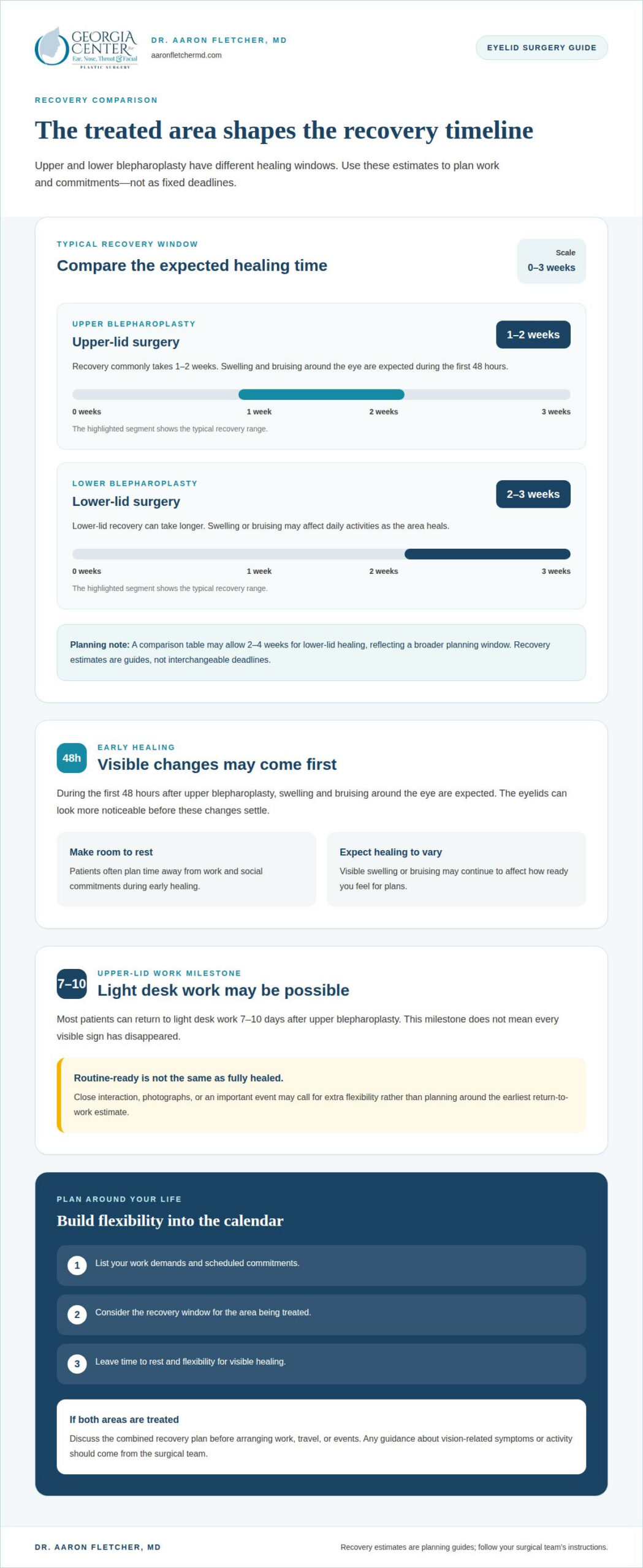
Recovery commonly takes 1-2 weeks after upper blepharoplasty and 2-3 weeks after lower blepharoplasty. A comparison table may allow 2 to 4 weeks for lower-lid healing, reflecting the broader planning window. Most patients recover in about two weeks after blepharoplasty surgery, though the treated area affects the timeline.
During the first 48 hours after upper blepharoplasty, swelling and bruising around the eye are expected. These changes can make the eyelids look more noticeable before they settle. Patients often plan time away from work and social commitments during early healing, then resume activities according to their recovery and care instructions.
For upper-lid surgery, most patients can return to light desk work 7 to 10 days after the procedure. That milestone doesn’t mean every visible sign has disappeared. If your work involves close interaction, photographs, or an important event, allow flexibility rather than planning around the earliest return-to-work estimate. Feeling rested and ready for a routine task can differ from looking fully healed.
Lower-lid recovery can take longer, so plan around a wider recovery window. The area may swell or bruise as it heals, which can affect daily activities. The purpose of surgery matters too: removing excess skin or addressing under-eye fullness involves a different treatment area than upper-lid surgery.
Use these recovery estimates as planning guides, not as interchangeable deadlines. For example, someone choosing upper-lid surgery may plan desk work after 7 to 10 days, while someone having lower-lid surgery should account for a typical 2-3-week recovery. If both areas are treated, discuss the combined recovery plan before arranging work, travel, or events. Any instructions for vision-related symptoms or activity should come from the surgical team.
To prepare, list your work demands, scheduled commitments, and the time you can set aside to rest. Consider how recovery from the area being treated may fit those needs, then leave flexibility in your calendar.
Combining upper and lower procedures
Blepharoplasty can address the upper eyelids, lower eyelids, or both. Combining procedures may suit someone with separate concerns in each area, such as upper-lid skin resting on the lashes and lower-lid bags. A combined plan considers both areas rather than treating one feature in isolation.
A combined plan starts by identifying what you want to change in each area. Upper-lid heaviness and lower-lid fullness are distinct concerns, so describe them separately. For example, note whether you want a more defined upper crease, a smoother under-eye transition, or both. This helps clarify the changes you hope to see.
- Identify each concern. Connect each goal to its location, such as excess skin on the upper eyelid or puffiness beneath the lower lid.
- Discuss the desired result. Explain what “refreshed” means to you, using specific features rather than a general request to look younger.
- Consider the procedures together. Review how addressing both areas in one plan relates to your goals and healing arrangements.
Combining surgery doesn’t mean both eyelids need the same correction. Upper-lid work may focus on skin or fatty deposits that alter the natural contour. Lower-lid work may address bags, wrinkles, hollowing, or lid position. The plan should reflect the findings in each area, with an even overall appearance as the aim.
Ask how each planned change relates to your priorities. If your main concern is lower-lid fullness, an upper-lid procedure may not address it. If both areas concern you, explain which feature matters most and how you hope they will look together.
Before deciding, write down one example of what concerns you about each area and one outcome you value. This focused list can guide a discussion about whether treating both areas together fits your goals.
Differences between upper and lower blepharoplasty
Upper and lower eyelid surgery address different structures, so the correction should match the concern. Upper blepharoplasty focuses on excess skin or fatty deposits that soften the upper eyelid’s natural contour. Lower blepharoplasty addresses concerns such as under-eye puffiness, wrinkles, hollowing, or a drooping lower lid. Facial cosmetic surgeons like Dr. Daria Hamrah assess each area and consider how the eyelids relate to the rest of the face. A useful upper vs lower blepharoplasty comparison starts by identifying which area is driving your concern.
Both procedures carry surgical risks, and relevant considerations depend on the treatment area and planned correction. Ask which risks apply to your eyelid anatomy, what the procedure is intended to change, and what it cannot address. This discussion should clarify the proposed plan and its purpose before you decide.
Upper blepharoplasty results typically last 12 to 15 years. For lower-lid surgery, discuss expected results in relation to the specific concern and correction being considered. Removing excess skin addresses a different feature from treating puffiness or correcting lid position. That distinction helps set expectations around the result you want to maintain.
During a consultation, expect an assessment of upper-lid skin, fatty deposits, lower-lid puffiness, and eyelid position. If upper-lid heaviness affects your vision, describe what you notice. Before the visit, write down your concerns and the changes you hope to see. For example, distinguish a heavy upper fold from fullness beneath the eyes. These details help focus the discussion on your anatomy and goals.
To compare the procedures, match each concern to the eyelid area involved, then discuss the purpose, risks, and intended result. In an upper vs lower blepharoplasty decision, your specific features and priorities are more useful guides than the procedure name alone. Bring your questions to a blepharoplasty consultation and discuss how the proposed correction relates to your goals.
Dr. Aaron Fletcher, MD: Facelift
Dr. Aaron Fletcher, MD offers facelifts for people whose facial concerns extend beyond the eyelids. If your primary concern is excess eyelid skin, under-eye puffiness, or drooping lids, blepharoplasty directly addresses those areas. If you’re also considering changes to your broader facial appearance, a facelift may be worth discussing alongside your eyelid goals.
The next step is to describe which features concern you most and what you hope to change. This frames a focused conversation about whether your goals relate to the eyelids, the face, or both. A discussion can clarify which procedure best aligns with the areas you want addressed.
Contact Dr. Aaron Fletcher, MD to discuss your facial surgery goals.
Take the Next Step With Clarity
Before deciding, identify the change that matters most to you and why. Is your priority a functional concern, such as upper-lid skin affecting vision, or a change in how the eye area looks? Bringing that distinction to a consultation can keep the conversation focused on your goals rather than procedure names alone.
The choice between upper vs lower blepharoplasty depends on your eyelid anatomy and the result you hope to achieve. Dr. Aaron Fletcher, MD offers blepharoplasty for eyelid concerns and rhinoplasty for people considering changes to the nose. A discussion can help clarify which area your priorities relate to and whether the procedures you’re considering address them.
If you’re ready to discuss your goals and possible next steps, contact Dr. Aaron Fletcher, MD. A thoughtful conversation can help you move forward with greater clarity.
Frequently Asked Questions
Are upper and lower blepharoplasty performed differently?
Yes. The procedures address separate eyelid areas, so their surgical plans and target tissues differ. For example, a concern centered on the upper eyelid fold calls for a different assessment than fullness beneath the eyes. If both areas concern you, describe each separately during consultation. This helps clarify whether the plan should include one area or both.
What is blepharoplasty?
Blepharoplasty is surgery on the upper eyelids, lower eyelids, or both to address excess skin or fatty deposits that contribute to drooping or sagging. The procedure is planned around the specific eyelid concern, rather than treating the eye area as one uniform feature. For instance, upper-lid skin affecting the crease differs from lower-lid fullness beneath the eyes.
Why is preserving lower eyelid support important during surgery?
Lower eyelid support helps the lid maintain its position and contour against the eye. A preservation-focused approach considers this structure while addressing the concern, rather than removing tissue without regard to support. This is especially important when the lower lid already sits low or shows more of the eye’s white. Discuss lid position and support as distinct goals during surgical planning.
Can brow descent make the upper eyelids look heavier?
Yes. A lowered brow can contribute to upper-lid heaviness, even when the eyelid itself is not the only source of concern. Compare the brow position with the skin resting near the lashes. If brow descent accompanies an upper-eyelid issue, a forehead lift may be considered to firm the area.
Can removing too much fat during blepharoplasty create hollow eyes?
Yes. Removing too much fat can leave the eye area looking hollow, particularly if under-eye hollowing is already a concern. Lower-lid planning therefore considers both puffiness and the surrounding volume. Describe whether you notice bags, a hollow groove, or both. These details help frame a preservation-focused discussion about the desired contour.
Can upper eyelid heaviness be caused by something other than excess skin?
Yes. Brow descent or fatty deposits can also contribute to a heavy appearance, so excess skin is not the only factor to consider. Upper-lid heaviness may also affect peripheral vision. During assessment, describe where the heaviness sits and whether it changes your vision. These observations help distinguish eyelid skin concerns from brow position or fullness.