
What if hooded-looking eyelids reflect your natural anatomy rather than a problem? If you’ve noticed a heavier upper lid, it’s understandable to wonder what causes hooded eyes and whether the change is simply part of your features or a sign of eyelid drooping.
There are several possible explanations. For some people, inherited eyelid shape creates a fold of skin that partly covers the crease from a young age. Over time, skin may lose elasticity, the brow may descend, or the muscle that lifts the eyelid may weaken. These changes can look similar but have different causes. A new or worsening appearance deserves attention, particularly if it affects your vision.
This article explains common anatomical and age-related reasons upper eyelids look hooded, and how excess eyelid skin differs from brow descent and ptosis, or true eyelid drooping. You’ll also learn what to note before an evaluation and when one may help. Considering the eyelid anatomy and brow position together can clarify what’s contributing to the appearance and whether any next steps suit your individual findings.
Key Takeaways
- What causes hooded eyes can vary, from inherited eyelid anatomy to changes in skin, brow position, or the structures that lift the eyelid.
- Natural hooding, excess upper-eyelid skin, brow descent, and true eyelid drooping have different anatomical contributors and can look similar.
- Noting when the appearance began, whether it is changing, and whether it affects vision can make an evaluation more informative.
- Photos may help show how your eyelids have changed over time, but they can’t determine the underlying cause on their own.
- Treatment is optional for a natural feature. When appropriate, an individualized assessment can clarify whether eyelid or brow procedures may address your concerns.
What causes hooded eyes, and what does the term mean?
A hooded upper eyelid can be a natural feature, not automatically a disease or a sign that something is wrong. Hooded eyes describe an eyelid shape in which skin or the surrounding eyelid contour partly covers the upper-lid crease, making it less visible. The appearance may reflect inherited facial anatomy, age-related changes, or individual differences in eyelid structure. The term alone doesn’t identify a medical cause.
Dermatochalasis is the medical term for excess or lax eyelid skin, which can contribute to hooding, particularly as skin changes with age. However, people may use “hooded eyes” to describe a visible shape without having a diagnosed condition. The crease, amount of overlying skin, brow position, and eyelid-lifting structures all influence how the upper lid looks.
What does a hooded upper eyelid look like?
With hooded eyes, a fold of skin or the contour above the eyelid rests over part of the crease. The crease may be partly visible, mostly hidden, or shaped differently across the lid. This can happen on both sides, though the eyes don’t always look identical. A low or concealed crease alone doesn’t establish that a medical problem is present.
There isn’t one standard hooded-eye appearance. The visible fold and amount of exposed eyelid can vary with facial anatomy, brow position, and changes over time. The crease can help describe the appearance, but it can’t show by itself which structures are contributing.
Are hooded eyes the same as droopy eyelids?
Not necessarily. Blepharoptosis, often called ptosis, refers to a lowered upper-eyelid margin, the edge of the lid that sits above the eye. A hooded appearance may result from overlying skin or eyelid contour even when that margin isn’t drooping. The distinction matters because the terms describe different anatomical features.
Appearance alone can’t reliably identify the cause. An examination considers the eyelid margin, skin, brow position, and lifting structures together. If the appearance is new, changing, or affecting vision, an individualized assessment can help clarify what’s contributing instead of relying on the crease or a photograph alone.
How eyelid anatomy, inherited traits, and aging can create hooded eyes
The upper eyelid’s appearance reflects several structures working together. Skin lies over the eyelid and folds at a crease, while the brow frames the area above it. Muscles and connective tissue help raise the eyelid and maintain its position. Differences in any of these features can affect how much of the crease is visible and whether skin appears to rest over it. Understanding how these structures relate helps explain what causes hooded eyes without assuming there is one cause for everyone.
How inherited facial structure affects the eyelid crease
Eyelid shape and crease formation naturally vary. Some people inherit a crease that sits lower or is less defined, or an eyelid contour with more skin above the crease. These features may be apparent earlier in life and can resemble patterns seen among relatives. Family resemblance can offer context, but it doesn’t establish a diagnosis or mean a particular eyelid shape is abnormal. A visible crease is only one part of the anatomy.
How aging and brow position change the upper eyelid
Over time, skin and the tissues supporting the brow and eyelid can change, altering the contour above the eye. Dermatochalasis refers to excess or lax upper-eyelid skin. If the brow descends, especially toward its outer portion, the tissue above the eyelid may look more prominent or sit closer to the crease. An overview of treatment options for hooded eyes also discusses how inherited features and aging can contribute to their appearance.
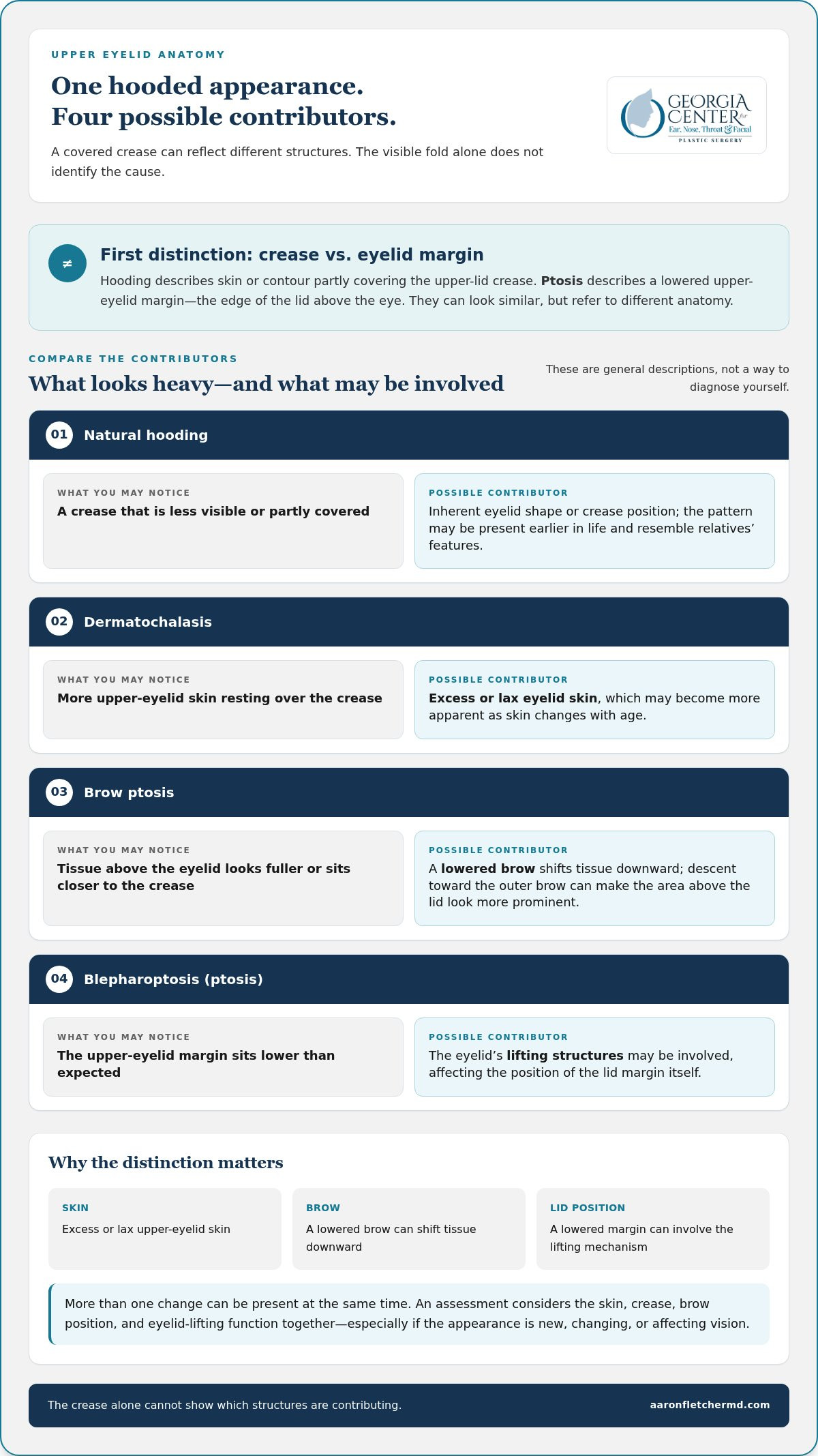
These terms describe different structures: dermatochalasis is excess or lax eyelid skin; brow ptosis is a lowered brow that can shift skin downward; and blepharoptosis is a lowered upper-eyelid margin, often related to the eyelid’s lifting mechanism. More than one change can be present at the same time, so the visible fold alone may not show which factor is involved.
An individualized assessment considers the eyelid skin, crease, brow position, and eyelid-lifting function together. If you’ve noticed a change or want to understand how these structures relate in your case, a facial evaluation for eyelid concerns can help clarify the contributing anatomy.
Hooded eyes or another eyelid change? Compare the common causes
The same heavy or covered appearance can come from different structures. Not every hooded-looking eyelid is caused by aging or excess skin. Some people have a naturally less visible crease, while others develop changes in the eyelid skin, brow, or eyelid position. The distinctions below describe general anatomical contributors, not a way to diagnose yourself.
| Appearance or condition | General anatomical contributor |
|---|---|
| Natural hooding | Inherent eyelid shape or crease position leaves some upper-lid skin or contour over the crease. |
| Dermatochalasis | Excess or lax upper-eyelid skin, which may become more apparent with age. |
| Brow ptosis | A lowered brow shifts tissue downward and can make the skin above the eyelid look fuller. |
| Blepharoptosis | The upper-eyelid margin sits lower than expected, often because of an issue involving the structures that lift the lid. |
How can you tell excess eyelid skin from a low brow?
Fullness that appears to fold over the crease may involve eyelid skin; tissue sitting lower above the eyelid may reflect brow position. Blepharoptosis involves the eyelid margin itself, rather than only the skin above it. These features can coexist, so where fullness seems to sit may offer context but can’t reliably identify the cause. This isn’t a home diagnostic test. A clinician considers eyelid position, brow position, your history, and how the eyelids function together.
Can a hooded appearance start or change suddenly?
A longstanding feature or gradual change differs from a sudden new droop. If one eyelid suddenly looks lower, seek prompt medical assessment, especially if the change is accompanied by double vision, vision changes, weakness, or a severe headache. Sudden eyelid drooping with these symptoms may need urgent evaluation. Don’t rely on appearance alone to decide what’s causing a new change.
Noting when the change began and whether it affects one or both eyes can help you describe it during an assessment. The question of what causes hooded eyes is answered by examining the relevant anatomy, not by crease shape alone.
When should you seek an evaluation for hooded eyes?
A stable eyelid shape that has been present for years may simply reflect your natural anatomy. An evaluation can be helpful if you notice a gradual change, a new difference between the eyes, or skin that seems to interfere with your vision. The question of what causes hooded eyes can’t be answered reliably from appearance alone, but noting how the change developed gives a clinician useful context.
Sudden eyelid drooping is different from a gradual change and should be assessed promptly. Seek urgent medical attention if a sudden change occurs with double vision, other vision changes, weakness, or a severe headache. Don’t wait to see whether these symptoms resolve on their own.
What details help explain a changing eyelid appearance?
Before an appointment, consider when you first noticed the change and whether it has remained stable or continued to progress. Note whether one or both eyelids are affected and whether the appearance varies during the day. Photos taken at different times may help illustrate progression, but they can’t establish the underlying cause.
It can also help to describe any effect on daily activities, such as difficulty seeing when looking upward, along with other symptoms. Share relevant medical history and a list of medications, including recent changes. These details help place the appearance in context, but they don’t replace an examination.
- Onset and course: When the change began and whether it is stable, gradual, or sudden.
- Side-to-side difference: Whether one eyelid looks lower or more covered than the other.
- Symptoms: Any visual obstruction, double vision, discomfort, or other new changes.
- Health context: Relevant medical history and current medications.
What can an eyelid assessment help determine?
An individualized assessment may consider the position of the eyelid margins, the amount and distribution of skin, brow position, and how the eyes and eyelids function. These observations help distinguish a primarily appearance-related concern from a change that affects function and clarify which anatomical factors may be contributing. Findings, rather than a photograph or article description, guide any discussion of next steps.
If a changing eyelid appearance is concerning you, schedule an individualized facial evaluation to discuss your observations and have the eyelid and brow anatomy assessed together.
What treatment options may address hooded eyes?
Treatment is a personal choice, not a requirement for a natural eyelid feature. The appropriate next step depends on what’s contributing to the appearance, whether it affects vision or comfort, and what you hope to address. For some people, no procedure is needed or desired. If you’re considering treatment, assessing the eyelids and brow together helps guide a discussion based on your anatomy rather than the label “hooded eyes.”
How can blepharoplasty address excess upper-eyelid skin?
Upper blepharoplasty is a surgical procedure that may address selected concerns involving excess upper-eyelid skin. It isn’t designed to correct every cause of a hooded appearance. Brow position may contribute to fullness above the eyelid, while blepharoptosis involves the eyelid margin and lifting structures. These distinctions matter when considering what a procedure may address. Read more in this guide to blepharoplasty.
When might brow position matter to treatment planning?
If the brow sits lower than its usual position, it can shift tissue toward the upper eyelid and make the area look heavier. A brow assessment helps determine whether that position contributes to the concern. Brow lift surgery may be considered when the findings and personal goals make it relevant, but it isn’t a universal recommendation for hooded eyes. The right discussion accounts for the brow, eyelid skin, lid margin, and function together.
An individualized evaluation can clarify whether observation, blepharoplasty, brow lift surgery, or another approach fits the findings. It can also help distinguish what a procedure may address from features it would not be intended to change. You don’t need to decide on surgery before learning about your anatomy and options.
If you’d like to discuss your concerns and possible next steps, schedule a personalized eyelid and brow evaluation.
Find clarity about your eyelid concerns
Hooded eyes may reflect inherited facial anatomy, age-related changes in eyelid skin, a lower brow, or a change in the eyelid’s lifting structures. Understanding what causes hooded eyes for an individual means distinguishing these contributors rather than assuming every covered crease signals a problem. A new or sudden change, particularly one that affects vision or comes with other symptoms, deserves medical assessment.
Treatment is optional for a natural feature. If you’re considering a change, an individualized evaluation can examine the eyelid and brow together and help clarify whether observation, blepharoplasty, or brow lift surgery fits your findings and goals. Dr. Aaron Fletcher, MD, is a board-certified otolaryngologist and facial plastic surgeon with nearly a decade of surgical experience, offering blepharoplasty and brow lift surgery.
Schedule a personalized eyelid evaluation to discuss your concerns and possible next steps. A thoughtful assessment can help you move forward with greater clarity, whether or not you choose treatment.
Frequently Asked Questions
Is having hooded eyes normal?
Yes, hooded eyes can be a normal variation in eyelid anatomy and may run in families. The term describes an appearance, not a diagnosis by itself. Some people naturally have a less visible crease, while others notice more skin over the upper eyelid as they age. If the appearance is new, changing, or bothersome, a clinician can assess whether it reflects natural anatomy, eyelid drooping, or another cause.
What causes hooded eyes as you get older?
With age, changes in skin and supporting tissues around the eyelid can make upper-lid skin more prominent or the crease less visible. The brow may also descend and contribute to a heavier appearance. Aging is one possible factor, but inherited eyelid structure also matters. An assessment considers the skin, brow position, and eyelid margin together to clarify which features may be contributing in your case.
Can hooded eyes affect vision?
Hooded eyelids don’t necessarily interfere with vision. In some cases, excess upper-eyelid skin or a low eyelid margin may obstruct part of the visual field. If you notice difficulty seeing, worsening drooping, or a new change, seek clinical assessment rather than relying on appearance alone. An individualized evaluation can help determine whether the eyelids affect function and what may be causing the change.
What is the difference between hooded eyes and ptosis?
Hooded eyes describe upper-eyelid skin or contour partly covering the crease. Ptosis, also called blepharoptosis, means the upper-eyelid margin itself sits lower than expected. The two can look similar and may occur together, but they describe different anatomical features. A clinician can examine eyelid position and related structures to identify what may be contributing to an individual’s appearance.
Can hooded eyes appear suddenly?
A hooded appearance that has been present for years differs from sudden, new eyelid drooping. A sudden change should be assessed promptly, especially if it occurs with double vision, weakness, a severe headache, or other vision changes. This article can’t determine the cause. If symptoms are severe or concerning, seek urgent medical care rather than waiting for a routine appointment or cosmetic evaluation.
Can surgery correct hooded eyes?
Surgery may address some causes of hooding, but it isn’t necessary for everyone. Upper blepharoplasty may be considered when excess upper-eyelid skin contributes to the appearance. If brow position also plays a role, a brow lift may be discussed. An individualized facial evaluation can assess eyelid anatomy, brow position, and any functional concerns to guide a conversation about appropriate options.
Are hooded eyes caused only by aging?
No. Hooded eyes may reflect inherited eyelid shape or crease formation, age-related changes in skin and supporting tissues, brow position, or a combination of factors. The visible appearance alone can’t confirm which cause applies. If a change is new or progressing, affects vision, or concerns you, a clinical assessment can help clarify what’s happening and whether any next steps are appropriate.