
A nose that needs more support may call for a different plan than one that needs reduction. Asian rhinoplasty techniques often focus on a lower bridge, a wider nasal tip, or limited tip projection, with choices shaped by the individual’s anatomy and goals. Rather than applying a single “Asian” method, the surgeon may combine bridge augmentation with techniques that support or refine the tip.
It’s understandable to want to know how asian rhinoplasty techniques differ from standard rhinoplasty and whether the result can look natural. The key distinction is often the emphasis on building proportion and support where needed, rather than assuming that reducing nasal structures is the main goal. The approach depends on the features being addressed and which graft or implant options suit the surgical plan.
This article explains how nasal tip anatomy can influence technique, how bridge and tip approaches may differ, and what recovery can involve. Most patients return to work within 7 to 10 days after surgery, although swelling and refinement continue beyond that early recovery period. You’ll also learn what discomfort may feel like and how pain management fits into the healing process.
Key Takeaways
- Understand how cartilage support and bridge augmentation can be tailored to nasal anatomy, rather than relying on a one-size-fits-all approach.
- Learn how alar base reduction may narrow the nostrils, with incisions placed inside them.
- Know what to expect as early swelling settles and the nose continues to refine during recovery.
- Compare implant and graft considerations, including why tip support matters when weighing surgical options.
Anatomical characteristics of Asian nasal tips
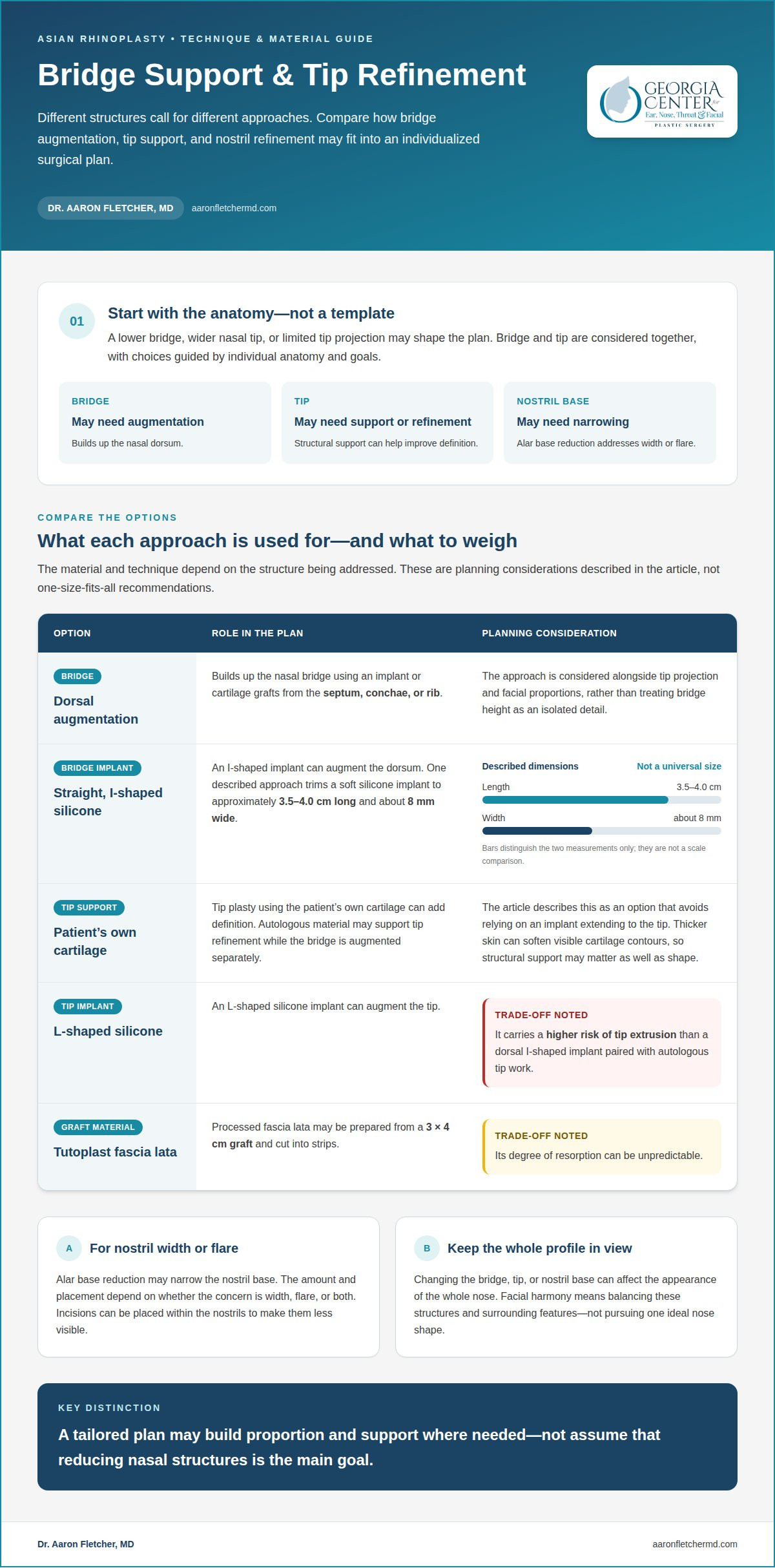
Asian nasal anatomy varies from person to person, but concerns may include a low bridge, a wide nasal tip, or limited tip projection. These features can shape the plan: a consultation considers the bridge and tip together, rather than treating either as an isolated detail.
Nasal Tip Refinement
Nasal tip refinement reshapes or supports the tip to improve definition, particularly when it appears bulbous. Thicker skin can soften visible cartilage contours, so the plan may focus on structural support as well as shape. For example, tip plasty using the patient’s own cartilage can add definition without relying on an implant that extends to the tip.
Nasal Anatomy and Facial Harmony
Facial harmony means balancing the bridge, tip, and surrounding features rather than pursuing one ideal nose shape. A low bridge paired with limited tip projection, for example, may call for a different balance than a wide tip alone. This matters because augmentation and refinement should reflect the patient’s facial proportions and stated goals.
Dorsal augmentation builds up the nasal bridge, using either an implant or cartilage grafts from the septum, conchae, or rib. If a soft silicone implant is selected, one described approach trims it to approximately 3.5-4.0 cm long and about 8 mm wide. A straight, I-shaped implant can augment the dorsum, while autologous material supports tip refinement.
Material choice also affects the trade-offs discussed during planning. Tutoplast processed fascia lata may be prepared from a 3 × 4 cm graft and cut into strips, but its degree of resorption can be unpredictable. An L-shaped silicone implant can augment the tip, yet it carries a higher risk of tip extrusion than a dorsal I-shaped implant paired with autologous tip work. These distinctions help frame the surgical discussion.
What makes Asian rhinoplasty different from standard rhinoplasty?
Asian rhinoplasty may address nostril width and alar shape, while rhinoplasty goals vary from patient to patient. In the United States, look for a surgeon with relevant board certification and experience in nasal surgery and facial plastic surgery.
Alar Base Reduction
Alar base reduction narrows the nostril base when the alae appear wide or flared. It matters because changing the base can alter the nose’s appearance from the front and affect balance with the bridge and tip. The surgical plan considers the shape and position of each nostril, rather than treating width as an isolated measurement.
For example, a patient whose nostrils widen noticeably when smiling may discuss whether reduction fits their goals. Incisions can be placed within the nostrils to make them less visible. The intended change should be considered alongside existing facial proportions, since reducing the base without regard to the rest of the nose can create an unbalanced appearance.
Nostril Reduction
Nostril reduction changes the visible width or shape of the nostrils through carefully placed incisions. It may suit someone seeking a narrower appearance, but it does not address concerns about bridge height or nasal tip definition. The goal is a proportionate change that respects the existing nostril contour.
Incisions placed within the nostrils can reduce visible scarring. The amount and placement of reduction depend on whether the concern is width, flare, or both. Discussing these distinctions during consultation helps define the desired change without assuming that everyone of a particular ethnic background needs the same procedure.
These considerations distinguish a tailored plan from an assumed “Caucasian nose” template. Cartilage, implants, and nostril refinement address different structures, and changing one area can affect the appearance of the whole nose. Asian rhinoplasty techniques focus on the patient’s individual anatomy and stated goals, not ethnicity alone.
For a thoughtful discussion of nasal proportions and surgical goals, explore rhinoplasty care as a next step.
Recovery timelines and pain management
During the first week after surgery, swelling, bruising, discomfort, and temporary difficulty breathing can occur. A nasal splint protects the bridge during this early phase. Pain management follows the surgeon’s instructions, which account for the procedure, the patient’s anatomy, and whether grafts were used. Keep the recovery plan and medication directions available as you heal.
Splint removal after Asian tip rhinoplasty typically occurs one to two weeks after surgery, while swelling may remain. Most patients return to work within 7 to 10 days, and bruising usually resolves within 1-2 weeks. These milestones describe early recovery, not the point when the nose has finished healing or its tip projection has fully settled.
At 6-8 weeks, most swelling has subsided, making the nasal shape easier to assess. Light exercise can resume after 2 to 3 weeks, while more strenuous activities should wait until 6 weeks after surgery. Contact and ball sports also require avoiding for at least 6 weeks. These activity milestones help protect healing tissues from impact or excessive exertion.
Pain and pressure can change as swelling shifts during the first week. Follow the prescribed pain-management plan rather than changing medication use on your own. If discomfort changes or concerns you, communicate with the surgical team. The approach may depend on the extent of surgery, whether the tip was refined, and how you respond during recovery.
Healing continues well beyond the first follow-up milestones. The shape and size of the nose may keep refining for 12 to 18 months after Asian rhinoplasty, as swelling resolves and tissues settle. At 6 months, final results may begin to become apparent, but that is not necessarily the end of refinement. A patient should assess changes over time, not judge tip definition solely by early photographs.
Asian rhinoplasty concerns
A central concern is balancing visible change with structural support. For Asian patients, an implant that augments the bridge can affect the nasal tip, surrounding tissue, and overall harmony. Material and shape matter: an L-shaped silicone implant reaches the tip, while a dorsal I-shaped implant can be paired with separate tip support. Implant placement should account for both bridge and tip, not simply increase height.
Tip extrusion is a specific concern with an L-shaped silicone implant. It carries a higher risk of extrusion at the nasal tip than a dorsal I-shaped implant paired with autologous tip work. This matters because the tip tissue must accommodate the planned support. A careful procedure weighs the desired projection against the location and extent of implanted material.
Grafts involve different considerations. Cartilage from the septum or conchae may be used when suitable; if those sources provide insufficient cartilage, rib is most often used as a donor site. Diced cartilage can also be wrapped in fascia to build the bridge. The choice depends on the patient’s available tissue and the areas requiring support, rather than one method for every “Asian nose.”
Gore-Tex also requires careful handling. Precautions described include soaking it in saline containing Betadine or antibiotics before use, and washing surgical gloves to remove powder or other foreign substances. Delayed inflammation has been illustrated two years after rhinoplasty using Gore-Tex, underscoring why material choice and handling belong in the discussion.
At consultation, clarify which concern drives the plan: bridge height, tip support, or implant-related trade-offs. A focused discussion can connect those priorities with facial harmony and tissue support. Discuss your rhinoplasty concerns as a next step.
Dr. Aaron Fletcher, MD: Rhinoplasty
Dr. Aaron Fletcher, MD offers rhinoplasty for patients considering changes to nasal shape, structure, or proportion. As a board-certified otolaryngologist and facial plastic surgeon, he can discuss how your goals relate to your nasal anatomy and surgical options. A consultation is a useful next step if you’re weighing bridge augmentation, tip support, or nostril refinement and want to understand how those choices relate to your features.
A rhinoplasty consultation can also clarify what recovery may involve and which concerns matter most to you. Bring your priorities, such as improving tip definition or addressing bridge height, so the discussion can focus on your goals and relevant considerations.
Contact Dr. Aaron Fletcher, MD to discuss rhinoplasty and your questions.
Take the Next Step with Clarity
Before moving forward, consider what you want to feel more at ease about in your appearance and what change might support that goal. A conversation about asian rhinoplasty techniques can help turn broad preferences into clear priorities. Think about how you want your nose to relate to your features, which concerns matter most, and what questions would help you make an informed decision. You don’t need technical language or a fixed surgical plan. An honest discussion of your goals and reservations gives the consultation a useful starting point.
Dr. Aaron Fletcher, MD offers rhinoplasty, facelift, and blepharoplasty. If you’re ready to discuss your goals and the considerations that matter to you, contact Dr. Aaron Fletcher, MD. Taking that first step can help you move forward with greater understanding and confidence.
Frequently Asked Questions
Asian Vs Caucasian Noses: What Is The Difference?
There isn’t one defining difference that applies to every person in either group. Nasal bridge height, tip width, projection, skin thickness, and cartilage support vary among individuals. A useful comparison focuses on the specific features a patient wants to address, rather than assuming ethnicity predicts a particular nose shape. For example, two patients with similar bridge concerns may still need different plans because their tip support differs.
How Long Does Recovery Take?
Early recovery and final refinement happen on different timelines. Many patients return to work within 7 to 10 days after surgery, while changes in shape can continue for 12 to 18 months. Plan time away from work based on your comfort and responsibilities, and keep follow-up appointments even after visible bruising fades. Returning to daily routines doesn’t mean the nose has reached its final appearance.
What are common Asian rhinoplasty techniques and how do they differ?
Common approaches include bridge augmentation, cartilage grafting for support, tip refinement, and alar base reduction. Each addresses a different goal: an implant can add bridge height, cartilage can support the tip, and alar reduction can narrow the nostril base. Some plans combine methods, while others address one area. The distinction is where support or reshaping is needed, not one technique for every patient.
How do surgeons address a low nasal bridge in Asian rhinoplasty?
A low bridge can be augmented with a soft silicone implant or graft material. Cartilage may come from the septum or conchae, while rib is commonly used when those sources provide insufficient material. Diced cartilage wrapped in fascia is another way to build the bridge. The choice depends on the desired augmentation, available tissue, and the trade-offs of each material.
How is the nasal tip refined in Asian rhinoplasty?
Tip refinement can use the patient’s own cartilage to improve support and definition. Surgeons may use septal, conchal, or rib cartilage, depending on what is available and the structural needs. For example, a patient seeking greater projection may need support distinct from bridge augmentation. Skin thickness also affects how clearly the underlying structure shows, so a planned change should account for both the framework and the covering tissue.
What materials are used for Asian rhinoplasty implants, and what are their pros and cons?
Options include silicone implants, Gore-Tex, and the patient’s own cartilage; fascia may also be used in grafting. Silicone can augment the bridge, while autologous cartilage can provide structural support without an alloplastic implant. Material-specific trade-offs matter: an L-shaped silicone implant carries greater tip-extrusion risk than a dorsal I-shaped implant paired with autologous tip work. Tutoplast fascia lata can resorb unpredictably.