
A stronger chin doesn’t always create a more balanced face. Chin implants add projection, but the risks of chin augmentation include infection, bleeding, implant movement, nerve injury, scarring, and an uneven or disproportionate result. The right outcome depends not only on the implant, but also on how its size and position relate to your other features.
It’s understandable to focus on how a chin implant might change your profile while also wondering about visible scars, lasting numbness, or a result that feels out of proportion. Understanding the procedure and its possible complications can help you weigh these concerns more clearly.
This article explains what chin implants are, how surgery can affect healing and sensation, and where scars may form. It also explores how facial proportions influence the choice between an implant and reshaping the chin bone, helping you understand the considerations behind a natural-looking result.
Key Takeaways
- Understand how implant placement can affect nearby teeth, gums, nerves, and the position of the implant, and which changes may need follow-up.
- Compare implants with temporary approaches such as fillers and fat grafting in light of your goals and the kind of change you want.
- Learn where scars may form and how bleeding, infection, fluid accumulation, and anesthesia are considered as part of surgical planning.
- Assess chin projection in relation to your other facial features; reshaping or repositioning the chin bone may be an alternative to an implant.
What are the risks of chin surgery?
The risks of chin augmentation depend partly on the method, implant position, and your anatomy. Understanding these differences helps you weigh an aesthetic change against possible complications.
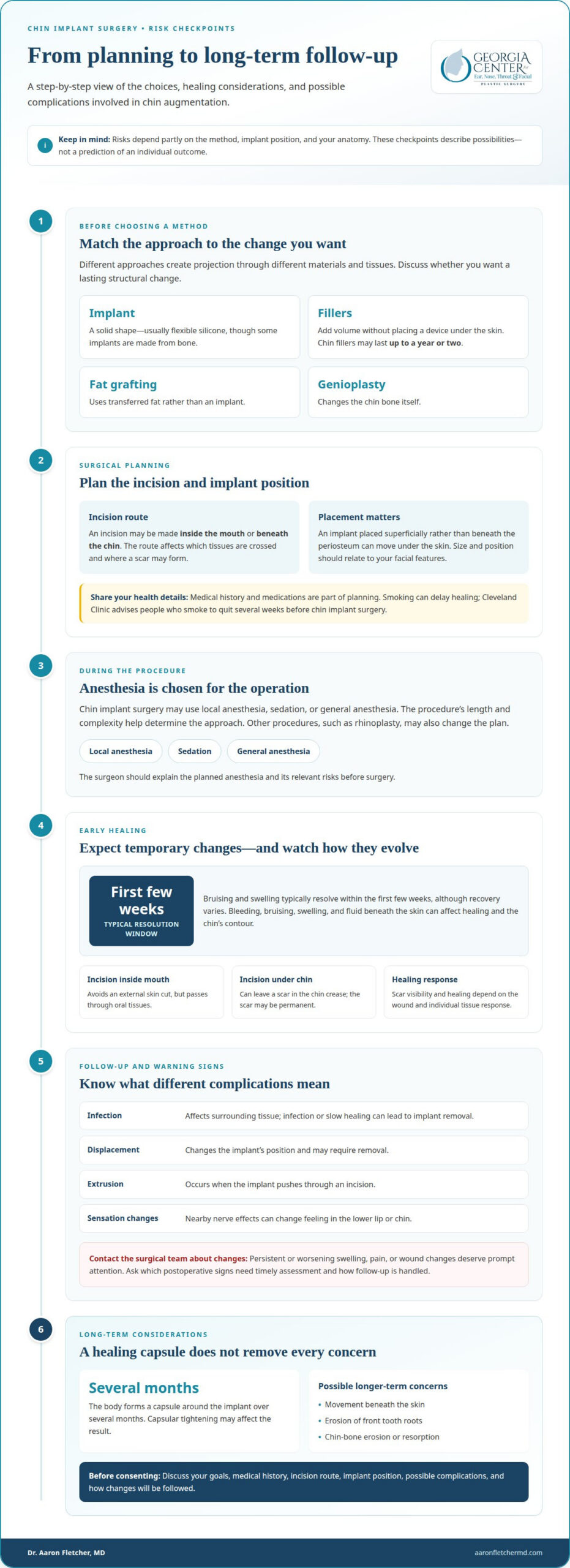
An implant provides a solid shape, while fillers add volume without placing a device under the skin. Chin fillers may last up to a year or two. Fat grafting uses transferred fat rather than an implant, while genioplasty changes the chin bone itself. These approaches create projection in different ways and involve different tissues. Ask how the proposed method fits your goals, including whether you want a lasting structural change.
Long-Term Silicone Implant Concerns
Silicone chin implants are flexible devices placed to change chin projection. Long-term concerns include movement, bone changes, and effects on nearby teeth. An implant placed superficially rather than beneath the periosteum can move under the skin. Implants may also erode the roots of front teeth or contribute to chin-bone erosion or resorption. These possibilities matter when considering an implant intended to remain in place long term. The body forms a capsule around the implant over several months, but this process does not eliminate every concern.
Implant Infection, Displacement, and Extrusion
Infection, displacement, and extrusion are distinct implant complications: infection affects surrounding tissue, displacement changes implant position, and extrusion occurs when the implant pushes through an incision. Cleveland Clinic lists nerve injury and chin-bone erosion or resorption among the risks of chin implant surgery. An implant may need removal because of infection or displacement. Slow healing, infection, or internal bleeding can also lead to removal. These outcomes can affect both recovery and the eventual chin contour, so they belong in the decision before surgery.
Complication Frequency and Risk Reduction
Complications can occur with implants or fillers, but their frequency depends on the treatment and technique. A single rate cannot represent every patient. To reduce risks, discuss your goals, medical history, and concerns with your surgeon before consenting. Smoking can delay healing, and Cleveland Clinic advises people who smoke to quit several weeks before chin implant surgery. Ask how the incision will be made, where the implant will sit, and how combining procedures could affect the plan. Incisions may be inside the mouth or under the chin, while procedure length and complexity help determine the anesthesia approach.
What is a chin implant?
A chin implant is a shaped device placed to add projection or improve a recessed chin. Implants are usually made of flexible silicone, though some are made from bone. During surgery, the implant is inserted through an incision inside the mouth or, in some cases, beneath the chin. The incision route affects where a scar may form and which tissues the procedure passes through.
Smoking can slow the body’s healing process after chin augmentation, so people who smoke may face greater concern about delayed healing. A person’s health, the incision route, and the operation itself also matter when discussing possible complications. Share relevant health details and medications during surgical planning so the team can consider them alongside the desired aesthetic change.
Infection, bleeding, and poor healing are possible surgical complications. Fluid can also collect beneath the skin, affecting swelling and the contour around the implant. An incision inside the mouth avoids an external cut beneath the chin but passes through oral tissues. An incision under the chin creates an external wound that may leave a scar in the crease. Neither route eliminates the need to consider infection and wound healing.
Infection may require treatment, and slow healing, infection, or internal bleeding can lead to implant removal. Persistent or worsening swelling, pain, or changes to the wound deserve prompt attention from the surgical team. Sensation may also change if nearby nerves are affected, including feeling in the lower lip or chin. Discuss these risks before consenting, including which postoperative signs need timely assessment and how follow-up is handled.
For a clear discussion of the procedure and its considerations, explore chin augmentation surgery as part of your planning.
Scarring, bleeding, and anesthesia risks
Chin surgery can affect the skin, deeper tissue, and sensation during recovery. Incision placement and anesthesia are part of planning, especially if another procedure, such as rhinoplasty, is being considered.
Bleeding, Bruising, and Swelling
Bleeding, bruising, and swelling are possible after chin implant surgery and can temporarily alter your profile. Bruising and swelling typically resolve within the first few weeks, although recovery varies with the procedure. Fluid or blood beneath the skin can affect the chin’s contour and healing. Persistent pain or swelling deserves attention from the surgical team, particularly if it worsens rather than improves during recovery.
Incision Location and Scarring
The incision’s location determines whether a chin implant leaves an internal or visible external scar. An incision inside the mouth avoids a skin incision, while an incision beneath the chin can leave a permanent scar in the chin crease. The scar typically heals well, but its visibility and healing depend on the wound and your individual tissue response. A capsule forms around an implant over several months. Ask how capsular contracture, or tightening around the implant, could affect the result.
Anesthesia Risks
Anesthesia for chin implant surgery may be local anesthesia, sedation, or general anesthesia. The procedure’s length and complexity help determine the approach. Your plastic surgeon should explain the planned anesthesia and its relevant risks before surgery, including how other procedures could change the plan. If rhinoplasty is also being considered, discuss the scope and duration of the combined procedure.
Sensation Loss and Scarring
Nerve changes can cause temporary loss of feeling in the chin or lower lip, while scarring may remain after the incision heals. If sensory nerves aren’t cut, recovery may take weeks to months and rarely over a year. Permanent loss of sensation is also possible. These effects matter beyond appearance: altered lower-lip sensation can affect daily comfort, while a scar in the chin crease may remain visible in some profiles.
Facial balance and natural-looking results
A chin implant changes more than the chin’s projection; it can shift the visual balance among facial features. A natural-looking plan considers the chin alongside the lower lip, jawline, and overall profile.
Implant size and shape matter. An implant that projects too far or is too wide can make the chin appear out of harmony with other features. A chin implant may also create a squarer appearance, which can have an undesired masculinizing effect, particularly for women. Excessive projection can deepen the crease beneath the lower lip, changing the profile even when the chin looks more prominent. The goal is proportion, not simply added volume.
Bone structure also influences the available options. In sliding genioplasty, the surgeon moves the patient’s chin bone rather than placing a silicone implant. The bone can move forward, down, or toward the center, and can be widened or narrowed. This technique repositions the chin point in three dimensions, offering different adjustments from an implant. The choice depends on the desired change and how the chin relates to surrounding facial structure.
Before surgery, describe the specific change you want, such as a stronger side profile without a broader frontal appearance. The surgeon can assess your chin from multiple views and discuss how implant size or bone movement may affect facial harmony. If another facial procedure is planned, consider its effect on your overall appearance too. Liposuction, for example, addresses fat rather than chin projection, so it doesn’t substitute for changing chin structure. A clear discussion of your priorities helps align the procedure with your aesthetic goals.
For a focused discussion of proportion and chin projection, explore chin augmentation planning.
Dr. Aaron Fletcher, MD: Chin Augmentation
Dr. Aaron Fletcher, MD offers chin augmentation for people considering a change to chin projection or facial balance. A consultation can help you discuss your aesthetic goals, concerns about surgery, and how your chin relates to your profile. Reviewing these priorities together can clarify what you hope to change and which risks matter most to your decision.
Bring questions about implant placement, incision location, healing, and possible changes in sensation. You can also discuss whether an implant fits your goals or whether another surgical approach may be appropriate. The aim is an informed conversation about your options, trade-offs, and facial proportions, without treating a stronger chin as the only measure of a successful result.
To discuss chin augmentation and your goals, contact Dr. Aaron Fletcher, MD.
Make your next decision with clarity
Understanding the risks of chin augmentation is one part of deciding whether a change aligns with your priorities. Take time to consider what you want your profile to express, how you feel about surgery and recovery, and which uncertainties you need addressed before consenting. A thoughtful conversation can turn broad concerns into specific questions about your goals and options.
Dr. Aaron Fletcher, MD also offers facelift, blepharoplasty, and rhinoplasty. These procedures address different facial concerns and may be relevant when considering your appearance more broadly. The next step is a discussion centered on your needs, not pressure to choose a procedure.
Contact Dr. Aaron Fletcher, MD to discuss your goals and questions. A clear, considered decision is a meaningful step toward feeling comfortable with your path forward.
Frequently Asked Questions
When should I see my healthcare provider?
Cleveland Clinic advises contacting a healthcare provider if swelling or pain lasts longer than a few days after chin implant surgery. Also report a wound that appears to be opening, an implant that becomes visible, or a new change in lower-lip movement. Clear details about when symptoms began and whether they’re worsening can help your care team assess what’s happening.
What are the common risks and side effects of chin augmentation?
Common concerns include swelling, bruising, temporary numbness, and discomfort during healing. Surgical complications can also include bleeding, infection, poor wound healing, asymmetry, or implant movement. Your experience depends on the procedure and your healing response. Before surgery, discuss which changes are expected during recovery and which symptoms should prompt a call, so you have a practical guide for monitoring your progress.
What serious complications can occur after chin implant surgery?
Serious complications can include infection, blood clots, persistent pain, lasting sensory changes, implant extrusion, or injury to nerves that control lower-lip movement. Implant pressure can also erode the roots of front teeth or contribute to chin-bone erosion. Some problems may require implant removal. Before consenting, make sure you understand how complications would be assessed and what treatment could involve.
What are the signs of chin augmentation infection, implant displacement, or nerve injury?
Possible warning changes include worsening pain or swelling, a wound that changes or opens, or an implant that shifts visibly beneath the skin. Extrusion means the implant pushes through the incision. Nerve injury may alter chin or lower-lip sensation; injury to the marginal mandibular nerve can affect lower-lip movement. These signs need clinical assessment, not self-diagnosis.
How long do swelling, bruising, numbness, and pain last after chin augmentation?
Bruising and swelling commonly improve within the first few weeks, and Cleveland Clinic notes that most swelling is expected to be gone by six weeks, depending on the procedure. Chin numbness may last up to three months. Sensory nerves can take weeks to months to recover if they aren’t cut, and rarely longer. Pain duration varies, so report pain that persists beyond a few days.
What is recovery like after chin implant surgery, and when should patients seek medical care?
Recovery may involve taking it easy for a week or two, with a soft-food diet for a few weeks if recommended; Cleveland Clinic describes these as possible aftercare measures. Plan for follow-up and follow the surgical team’s instructions for wound care and activity. Seek medical advice for pain or swelling lasting longer than a few days, or for a new wound or implant change.