
Could one operation address both the way your nose works and the way it looks? If you’re considering septoplasty and rhinoplasty together, it’s reasonable to ask whether combining them is appropriate and how it could affect surgery and recovery. The answer depends on your nasal anatomy, breathing concerns, aesthetic goals, and overall health, not simply on whether two procedures can be performed at once.
Septoplasty focuses on correcting the internal nasal septum to improve airflow, while rhinoplasty reshapes the nose’s appearance and may also address structural concerns. When both functional and cosmetic goals are present, a combined procedure may be considered; in other cases, staged surgery may be more suitable. This article explains the differences between these procedures, the practical trade-offs of combining or separating them, and what recovery planning may involve. You’ll also find ways to prepare for a discussion about your priorities, risks, and options, where nasal function and facial aesthetics can be considered together.
Key Takeaways
- Understand how septoplasty addresses the nasal septum and breathing, while rhinoplasty focuses on nasal appearance and structure.
- Learn how symptoms, medical history, examination findings, and personal priorities contribute to an individualized surgical plan.
- Compare septoplasty and rhinoplasty together with having procedures separately, including differences in coordination and recovery planning.
- Explore why candidacy and potential risks depend on your health, anatomy, goals, and clinical evaluation.
- Prepare for a more informed consultation by clarifying your priorities and discussing timing and trade-offs with Dr. Fletcher, a board-certified otolaryngologist and facial plastic surgeon.
What Does It Mean to Have Septoplasty and Rhinoplasty Together?
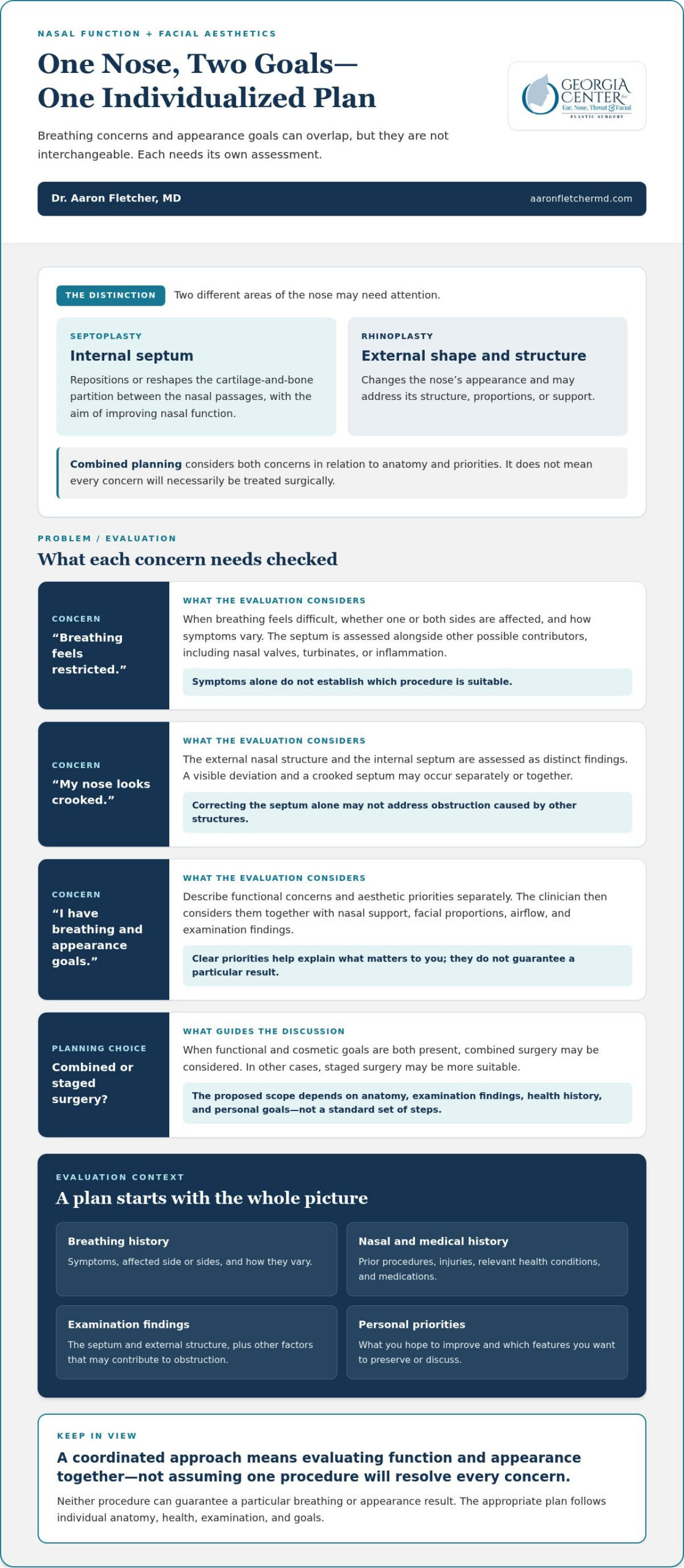
It’s possible to have two separate concerns about your nose: difficulty breathing comfortably and a wish to change its appearance. They can overlap, but they aren’t interchangeable. Septoplasty focuses on the internal partition that separates the nasal passages, while rhinoplasty addresses the nose’s shape and structure. Considering septoplasty and rhinoplasty together means evaluating both concerns in relation to your anatomy and priorities, rather than assuming one procedure will resolve every issue.
The septum is made of cartilage and bone. When it’s significantly off-center, it can narrow one or both nasal passages and contribute to restricted airflow. Septoplasty is surgery to reposition or reshape the septum with the aim of improving nasal function. Rhinoplasty changes the external nose, which may involve its shape, proportions, or structural support. The planned work depends on an individual examination, and neither procedure can guarantee a particular breathing or appearance result.
How Do Septoplasty and Rhinoplasty Differ?
The septum sits inside the nose and helps divide and support the nasal passages. The external nose has its own framework of bone, cartilage, and soft tissue. A person may have a crooked septum, a visible deviation of the nose, or both. These findings need separate assessment because correcting the septum alone may not address obstruction related to other structures, such as the nasal valves or turbinates, or to inflammation inside the nose.
What Does Combined Nasal Surgery Aim to Address?
Combined planning considers how breathing, nasal support, and requested aesthetic changes relate to one another. For example, someone concerned about airflow and an externally crooked nose may need an assessment of both internal alignment and visible structure. That doesn’t mean both concerns will necessarily be treated surgically. The proposed scope depends on examination findings, anatomy, health history, and the patient’s goals.
In brief: Septoplasty addresses the nasal septum and its effect on function; rhinoplasty changes nasal shape or structure; septorhinoplasty commonly refers to combining functional and structural nasal surgery. The term describes a coordinated approach, not a standard set of steps. Two people seeking surgery for similar concerns may have different treatment plans because their anatomy and priorities differ.
That distinction matters during evaluation. Improving septal alignment may support airflow, but breathing can also be affected by other nasal structures or conditions, so a septum finding isn’t the whole picture. An aesthetic goal also needs to be discussed in terms of the nose’s existing support and overall structure. Dr. Aaron Fletcher’s background as a board-certified otolaryngologist and facial plastic surgeon is relevant to considering nasal function and facial aesthetics together. This combined perspective informs individualized planning, but does not promise a specific result.
How Surgeons Plan Septoplasty and Rhinoplasty Together
Planning doesn’t follow a universal checklist or preset sequence of surgical steps. The evaluation brings together your breathing concerns, medical history, nasal anatomy, and appearance goals to determine what may be appropriate. If both functional and aesthetic changes are being considered, the surgeon needs to understand each goal clearly and assess how the planned work could affect the nose as a whole.
What Happens During a Nasal Surgery Evaluation?
Your discussion may cover when breathing feels difficult, whether symptoms affect one or both sides, and how they vary. Prior nasal procedures, injuries, relevant health conditions, and medications can also inform the assessment. The clinician examines the septum and external nasal structure, then considers whether other factors, such as swelling or the shape of internal nasal structures, may contribute to obstruction. Findings guide the next steps; symptoms alone don’t establish which procedure is suitable.
It can help to arrive with a short list of concerns and questions. Note what you hope to improve, what you’ve already tried or experienced, and whether breathing changes in particular situations. If you’ve had a prior nasal operation, describe what was done and how your symptoms or appearance changed afterward. These details give the evaluation useful context without assuming a particular diagnosis or surgical plan.
How Are Breathing and Appearance Goals Balanced?
Describe functional concerns and aesthetic priorities separately. For example, explain if one side feels harder to breathe through, then identify a specific shape or proportion you’d like to discuss. Separating the goals clarifies what matters to you while allowing the clinician to assess them in relation to nasal support, facial proportions, and airflow. The plan and expected results depend on your anatomy and examination, not on a standard approach to septoplasty and rhinoplasty together.
Aesthetic goals also need careful discussion. Bring clear descriptions of what feels important to you, including any features you want preserved. The clinician can explain which changes may be compatible with your anatomy and how structural considerations relate to the requested appearance. Discussing these points openly helps align expectations, but it doesn’t guarantee a particular result.
Dr. Aaron Fletcher’s background as a board-certified otolaryngologist and facial plastic surgeon offers relevant context for evaluating nasal function alongside facial aesthetics. To prepare, organize your symptoms, medical and surgical history, and appearance priorities so each can be discussed in turn. You can also explore rhinoplasty care and planning as you consider the questions you’d like to raise.
Combined Surgery or Separate Procedures: How to Compare the Options
If you have both functional and aesthetic concerns, it’s natural to wonder whether addressing them in one operation adds risk or makes the process easier. Neither assumption is reliable on its own. Combining procedures requires careful assessment of the overall surgical scope and your health. Staging them also involves trade-offs. The appropriate comparison depends on your examination findings, goals, and recovery circumstances.
| Consideration | Combined procedure | Staged procedures |
|---|---|---|
| Coordination | Functional and structural goals are planned within one surgical plan. | Each procedure is planned separately, allowing the goals to be addressed at different times. |
| Recovery planning | There is one recovery period to plan for, though the experience depends on the procedure’s scope and the individual. | There is more than one treatment and recovery period to plan around. |
| Surgical scope | The surgeon considers the combined work and its implications as a whole. | The scope of each operation is considered separately, with timing based on the treatment plan. |
| Individual considerations | Health, anatomy, goals, and the extent of planned changes inform whether combining is appropriate. | Distinct goals or clinical planning considerations may inform whether procedures are separated. |
What May Make a Combined Approach Worth Discussing?
A combined approach may be worth discussing if both breathing and appearance concerns are part of your goals. Coordinating them in one surgical plan can allow the surgeon to consider related functional and structural changes together. It may also consolidate recovery planning into one period. That doesn’t mean recovery will be simple or identical for everyone: the planned scope, your health, and your individual healing all matter.
The question isn’t simply whether septoplasty and rhinoplasty together can be performed. The surgeon must assess whether the overall scope is appropriate in light of your nasal anatomy, health history, and priorities. Ask how the proposed plan addresses each goal and what trade-offs may apply. A clear explanation can help you understand the reasoning without presuming a particular outcome.
When Might Staging Procedures Be Considered?
Separate procedures may be discussed when functional and aesthetic goals call for distinct planning, or when examination findings and other clinical considerations affect timing. Staging means planning for more than one treatment period, but it isn’t automatically safer, more effective, or necessary. The choice depends on the individual assessment and a discussion of the benefits and burdens of each approach.
In either pathway, ask what the proposed surgical scope includes, how each of your goals fits into it, and what recovery planning may involve. These questions keep the comparison practical. The aim isn’t to choose the option that sounds universally better, but to understand which plan best fits your circumstances after an individualized clinical evaluation.
Candidacy, Risks, and Recovery Planning for Combined Nasal Surgery
Considering septoplasty and rhinoplasty together involves more than deciding whether to address breathing and appearance in one operation. Candidacy depends on your symptoms, nasal anatomy, health history, goals, and clinical examination. A particular breathing complaint or aesthetic concern alone can’t determine whether combined surgery is appropriate. The consultation helps clarify whether functional treatment, cosmetic changes, or a coordinated plan aligns with your individual needs.
What Factors Can Affect Candidacy?
The evaluation considers why you’re seeking surgery, what the examination reveals, your overall health, and what changes you hope to achieve. Be prepared to discuss prior nasal procedures or injuries, relevant medical conditions, medications, and how symptoms affect your daily life. Realistic expectations matter, too. Your clinician can explain which goals may be addressed and how anatomy or health considerations could shape the recommended scope.
Combining procedures also means considering the overall demands of the proposed operation, rather than assessing each goal in isolation. As with surgery generally, potential risks and limitations should be discussed in relation to your health and the specific plan. Ask which risks apply to your circumstances, what steps are taken to manage them, and what may happen if your breathing or appearance goals can’t be fully achieved. No plan can promise a particular outcome.
Before your consultation, consider bringing questions such as:
- Which findings may be contributing to my breathing concerns?
- What functional and aesthetic goals could the proposed plan address?
- What risks or limitations are most relevant to my health and anatomy?
- What follow-up care and recovery instructions should I expect?
What Should Patients Know About Recovery?
Recovery instructions depend on the surgical plan and your individual healing. Swelling, temporary congestion, and activity limits may be part of the recovery experience, but the details and duration can vary. Follow the instructions provided by your surgeon rather than relying on generalized timelines or another person’s experience. Clarify how to manage discomfort, which activities to limit, and when to attend follow-up appointments.
Healing continues after the initial recovery period, and changes in swelling and appearance can take time to settle. Ask how progress will be assessed and which symptoms should prompt you to seek guidance. Planning ahead for help with daily responsibilities and time to follow your care instructions can also make the recovery period more manageable.
A thoughtful evaluation should leave you with a clear understanding of the proposed goals, individual considerations, and next steps. Dr. Aaron Fletcher’s board-certified background in otolaryngology and facial plastic surgery is relevant to discussing nasal function and facial aesthetics in the same consultation. To review your priorities and questions in a personalized evaluation, discuss your nasal surgery goals.
Choosing a Thoughtful Path to Septoplasty and Rhinoplasty Together
Deciding whether to combine procedures is best approached as a series of informed conversations: clarify what you want to address, understand the examination findings, compare possible timing, and discuss the trade-offs that apply to you. Septoplasty and rhinoplasty together may be appropriate for some people with both functional and aesthetic goals, but the choice depends on individualized clinical judgment rather than a general rule.
Before your consultation, write down what you experience and what you hope to change. Include when breathing feels difficult, any prior nasal procedures or treatments, and the appearance details that matter most to you. Specific descriptions can help distinguish a functional concern from an aesthetic preference and give the clinician a clearer picture of your priorities.
Questions to Bring to a Consultation
A prepared list can help you use the conversation well. Consider asking:
- How will you evaluate my breathing concerns and appearance goals separately?
- Which examination findings inform the proposed plan?
- What alternatives, including separate procedures or no surgery, should we discuss?
- What risks and limits are most relevant to my health and anatomy?
- What recovery instructions and follow-up should I plan for?
These questions invite a clear explanation of the reasoning behind a recommendation. You should leave understanding what the proposed treatment is intended to address, what it may not change, and how the plan relates to your priorities. Expected results should be discussed realistically, without assuming surgery can meet every goal.
How Dr. Fletcher’s Combined Expertise Informs the Discussion
Dr. Aaron Fletcher is a board-certified otolaryngologist and facial plastic surgeon with nearly a decade of surgical experience. Otolaryngology and facial plastic surgery provide relevant perspectives for discussing nasal function alongside appearance and facial proportions. This background supports a comprehensive conversation about your concerns, examination findings, and possible options; it doesn’t guarantee a particular outcome. The focus remains on helping you understand the considerations behind an individualized plan.
For additional context as you prepare, the practice’s comprehensive rhinoplasty guide can help you think through appearance priorities and the questions you may want to raise. Bring those priorities into the consultation alongside your symptom history and prior treatment details. These practical steps can make it easier to compare timing options and understand potential trade-offs without feeling rushed toward a decision.
If you’re ready to discuss how your breathing concerns and aesthetic goals may be evaluated, schedule a consultation with Dr. Fletcher.
Take the Next Step With Clarity
You don’t need to arrive at a consultation with a decision already made. Bring your questions, describe what you hope to improve, and leave room to understand which options fit your individual findings. If you’re considering septoplasty and rhinoplasty together, the discussion can help you weigh whether one coordinated plan or a different approach aligns with your priorities and health.
Dr. Fletcher’s combined experience in otolaryngology and facial plastic surgery provides a relevant perspective for discussing nasal function and appearance in the same evaluation. The goal is a thoughtful conversation about your concerns, the available options, and realistic expectations, so you can decide how to proceed with greater confidence.
Schedule a consultation with Dr. Fletcher to discuss your nasal surgery goals and next steps. An informed decision begins with a conversation tailored to you.
Frequently Asked Questions
Can septoplasty and rhinoplasty be performed together?
Yes, surgeons may combine the procedures in selected cases, but an evaluation is needed to determine whether that approach fits your situation. For example, you may want to discuss both persistent airflow concerns and a visible nasal feature, yet the examination may show that the concerns have different causes. Before the consultation, note when breathing feels restricted and which appearance changes matter most so both priorities can be discussed clearly.
What is the difference between septoplasty and septorhinoplasty?
Septoplasty addresses the nasal septum, while septorhinoplasty commonly refers to septal work performed alongside structural or aesthetic nasal surgery. The name alone doesn’t tell you exactly what a proposed operation includes. Ask which parts of the nose the plan addresses, whether its purpose is functional, aesthetic, or both, and how each goal will be assessed. This helps you understand the intended scope before making a decision.
Is it better to have septoplasty and rhinoplasty at the same time?
There isn’t one timing choice that’s best for every patient. A combined operation may coordinate related goals, while staging means planning for more than one treatment and recovery period. Consider how either option could fit with your personal responsibilities and ability to follow aftercare instructions. During consultation, ask why a particular timing is being considered, what alternatives are reasonable, and what trade-offs each choice may involve for you.
Can rhinoplasty improve breathing as well as appearance?
It may, if the planned structural changes are relevant to the cause of airflow difficulty, but a cosmetic change alone doesn’t necessarily improve breathing. Nasal obstruction can have more than one contributing factor. Describe symptoms precisely, including whether they affect one or both sides and whether they vary over time. This information can help the clinician distinguish your functional concerns from your appearance goals and explain what the assessment suggests.
What are the risks of combining septoplasty and rhinoplasty?
Potential risks depend on your health, nasal anatomy, and the scope of the operation, so your surgeon should explain them in relation to your plan. Ask which risks are most relevant to you, what uncertainties remain, and what alternatives exist. You can also ask whom to contact if a concern arises during recovery and what follow-up is planned. Clear answers help you make a considered decision without relying on general claims.
How long does recovery take after combined septoplasty and rhinoplasty?
Recovery varies, so your surgeon’s instructions are more useful than a timeline based on someone else’s experience. Swelling or congestion may affect how you feel during healing, while activity guidance and follow-up depend on the procedure performed. Before surgery, ask when you can resume your usual work, exercise, and daily activities, and which changes or symptoms should prompt you to contact the clinical team. Plan responsibilities around the guidance you receive.
How do I know whether I need septoplasty or rhinoplasty?
You can’t determine the appropriate procedure from appearance or symptoms alone; a clinical assessment helps clarify the cause of your concerns. Before an appointment, record when breathing difficulty occurs, any prior nasal treatments or procedures, and the specific changes you’d like to discuss. For instance, separate a concern about airflow from a preference about shape. This gives the clinician a clearer starting point for evaluating your priorities and explaining possible options.