
Rhinoplasty recovery is usually more uncomfortable than intensely painful: for most people, pain and discomfort settle within 24-48 hours after surgery. If you’re wondering how painful rhinoplasty recovery is, expect mild or minimal discomfort for many patients, though swelling, bruising, pressure, and nasal stuffiness can make the first days feel challenging.
It’s understandable to focus on pain, especially when you’re also wondering how it will feel to breathe through a stuffy nose or have the splint removed. Recovery involves more than soreness, and knowing what to expect can make each stage feel more manageable. This guide explains the discomfort you may experience, how congestion and activity limits affect daily life, and what to expect at splint removal and follow-up. It also covers changes that can occur during healing and symptoms that call for prompt contact with your surgeon, so you can approach recovery with clearer expectations.
Key Takeaways
- Discomfort is often mild and settles within 24-48 hours, while swelling and bruising can continue through the early recovery period.
- Nasal stuffiness can make breathing feel restricted for the first few days; follow your surgeon’s guidance on sprays or irrigations.
- Severe pain or significant nasal blockage needs prompt assessment by your surgeon, as it can signal a complication.
- Protect your healing nose by avoiding strenuous activity and situations that could cause impact, and follow your surgeon’s instructions about resuming activities.
- The splint is usually removed at a follow-up consultation 5 to 7 days after surgery, giving you a chance to discuss healing and next steps.
When should you call for help?
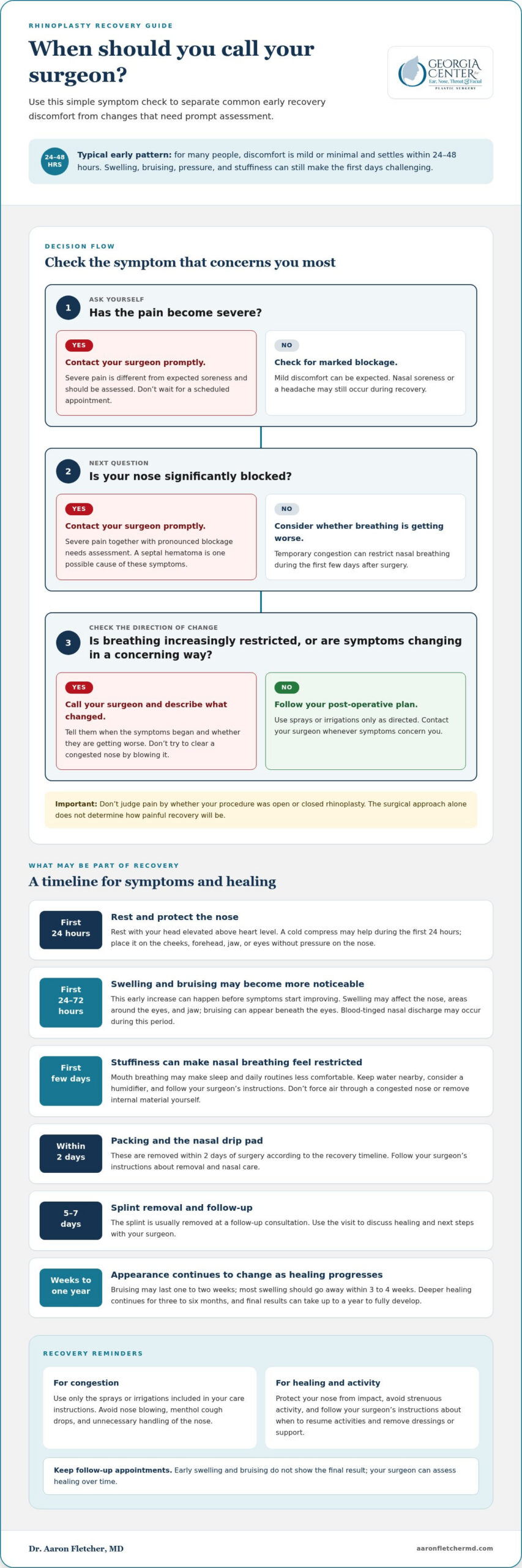
Rhinoplasty discomfort is often mild, and pain usually settles within 24-48 hours after surgery. Nasal soreness or a headache can still occur, while prescribed pain medication may help during the first few days. Severe pain is different from expected soreness: contact your surgeon promptly so the cause can be assessed. Don’t wait for a scheduled appointment if pain becomes severe or you develop pronounced nasal blockage.
Open and closed rhinoplasty are different surgical approaches, but the approach alone doesn’t determine how painful recovery will be. Open rhinoplasty uses a small incision between the nostrils, allowing the surgeon to lift the skin and adjust underlying cartilage. Your discomfort also depends on healing tissues and swelling after surgery. Follow your surgeon’s recovery instructions and report severe pain instead of judging it by the technique’s name.
Swelling and bruising can increase during the first 24 to 72 hours, and are often most noticeable during the first 72 hours. Swelling may affect the nose, areas around the eyes, and jaw; bruising can appear beneath the eyes. This early increase can happen before symptoms start improving. Bruising may last one to two weeks, while discomfort, swelling, and bruising can continue for up to seven days. The early appearance alone doesn’t show the final result.
Most swelling should go away within 3 to 4 weeks, but deeper healing takes longer. The healing process continues for three to six months after surgery, and final rhinoplasty results can take up to a year to fully develop. This distinction matters when assessing appearance: gradual changes may continue after the visible bruising has faded. Keep follow-up appointments so your surgeon can assess healing over time, rather than relying on an early view of the nose.
Minor bleeding or blood-tinged nasal discharge may occur during recovery, and blood-tinged discharge may last 48-72 hours following surgery. A septal hematoma is one possible cause of severe pain and nasal blockage after rhinoplasty. Because it needs assessment by the surgeon, contact them promptly if those symptoms occur together. Don’t dismiss intense pain as routine swelling or wait for your next appointment when breathing feels markedly blocked.
For expected swelling, rest with your head elevated above heart level on the first day after surgery. A cold compress may help during the first 24 hours, placed on the cheeks, forehead, jaw, or eyes without pressure on the nose. Keep the nasal area protected and follow instructions about when to remove dressings or other support. Call your surgeon when pain is severe, blockage is pronounced, or symptoms concern you; describe when they began and whether they are changing.
Nasal stuffiness and temporary breathing difficulty
Nasal congestion can make breathing feel restricted during the first few days after rhinoplasty. Knowing what may ease that sensation, and what your post-operative instructions allow, can help you manage recovery.
Congestion and Mouth Breathing
Nasal congestion is temporary blockage that may lead you to breathe through your mouth. During the first few days after surgery, this can make sleep and daily routines less comfortable. Keep water nearby and follow your surgeon’s instructions for caring for your nose. Don’t try to clear congestion by blowing your nose, as this can disturb healing tissues.
Sinus Pressure During Recovery
Congestion can create fullness or pressure around your nose and sinuses. This can be uncomfortable, especially when nasal breathing is already restricted during the first few days. Resting with your head elevated may help reduce pressure and swelling. Use nasal sprays or irrigations only as directed in your post-operative instructions, rather than adding products on your own.
Breathing Through the Nose
Temporary nasal blockage can make airflow feel limited, even when you can breathe comfortably through your mouth. A humidifier by the bed may soothe your nasal passages and throat during recovery. Keep the room comfortable, and don’t force air through a congested nose. If breathing feels increasingly restricted instead of gradually improving, contact your surgeon and describe what has changed.
In the first few days after rhinoplasty, congestion may be more noticeable than pain. That doesn’t mean you should try to remove internal material or alter dressings yourself. Packing and the nasal drip pad are removed within 2 days of surgery, according to the recovery timeline. Follow your surgeon’s instructions about removal and nasal care, since handling the nose unnecessarily can interfere with healing.
Use only the sprays or irrigations included in your care instructions to manage congestion. They may ease nasal stuffiness, but the right approach depends on your surgeon’s directions and the procedure performed. A humidifier is another gentle way to soothe dryness without putting pressure on your nose. Avoid menthol cough drops, which can increase nasal drip and irritation during recovery.
Temporary congestion after rhinoplasty is distinct from ongoing sinus concerns. If you have persistent sinus symptoms outside the recovery period, information about sinus surgery can help you understand a separate treatment option. For symptoms during healing, follow your post-operative plan and contact your surgeon if breathing becomes markedly worse or your symptoms change.
How Painful Is Rhinoplasty?
For many patients, rhinoplasty causes mild or minimal discomfort rather than significant pain. Before surgery, it’s useful to understand the type of discomfort, how long it may last, and what can help.
Rhinoplasty and septoplasty address different concerns, and pain depends partly on the work performed. No single pain ranking applies reliably to every patient or every surgery.
Recovery discomfort can feel like nasal soreness, pressure, or a headache. Pain and discomfort usually settle within 24-48 hours after surgery, though bruising and swelling can last longer.
To ease pain and swelling, follow your surgeon’s medication instructions and rest with your head elevated. During the first 24 hours, a cold compress on your cheeks or forehead may help; avoid pressure on your nose.
Typical Pain and Discomfort
Typical postoperative discomfort means mild soreness, nasal pain, pressure, or a headache as tissues begin healing. For most people, pain settles within 24-48 hours after surgery, and soreness is often minimal by the end of the first week. Swelling and bruising can last up to seven days, so tenderness may outlast the sharpest discomfort.
If osteotomies are part of the procedure, intermittent sensitivity over the nasal bridge may continue for several weeks. It may come and go rather than remain constant. Track whether discomfort is easing or worsening. Don’t simply wait for routine healing if pain is severe.
Pain Medicine and Remedies
Pain medicine can help manage early discomfort while your nose heals. Your surgeon may prescribe medication for the first few days after surgery. Follow the instructions for your prescription. Before taking an over-the-counter remedy, ask your surgeon whether it fits your recovery plan instead of adding medication on your own.
Severe pain warrants prompt contact with your surgeon, even if you’re taking prescribed medication. Explain when the pain began, where you feel it, and whether it is worsening. These details help the surgeon assess whether you need an evaluation rather than a routine adjustment to pain management.
Reducing Pain and Swelling
Reducing pain and swelling involves protecting the nose while easing discomfort around it. During the first 24 hours, place a cold compress on your cheeks, forehead, jaw, or eyes, never directly against the nose. A cold pack may be used for 10 to 20 minutes at a time, every 1 to 2 hours while awake for the next 3 days or until swelling goes down.
Keep your head elevated above heart level on the first day after surgery, and avoid putting pressure on your healing nose. These measures may help address swelling without disturbing the surgical area. Follow your surgeon’s instructions about medication and recovery care, especially if discomfort becomes severe or changes suddenly.
Avoiding strenuous activity and nose trauma
Activity restrictions protect healing tissues from increased swelling and accidental impact. Limits change over time, so distinguish gentle movement from strenuous exercise and activities that risk contact with your nose.
Activity Restrictions During Recovery
Patients should avoid strenuous activities for 2 to 3 weeks or until their doctor says it is okay. Exercise that could increase swelling or expose the nose to injury is best avoided during the initial stages of recovery. Light walking is encouraged during recovery to promote circulation, but it should remain gentle rather than becoming a workout.
Protect the nose from everyday pressure, too. Don’t blow your nose for at least 1 week, and avoid rubbing it for 8 weeks. Choose clothes that don’t need to be pulled over your head for 1 week, reducing the chance of catching the nose while dressing. Take care to avoid activities or pressure that could disturb the nose during recovery.
Returning to Light Activities
Light activities are gentle daily movements that don’t strain the body or risk bumping the nose. Many patients can return to light activities by the second week after surgery. A calm walk is a practical example, while strenuous workouts remain restricted for 2 to 3 weeks or until the doctor approves them.
Use your symptoms and the activity itself to guide your pace while protecting the surgical area. Postpone any activity that puts your nose at risk of contact. If your work involves physical effort, consider whether bending, lifting, or quick movements could make it harder to avoid strenuous activity during early healing.
Some restrictions last longer than the initial exercise limits. If nasal bones were broken during rhinoplasty, avoid injury to the nose for about 3 months. This longer precaution reflects the need to protect the healing bones from impact. Contact sports or crowded activities can create avoidable contact risks, so choose safer alternatives while that restriction applies.
Plan around the specific movements involved in daily routines. For example, pull-on shirts can catch the nose, while glasses place pressure directly on it. Use clothing that opens at the front for 1 week, and arrange vision alternatives if needed during the 4 weeks when glasses shouldn’t rest on the nose. Keep following the surgeon’s instructions as activity resumes.
Activity guidance doesn’t mean avoiding all movement. Light walking supports circulation, while strenuous activity can increase swelling or expose your nose to trauma. This distinction helps you stay mobile without assuming every task is safe. Keep your head elevated while resting, avoid contact with your nose, and return to demanding activities only within the limits in your recovery instructions.
Splint removal and follow-up
The nasal splint is usually removed during a follow-up consultation 5 to 7 days after surgery. This appointment marks an early checkpoint, not the end of healing. The splint coming off lets the surgeon review your nose without its external support and discuss what to expect next. Your appearance at this visit is still an early view, not a final result.
Splint removal and follow-up go together: the surgeon removes the splint and assesses early healing during the appointment. Keep the appointment rather than trying to remove or adjust the splint yourself. If you have questions about pressure, discomfort, or care before the visit, write them down so you can raise them during the consultation.
The nose may still look swollen after the splint comes off. Most swelling should go away in 3 to 4 weeks, but the healing process continues for three to six months after surgery. Final results can take up to a year to fully develop. That longer timeline explains why an early appearance should not be treated as the finished result.
Follow your surgeon’s instructions for any tape that remains after splint removal. Incision tape should stay in place for a week or until it falls off, unless your doctor gives different instructions. Don’t pull tape away to inspect your skin or change it for cosmetic reasons. If you’re unsure whether a piece has loosened, ask about it at follow-up.
Use the appointment to clarify which changes are expected as healing progresses. For example, ask how to protect your nose during daily activities and what to do with any remaining tape. Mention discomfort or pressure that concerns you, and explain when you noticed it. Specific details help keep the conversation focused on your recovery, not just appearance.
Splint removal is an initial review, but healing continues after the appointment. Keep following your care instructions, since splint removal doesn’t mean your nose is ready for unrestricted activity or pressure. Protect the area and attend the follow-up appointments in your recovery schedule.
For guidance tailored to your rhinoplasty and recovery timeline, schedule a rhinoplasty consultation.
Dr. Aaron Fletcher, MD: Facelift
Dr. Aaron Fletcher, MD offers facelifts for people considering surgery to address facial aging. Rhinoplasty focuses on the nose, while a facelift addresses facial concerns. The right procedure depends on the changes you want to discuss. If your questions have shifted from recovery to broader facial goals, a consultation can help clarify which option may fit and what each procedure involves.
For questions about rhinoplasty or whether a facelift may suit your goals, contact Dr. Aaron Fletcher, MD or visit the practice website.
Make Your Next Step a Thoughtful One
Understanding how painful rhinoplasty recovery can be is one part of deciding whether surgery fits your goals. Consider what you hope to change, what matters most in your daily life, and which questions you want answered before deciding. A focused conversation can connect those priorities with an appropriate surgical plan, without requiring you to make a decision before you feel ready.
Dr. Aaron Fletcher, MD offers rhinoplasty, facelifts, and blepharoplasty. These procedures address different concerns, so discussing your goals can help clarify which option merits attention. Raise any remaining questions about your desired changes, the procedure, or recovery. Clear information can help you make a considered choice at your own pace.
Contact Dr. Aaron Fletcher, MD to discuss your goals and next steps. A well-informed decision begins with a conversation centered on what matters to you.
Frequently Asked Questions
How can you care for yourself at home?
Follow your surgeon’s written care plan, and organize supplies before returning home. Keep your head elevated while resting, drink fluids regularly, and avoid blowing your nose for at least 1 week. Leave incision tape in place for a week or until it falls off, unless your doctor gives different instructions. A simple checklist can help you track medication directions, follow-up appointments, and changes you want to report.
How painful is rhinoplasty recovery on a 1-10 scale?
There isn’t a dependable 1-10 score that predicts each person’s experience. Many patients describe rhinoplasty discomfort as mild or minimal, but a number can’t capture pressure, nasal soreness, or a headache equally for everyone. Rather than comparing scores, note whether pain is easing or worsening and whether medication helps. Severe pain deserves prompt attention from your surgeon, regardless of the number you might assign it.
How long does pain last after rhinoplasty?
For most people, pain and discomfort settle within 24-48 hours after surgery. Some soreness can remain as healing continues, and intermittent sensitivity over the nasal bridge may last several weeks after osteotomies. Bruising or swelling can persist after the sharper discomfort eases, so appearance alone doesn’t indicate how much pain you should feel. Report pain that becomes severe or worsens instead of improving.
What pain medication is typically used after rhinoplasty?
Surgeons may prescribe pain medication for the first few days after surgery. The medication and directions depend on your recovery plan, so use the prescription exactly as directed. Before adding an over-the-counter medicine, ask your surgeon or follow your written instructions. Don’t assume a familiar remedy is suitable after surgery. If medication isn’t controlling severe pain, contact your surgeon rather than taking extra doses.
When is pain worst after rhinoplasty, and when does it improve?
Discomfort is generally concentrated in the early recovery period, and for most people it settles within 24-48 hours after surgery. Swelling may peak within 48 hours, but that timing doesn’t mean pain necessarily peaks at the same moment. If soreness is increasing rather than easing, or becomes severe, contact your surgeon. Tracking changes morning and evening can help you describe the pattern clearly.
How painful is rhinoplasty with nasal packing or splints?
Packing or a splint can add pressure or discomfort, but there isn’t a reliable pain score for these supports. Packing and the nasal drip pad are removed within 2 days of surgery; a nasal splint is usually removed at follow-up 5 to 7 days after surgery. Don’t remove or adjust either yourself. Follow your surgeon’s instructions, and report severe pain or marked nasal blockage.
What symptoms after rhinoplasty are normal, and what pain signals a complication?
Swelling around the nose, eyes, and jaw, bruising, and minor bleeding can occur during recovery. Blood-tinged discharge may last 48-72 hours after surgery, and bruising can remain for one to two weeks. Severe pain with significant nasal blockage may signal a complication, including a septal hematoma. Contact your surgeon promptly for assessment, especially if those symptoms occur together or your condition worsens.
How painful is rhinoplasty compared with septoplasty or other surgeries?
There isn’t a reliable pain ranking between rhinoplasty, septoplasty, or other surgeries; discomfort depends partly on the work performed. Many rhinoplasty patients have mild or minimal discomfort that settles within 24-48 hours.