
Keeping glasses off your nasal bridge for longer than you might expect can help protect your healing nose. If you’re asking when you can wear glasses after rhinoplasty, avoid putting pressure on your nasal bridge until your surgical team says it is safe.
It’s understandable to want a clear date, especially if glasses are part of your daily routine. When can I wear glasses after rhinoplasty depends on how your nose is healing and whether surgery involved reshaping the nasal bones. A splint coming off does not necessarily mean regular frames are comfortable or appropriate yet.
Glasses can put pressure on healing structures, and the timing for resuming them varies during recovery. This guide explains alternatives that can help you see clearly without placing weight on your nose, and what to consider before returning to regular glasses.
Key Takeaways
- Glasses may rest gently on the protective splint during the first week, but that doesn’t mean regular use on the nasal bridge is safe once it’s removed.
- Plan to keep pressure off the bridge for at least 4 to 6 weeks after splint removal; 12 weeks is a general milestone for potentially resuming glasses.
- Healing timelines depend in part on whether the nasal bones were reshaped, so get your surgeon’s approval before wearing frames directly on your nose.
- Contact lenses and glasses-support options that lift frames off the bridge may help you see clearly while your nose heals.
- When you’re cleared to resume glasses, ask how to ease back into wearing them without placing unnecessary pressure on the healing nose.
How Long After Rhinoplasty Can I Wear Glasses?
Glasses may rest gently on the protective splint during the first week after surgery. Once the splint is removed, keep pressure off your nasal bridge and follow your surgeon’s guidance on when regular frames can return.
Surgeon Guidance Before Wearing Glasses
Your rhinoplasty surgeon’s approval is the practical guide for resuming glasses. The recommendation depends on your healing and whether surgery changed the nasal bones or bridge. Before wearing glasses directly on your nose, discuss your frames, their weight, and how long you need them each day. This helps your surgical team assess pressure on the healing area and advise you on a safer transition.
Don’t treat splint removal as automatic clearance for regular glasses. The external splint is typically removed 6-7 days after surgery, but healing continues afterward. Mention prescription glasses and sunglasses during a follow-up, especially if you rely on them for driving or work. Your surgeon can clarify whether frames should stay off the bridge and whether a support alternative is appropriate.
Glasses While the Surgical Splint Is In Place
During the first week, the protective splint can provide a surface for glasses to rest on. Frames may be placed gently on top of the cast or splint, rather than letting the bridge bear their weight. This can help you manage essential tasks while reducing direct pressure on your nose. Handle glasses carefully so they do not shift or press against the healing area.
The splint is temporary, not permission to resume ordinary wear indefinitely. After it comes off, avoid placing glasses directly on your nasal bridge until your surgeon says it is safe. If your frames slide or touch your nose, stop wearing them that way and use an alternative that keeps their weight off the bridge. Ask your surgeon how to manage the transition.
Resuming Glasses During Recovery
After splint removal, the timing depends partly on whether rhinoplasty involved nasal bone fractures or osteotomies. When bone work was performed, pressure on the bridge generally needs to be avoided for 4 to 6+ weeks, and some patients need longer. In simpler cases, some patients may be cleared to wear glasses after a few weeks. The extent of bone work is a key distinction.
A useful timeline separates splint protection from bridge contact:
- First week: Glasses may rest gently on the splint.
- After splint removal: Keep frames from resting directly on the bridge.
- Following weeks: Resume direct wear only when your surgeon approves it.
- 12 weeks after surgery: This is a general milestone for potentially resuming glasses.
The stages of recovery explain why there is no single date for everyone. The surgical changes and your healing progress shape the transition.
Regular Eyeglasses by Week
During the first week, glasses can usually rest on the protective splint. After its removal, avoid direct bridge pressure for at least 4 to 6 weeks. Lightweight glasses may be gradually reintroduced during weeks 3 to 6 if your surgeon advises it, while 12 weeks is a general milestone for potentially returning to regular glasses.
Surgeons’ recommendations vary with the procedure and healing. Some patients may be cleared earlier after simpler surgery, while work on the nasal bones can call for a longer restriction. Resume regular wear only after your surgeon approves it, and follow directions about frame weight or duration. This guidance applies to prescription glasses and sunglasses alike, since both can put pressure on the bridge.
Pressure from glasses on healing nasal bones and cartilage
Glasses can press on the nasal bridge while bones and cartilage are healing. The amount and location of pressure matter, especially after surgery on the bridge.
Pressure on the Healing Nasal Bridge
A glasses bridge and nose pads concentrate weight on a small area of the healing nose. During the first month after rhinoplasty, consistent pressure can affect the result, including by causing an indentation or shifting nasal bone or cartilage. Even a light plastic frame can press repeatedly if it slips down. Keeping frames off the bridge reduces this avoidable contact.
Factors Affecting Glasses Use
The timing depends on the type of rhinoplasty, the areas reshaped, and healing progress. Work involving nasal bones or the bridge calls for particular care: glasses generally should not rest directly on the bridge for about six weeks, and some patients need longer. Pressure should be avoided for 4 to 6+ weeks when significant bony work was performed. Frame weight and fit also affect how force is distributed.
Signs of Possible Harm from Glasses
A new indentation, a visible change in alignment, or increased swelling or bruising where frames rested may signal excess pressure. These signs do not prove that the surgical result has changed, but they warrant attention. Remove the glasses instead of repeatedly testing the same fit, then describe the change to your surgical team. A photo can help show when the mark or swelling appeared.
Six weeks after rhinoplasty, nasal bones are more stable, though swelling and sensitivity can remain. That milestone does not mean every frame is comfortable or appropriate. If glasses leave a pressure mark, slide against the bridge, or cause tenderness, avoid wearing them directly on your nose until your surgeon advises otherwise. Ask about the specific frames you rely on, such as heavy sunglasses or daily prescription glasses.
- Check whether the frames touch the bridge when you lower your head.
- Notice whether nose pads leave pressure marks after use.
- Stop direct wear if swelling, bruising, or a new indentation appears.
- Ask your surgeon about options that keep the frame’s weight off your nose.
For guidance tailored to your recovery, discuss rhinoplasty care with your surgical team before resuming pressure on the bridge.
Contacts and other alternatives to glasses
Contact lenses and glasses-support devices can help you see while limiting pressure on your healing nose. The right option depends on what you can use comfortably and the instructions for your recovery.
Contact Lenses During Recovery
Contact lenses avoid resting a frame on the nasal bridge, making them a useful alternative during the first 1-4 weeks after rhinoplasty. Patients can typically begin wearing contacts the day after surgery or once initial eyelid swelling subsides. If swelling makes handling lenses uncomfortable, wait until inserting and removing them feels manageable and follow your surgical team’s instructions.
Take care when putting in or removing contact lenses. Use clean hands and avoid bumping your nose while reaching toward your eyes. If you usually wear glasses but have not used contacts recently, switching during recovery may feel unfamiliar. Do not force the change if your eyes are swollen or handling lenses causes discomfort. Follow your surgeon’s post-operative instructions about when contact use fits your recovery.
Glasses-Support Options
If contacts are not suitable, supports can hold glasses above the nasal bridge. A forehead strap or eyeglass suspension device lifts the frame’s weight away from your nose. Cheek supports can also keep frames from resting directly on the bridge. These options let you use prescription lenses while minimizing contact with healing tissues.
- Forehead support: Holds frames upright without resting them on the nasal bridge.
- Cheek supports: Transfer the glasses’ weight away from the healing bridge.
- Taping: A surgeon may recommend taping glasses to your forehead.
- Clip-on lenses: Lightweight or clip-on designs can reduce pressure compared with regular frames.
Use these options in a way that follows your post-surgery instructions. A strap that slips or glasses that touch the bridge defeat the purpose, so check how the frame sits before relying on it for reading or work. If you need glasses for essential tasks, discuss a support approach with your surgical team instead of improvising a setup that presses on your nose.
Choosing an Alternative
Match the solution to the task. Contacts may suit someone who already wears them, while a forehead support can help someone who depends on glasses throughout the day. Lightweight frames may reduce pressure when your surgeon permits glasses, but they still rest on the nose unless supported. Follow the same guidance for sunglasses and reading glasses as for prescription frames.
The goal is clear vision without unnecessary pressure during recovery. Follow your surgeon’s instructions about contacts and supports, and do not assume an alternative is appropriate simply because it avoids regular glasses. As swelling changes, fit and comfort can change too. Reassess the setup if a support shifts, touches the nasal bridge, or makes wearing lenses difficult.
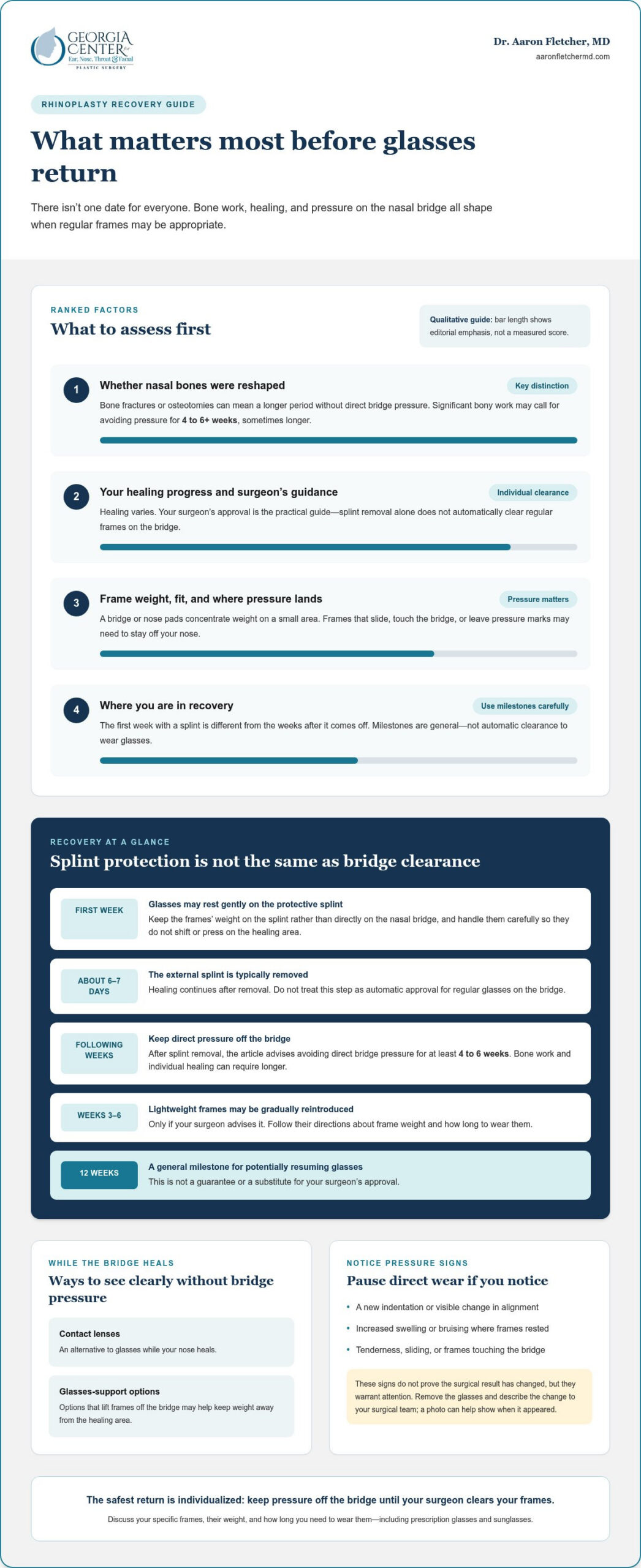
How long to avoid glasses after rhinoplasty
The clearest takeaway is to keep glasses off the nasal bridge for at least 4 to 6 weeks after splint removal. Since the external splint typically comes off 6-7 days after surgery, that restriction extends beyond the first week. A 12-week milestone is a general point for potentially resuming glasses, with your surgeon’s approval.
These milestones describe different stages, not competing promises. The splint protects the nose during the first week, while avoiding pressure after its removal helps protect healing structures. Some surgeons allow a gradual return earlier, especially with lightweight frames, but that is not the same as unrestricted daily wear. The procedure and your surgeon’s assessment guide the timeline.
- First week: Glasses can usually rest gently on the protective splint.
- After splint removal: Avoid resting frames directly on the bridge for at least 4 to 6 weeks.
- Weeks 3 to 6: Lightweight glasses may be gradually reintroduced if advised by your doctor.
- 12 weeks: This is a general milestone for potentially resuming glasses, subject to approval.
Surgery on the nasal bones can extend the period without bridge contact. After rhinoplasty that reshapes the nasal bones or bridge, glasses generally should not rest directly on the bridge for about six weeks, and sometimes longer. Some surgeons advise waiting at least two months after bony work, while others recommend avoiding contact for the first three months. These recommendations reflect different protocols and assessments of healing.
That variation explains why “a few weeks” shouldn’t be treated as a universal clearance date. In simpler cases, some patients may be cleared to wear glasses on the bridge after a few weeks. By week six, most patients can resume glasses if healing is progressing well. However, the general 12-week milestone offers a more cautious reference point, rather than a requirement for every patient.
Frame weight also matters once you are cleared to resume wearing glasses. Lightweight frames place less weight on your nose than heavy sunglasses, but still touch the bridge if worn normally. Ask your surgeon whether you can start with short periods, such as wearing frames while reading, and whether a support that lifts them off your nose is preferable.
For a practical timeline, treat splint removal as the start of continued protection, not the end of it. Keep direct pressure off the bridge for at least 4 to 6 weeks after removal, then follow your surgeon’s guidance. A 12-week milestone is a useful reference for discussing regular wear, especially after nose surgery that involved nasal bone reshaping.
How long should you avoid wearing glasses after rhinoplasty?
For a practical rule, avoid resting glasses on your nasal bridge for at least 4 to 6 weeks after your surgeon removes the splint. Since splint removal typically occurs 6-7 days after surgery, the restriction continues beyond the first week. This is a period for protecting the healing bridge, not a fixed date that guarantees every frame is safe afterward.
The procedure changes the timeline. When rhinoplasty includes reshaping the nasal bones or bridge, glasses generally should not rest directly on the nose for about six weeks, and sometimes longer. Some surgeons advise waiting at least two months after bony work, while others recommend avoiding nasal contact during the first three months. These recommendations reflect different approaches to healing and managing pressure.
By comparison, patients with simpler cases may be cleared for glasses after a few weeks. Lightweight frames may be gradually reintroduced during weeks 3 to 6 if the doctor advises it. A 12-week milestone is a general point for potentially resuming glasses, subject to the surgeon’s approval. Don’t treat these ranges as interchangeable: the extent of bone work and your healing progress affect the decision.
Use the timeline to discuss your own frames, not as permission to restart on a particular day. At your follow-up, explain whether you need prescription glasses all day or mainly sunglasses outdoors. The frame’s weight and where its pads touch can affect pressure. If your surgeon permits gradual wear, ask whether brief use is appropriate before longer periods.
- While the splint is in place: Glasses may rest gently on top during the first week.
- After splint removal: Avoid direct bridge pressure for at least 4 to 6 weeks.
- During weeks 3 to 6: Lightweight glasses may be gradually reintroduced if advised.
- At 12 weeks: Discuss resuming regular glasses as a general milestone.
If regular glasses are essential before you are cleared, use an option that keeps their weight off your nose, such as a forehead support or cheek supports. Contact lenses may also provide an alternative during recovery. If glasses leave a mark, increase discomfort, or press against the bridge, stop wearing them directly on your nose and raise the change at your next follow-up.
For guidance specific to your procedure and recovery, discuss your rhinoplasty recovery with your surgical team before resuming glasses on the bridge.
Dr. Aaron Fletcher, MD: Facelift
Dr. Aaron Fletcher, MD, offers facelift surgery and rhinoplasty for patients considering facial surgical care. As a board-certified otolaryngologist and facial plastic surgeon, he can help you understand rhinoplasty options and discuss recovery questions, including when pressure from glasses may be appropriate again. If you are planning rhinoplasty or want guidance after your procedure, schedule a consultation to discuss your care. The practice also offers blepharoplasty and sinus surgery for different concerns.
For information about rhinoplasty care or to discuss your questions, contact Dr. Aaron Fletcher, MD.
Plan Your Next Step With Confidence
If you are still deciding when you can wear glasses after rhinoplasty, make your next follow-up specific to your daily needs. Note when you rely on glasses most, whether they are prescription frames or sunglasses, and any pressure or discomfort you have noticed. Bringing the frames you wear regularly can help make the discussion practical.
Use that conversation to clarify what to do next instead of judging healing by appearance alone. Ask how to manage essential vision needs in the meantime and what signs should prompt you to stop wearing frames on your nose. A plan tailored to your recovery can make returning to your routine feel more manageable.
For individualized guidance about rhinoplasty and recovery, contact Dr. Aaron Fletcher, MD. With clear advice and a thoughtful transition, you can move forward with greater confidence.
Frequently Asked Questions
How Long Should You Avoid Glasses?
If you’re asking, “when can I wear glasses after rhinoplasty?”, avoid direct pressure on your nasal bridge for at least 4 to 6 weeks after splint removal. If glasses are essential for work, ask your surgical team about a support that keeps the frames off your nose. The timing can extend after nasal bone work. Follow your surgeon’s clearance rather than relying on a calendar date alone.
How long is rhinoplasty recovery?
Rhinoplasty recovery continues beyond the first few weeks. Swelling and sensitivity should begin to recede within 2-3 weeks, but subtle residual swelling can last 6 – 12 months. The nose can take up to a year to fully heal after surgery. This distinction matters when judging comfort: less visible swelling doesn’t necessarily mean the nose is ready for pressure from everyday frames.
Why can glasses damage the nose after rhinoplasty?
Glasses place concentrated weight on the nasal bridge, where healing bone and cartilage may be vulnerable to repeated pressure. A frame that slides down can press on the same small area throughout the day. Pressure during recovery can cause an indentation or shift in nasal structures, potentially affecting the surgical result. Remove frames if they leave a mark or increase tenderness.
What alternatives to glasses are safe during rhinoplasty recovery?
Contact lenses can avoid frame pressure, and patients can typically wear them the day after surgery or once initial eyelid swelling subsides. A forehead support, cheek supports, or an eyeglass suspension device can also lift frames off the bridge. These options still need to fit comfortably and avoid contact with the nose. Follow your surgical team’s instructions before using a support.
How can you wear glasses without putting pressure on your nose after rhinoplasty?
Use a forehead strap or cheek supports to keep frame weight off the nasal bridge. Your surgeon may also advise taping glasses to your forehead. Before relying on any setup, check that the frames stay lifted while you read or look down. If they touch the bridge or leave a pressure mark, stop using that arrangement and follow your post-operative instructions.
When can you wear sunglasses after rhinoplasty?
If you are wondering when you can wear glasses after rhinoplasty, apply the same pressure precautions to sunglasses as to prescription glasses. One recommendation is to avoid sunglasses and other glasses for about six weeks after rhinoplasty, since pressure can contribute to swelling or bruising and affect the result. If you need eye protection outdoors, use an option that does not rest on your nose, and ask your surgical team when bridge contact is appropriate for your healing.