
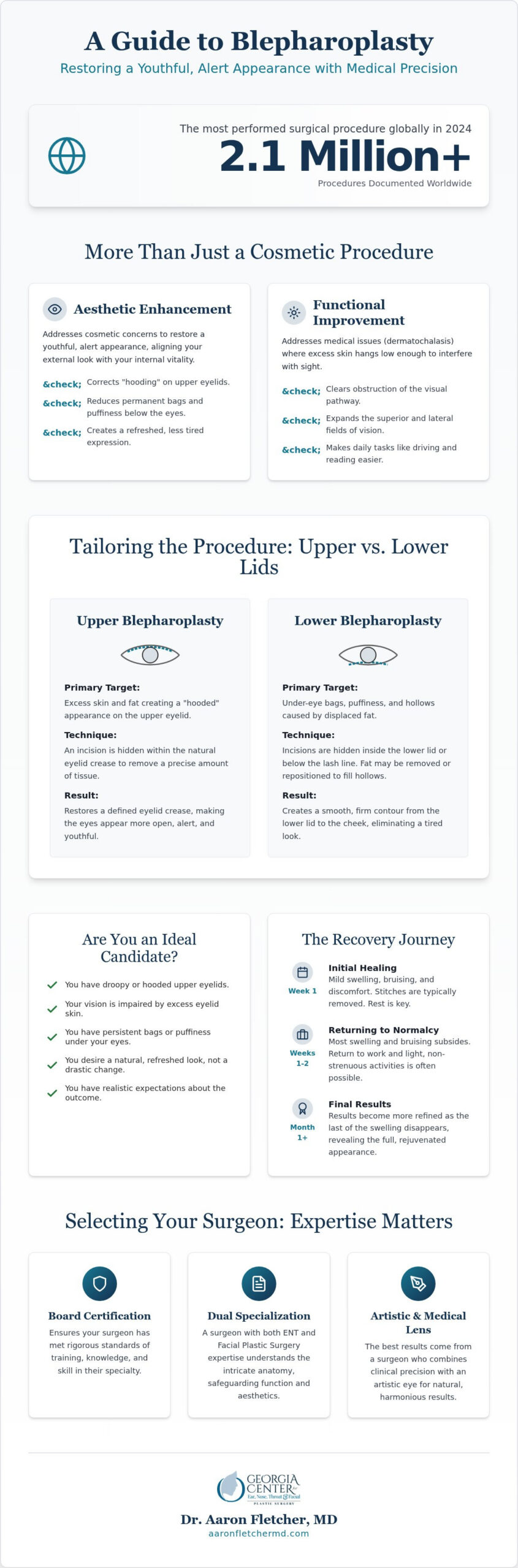
Did you know that eyelid surgery became the most frequently performed surgical procedure globally in 2024, with over 2.1 million procedures documented? This surge in blepharoplasty reflects a common struggle; the realization that your eyes no longer mirror the vitality you feel inside. You might find yourself checking the mirror only to see a heavy, exhausted expression that persists even after a full night’s sleep. It’s frustrating when hooded lids make applying makeup a chore or when sagging skin begins to obscure your field of vision, making daily tasks feel like a strain.
You aren’t alone in wanting to look refreshed without losing the unique character of your face. This guide explores how modern eyelid surgery has evolved into a meticulous intersection of medical precision and aesthetic artistry. We’ll examine the latest 2026 techniques designed to restore a youthful, alert appearance while prioritizing subtle, natural results. From understanding the functional benefits of improved vision to navigating the nuances of the “almond eye” trend, we’ll provide the clinical clarity you need to move forward with confidence.
Key Takeaways
- Learn how blepharoplasty addresses both upper and lower eyelid concerns by meticulously removing excess tissue to restore a naturally alert expression.
- Identify the specific physical characteristics that define an ideal candidate, ensuring your aesthetic goals align with realistic, life-enhancing outcomes.
- Gain a transparent overview of the recovery journey and the professional aftercare protocols required to ensure a smooth, comfortable healing process.
- Discover the clinical advantages of choosing a surgeon who combines ENT expertise with facial plastic surgery to safeguard the delicate structures surrounding your eyes.
Understanding Blepharoplasty: More Than Just Cosmetic Enhancement
At its core, blepharoplasty is a specialized surgical procedure designed to repair droopy eyelids by meticulously removing or repositioning excess skin, muscle, and fat. While often categorized as a cosmetic choice, it’s a sophisticated intervention that addresses the fundamental biological changes of the aging face. Over time, the levator muscles that lift the eyelids can weaken, and the skin begins to lose its elastic fibers, leading to stretching and sagging. For those seeking a comprehensive overview of blepharoplasty, it’s clear that this procedure isn’t about creating a “new” face, but rather about structural rejuvenation.
This modern approach focuses on restoring the eyelid’s natural architecture rather than simply tightening the surface. By reinforcing the underlying support systems of the eye, surgeons can ensure results look refreshed rather than surgically altered. This meticulous methodology prioritizes the individual’s unique anatomy, ensuring that the eyes appear more open and alert while maintaining facial harmony. It’s a balance of clinical expertise and a deep understanding of how the eyes contribute to our overall sense of well-being and social connection.
By addressing the root causes of eyelid sagging, such as the gradual thinning of the dermal layer and the shifting of orbital fat, we can achieve a look that’s both revitalized and entirely authentic to your original features. This process requires a surgeon who views the procedure through both a medical and artistic lens, ensuring that functional improvements don’t come at the expense of a natural appearance.
The Aesthetic Impact of Tired-Looking Eyes
The eyes are the focal point of human interaction. When upper eyelids begin to “hood,” they cast shadows that create a weary expression, regardless of how much sleep you’ve had. In the lower lids, weakened membranes can lead to fat prolapse, creating permanent bags that topical treatments cannot conceal. Correcting these concerns provides a psychological boost, ensuring your external appearance finally aligns with your internal energy.
Functional Blepharoplasty: When Vision is at Stake
Beyond aesthetics, many individuals experience dermatochalasis, where excess skin hangs low enough to interfere with sight. This functional deficit obstructs the superior and lateral fields of vision, making tasks like driving or reading difficult. A functional procedure clears the visual pathway, effectively expanding your field of view. Improving your vision often yields the secondary benefit of a more youthful, open-eyed look that enhances your daily quality of life.
Upper vs. Lower Eyelid Surgery: Tailoring the Procedure to Your Anatomy
Aging doesn’t impact the eyes in a uniform way. For some, the primary concern is a heavy, hooded appearance on the upper lids that might even affect vision. For others, the focus is on the lower lids, where puffiness and dark hollows create a perpetually tired look. Understanding the distinction between these two approaches is essential when determining are you a candidate for blepharoplasty. While the procedures are distinct, they are frequently combined to achieve a comprehensive rejuvenation that harmonizes the entire orbital region.
A sophisticated surgical plan moves beyond “cookie-cutter” removals. Modern blepharoplasty prioritizes structural integrity, often utilizing specialized methods like orbital fat repositioning to fill hollows or canthopexy to provide better support to the lower lid margin. These advanced techniques allow for a nuanced restoration of the eye area. By focusing on the unique bone structure and skin quality of each patient, we avoid the “surprised” or “surgical” look that results from outdated, aggressive skin removal. This tailored approach ensures that the results complement your specific facial anatomy.
Upper Blepharoplasty: Addressing the Hooded Look
Upper eyelid surgery specifically targets the “hooding” that occurs when excess skin and muscle weigh down the lid. To ensure the most discreet results, incisions are placed precisely within the natural fold of the eyelid, allowing for effective scar camouflage. The surgeon removes a specific “crescent” of skin and manages fat deposits conservatively to avoid a sunken look. This meticulous attention to detail ensures that the eye retains its natural depth and character. The ultimate goal of upper lid surgery is restoring a crisp, visible eyelid crease that makes the eyes appear more open and alert.
Lower Blepharoplasty: Erasing Bags and Hollows
Lower lid surgery focuses on the transition between the eye and the cheek, addressing the “bags” that develop as fat pads shift. Surgeons may use a transconjunctival approach, with an incision inside the lid, or a subciliary approach just below the lashes. Rather than simply removing fat, which can lead to a “hollowed-out” appearance, we often prefer fat repositioning to smooth the “tear trough” area. This technique creates a seamless, youthful contour across the midface while preserving the essential volume of the lower lid. If you’re considering how these techniques might work for you, exploring your options with a specialist in facial rejuvenation is the first step toward a refreshed appearance.
Determining Candidacy: Are You a Right Fit for Eyelid Rejuvenation?
Identifying an ideal candidate for blepharoplasty involves a comprehensive evaluation of the orbital anatomy and the patient’s overall health. Typically, the best candidates present with redundant skin that creates folds in the upper lid or visible puffiness in the lower lid caused by shifting fat pads. While the primary goal is often aesthetic, we also prioritize functional integrity. It’s essential to maintain realistic expectations; surgery can revitalize your appearance, but it doesn’t halt the aging process entirely. Achieving balance is key to a natural result, much like the principles discussed in our Rhinoplasty Mastery Guide, where form and function are equally weighted to preserve facial harmony.
Certain medical conditions may require additional consideration or clearance before proceeding. Severe dry eye syndrome requires a meticulous assessment, as the procedure can temporarily exacerbate dryness. Conditions such as glaucoma or uncontrolled thyroid eye disease also require coordination with your ophthalmologist. Transparency regarding your medical history ensures your safety and the long-term success of your results. During your consultation, we take the time to answer every question, ensuring you feel secure in your decision-making process.
The Role of Brow Position in Eyelid Surgery
A common diagnostic challenge is distinguishing between true eyelid sagging and brow ptosis. When the forehead tissues descend, they push the brow downward, creating a “pseudo-ptosis” effect where the upper lids appear heavy. In these instances, performing a blepharoplasty alone may not achieve the desired openness. A specialist will assess whether a brow lift is a more appropriate or complementary procedure to restore the eyes to their proper anatomical position. This distinction is vital for avoiding an over-corrected appearance and ensuring the final result looks entirely natural.
Age and Lifestyle Factors
While many patients seek rejuvenation in their 40s or 50s, genetics can cause hooded lids or under-eye bags much earlier. The quality of your skin, specifically its elasticity and collagen density, significantly influences the surgical approach. Lifestyle choices are equally impactful. Smoking constricts blood flow and impairs healing, while cumulative sun damage can compromise the delicate tissues around the eye. Addressing these factors during your consultation helps us develop a strategy that ensures your results are both beautiful and enduring, reflecting the energetic person you feel like inside.
The Recovery Journey: Navigating the Path to Refreshed Results
The transition from the operating room to your daily routine is a period defined by patience and precision. While the thought of surgery can be daunting, the recovery following blepharoplasty is typically straightforward and well-tolerated by most patients. Our focus during this time is to provide you with the clinical support and empathetic guidance needed to ensure your healing is as comfortable as possible. By adhering to a structured aftercare protocol, you can significantly minimize initial inflammation and accelerate the reveal of your refreshed, youthful appearance. For a detailed breakdown of every healing milestone, our blepharoplasty recovery timeline clinical guide provides expert-led strategies to help you navigate each stage with confidence.
Following our methodical approach ensures that your results settle into a look that’s both vibrant and authentic to your facial character. We view the recovery phase as a partnership, where our expertise in post-operative management meets your commitment to the healing process. This collaborative effort is what leads to the stable, long-term outcomes our patients value most.
The First 72 Hours: Critical Care
The first three days represent the most significant phase of the healing process. During this window, your primary goals are to control swelling and protect the delicate incision sites. We emphasize the frequent application of cold compresses and maintaining head elevation, even while sleeping, to promote proper lymphatic drainage. You’ll likely experience a sensation of “tightness” in the eyelids. This is a normal physiological response as the tissues adjust to their new contours and isn’t typically associated with sharp pain. To safeguard your results, it’s essential to avoid specific activities that could increase ocular pressure:
- Lifting heavy objects or performing strenuous cardiovascular exercise.
- Bending forward, which can cause blood to rush to the face.
- Straining the eyes through prolonged use of digital screens or reading.
Weeks 1 through 4: Watching the Transformation
As you enter the second week, you’ll begin to see the weary expression of the past fade away. Suture removal usually occurs between five and seven days post-surgery, which often brings an immediate sense of relief and improved comfort. Most visible bruising and significant swelling subside within ten to fourteen days. At this point, many patients feel confident returning to professional and social environments. Once the incisions are fully healed, you may begin using mineral makeup to conceal any minor residual redness. It’s helpful to understand that while the initial transformation is striking, residual “micro-swelling” may take several months to fully resolve before the final, refined results of your blepharoplasty are settled. Throughout this journey, our team remains dedicated to your progress. If you have questions about your specific healing timeline, contact our office to speak with a recovery specialist.
Selecting Your Surgeon: Why Board Certification and ENT Expertise Matter
Choosing the right practitioner for your blepharoplasty is the most significant decision you’ll make in your aesthetic journey. It’s not just about removing skin; it’s about understanding the complex interplay between the eyelids, the tear ducts, and the surrounding facial architecture. A surgeon with dual certification in Otolaryngology and Facial Plastic Surgery brings a unique perspective to this procedure. This specialized ENT background ensures a profound understanding of the delicate structures that support both eye function and facial health, allowing for a higher level of surgical precision.
When you choose a specialist who understands the underlying anatomy, you’re prioritizing both safety and artistry. This expertise is particularly valuable when considering comprehensive facial rejuvenation. Many patients find that addressing the eyes is the first step toward a more holistic transformation, such as those detailed in our guide to finding a board-certified facelift specialist near me. For patients also concerned with persistent lower facial fullness that diet and exercise cannot address, learning about buccal fat removal for lower facial contouring can provide additional insight into how complementary procedures work together to achieve a balanced, sculpted result. By selecting a surgeon who values the structural integrity of the face, you ensure that every procedure contributes to a balanced, youthful, and naturally alert appearance without compromising the unique character of your features.
The goal of modern blepharoplasty is to achieve results that look refreshed rather than surgically altered. We focus on conservative techniques that avoid the “startled” or hollowed-out look often associated with more aggressive, outdated methods. This meticulous approach preserves your essential identity while subtly erasing the signs of fatigue, ensuring you look as energetic as you feel.
The Importance of a Specialized Consultation
A thorough consultation is the foundation of a successful outcome. When reviewing a surgeon’s “Before and After” gallery, look for patients with similar facial structures to your own. Pay attention to the symmetry of the lids and the natural appearance of the scars. During your visit, don’t hesitate to ask specific questions regarding the surgeon’s experience with eyelid surgery:
- How do you customize the approach for patients with functional concerns like dry eye?
- How many procedures of this specific type do you perform annually?
- Can you demonstrate the expected outcomes using 3D imaging or digital simulations?
Utilizing advanced digital imaging technology allows us to create a precise surgical roadmap. This transparency ensures that you and your surgeon are fully aligned on the aesthetic goals before the procedure begins, fostering a sense of security and clarity.
Safety, Ethics, and the Fletcher Philosophy
At our practice, we believe that an informed patient is a confident patient. Our philosophy is rooted in transparent communication and a commitment to meticulous patient education. We prioritize conservative surgery that respects your unique facial character, ensuring that you look like a rested version of yourself. As you plan your procedure, understanding the full blepharoplasty cost in Atlanta — including facility fees, anesthesia, and specialized technique variables — is an essential part of making a confident, informed decision. This patient-centered approach is designed to provide you with peace of mind throughout your entire journey. Schedule a comprehensive consultation with Dr. Aaron Fletcher, MD to begin your personalized path toward a more vibrant, refreshed appearance.
Embracing a More Vibrant Vision of Yourself
Restoring the youthful vitality of your eyes is about more than just aesthetics; it’s about reclaiming an appearance that truly reflects your internal energy. Throughout this guide, we’ve explored how modern blepharoplasty serves as a sophisticated bridge between clinical precision and artistic restoration. By choosing a surgeon who understands the intricate anatomy of the orbital region, you ensure that your results remain subtle, functional, and entirely authentic to your unique facial structure.
The journey toward refreshed eyes is a patient-centered experience, from the initial diagnostic consultation to the final settling of your results. Dr. Aaron Fletcher, a Board-Certified Otolaryngologist and Specialist in Facial Plastic and Reconstructive Surgery, is dedicated to providing meticulous, natural-looking results that enhance your quality of life. Whether you’re seeking to improve your field of vision or simply want to look as well-rested as you feel, the right expertise makes all the difference in your surgical outcome.
Begin Your Journey to Refreshed Eyes with Dr. Aaron Fletcher
Take the next step toward a more alert and confident version of yourself. We’re here to guide you through every stage of this transformative process with transparency and dedicated care.
Frequently Asked Questions
How long do the results of a blepharoplasty typically last?
Results of a blepharoplasty are designed to be long-lasting. While the procedure essentially “resets the clock,” your skin will continue to age naturally. Most patients find that lower eyelid results are permanent. Upper eyelid results typically last between seven and ten years, though individual factors like skin elasticity and sun protection habits influence the longevity of your refreshed appearance.
Will eyelid surgery get rid of my crow’s feet and wrinkles?
Eyelid surgery focuses on removing excess tissue and fat rather than smoothing fine lines at the outer corners of the eyes. While the procedure addresses hooding and bags, crow’s feet are dynamic wrinkles caused by muscle movement. To address these specifically, we often recommend complementary treatments that target the skin surface or muscle activity, as surgery alone isn’t designed to eliminate these fine lines.
What is the difference between blepharoplasty and a brow lift?
A blepharoplasty specifically targets the tissues of the eyelids, whereas a brow lift addresses the position of the forehead and eyebrows. As discussed earlier, a sagging brow can often mimic heavy eyelids. If your primary concern is tissue hanging over the lashes, eyelid surgery is the solution. However, if the entire brow has descended, a brow lift may be necessary to restore proper anatomical harmony.
Can blepharoplasty be performed under local anesthesia?
Yes, many upper eyelid procedures are comfortably performed using local anesthesia with optional oral sedation. This approach allows you to remain awake while the area is completely numbed. For lower eyelid surgery or combined procedures, we typically recommend intravenous sedation or general anesthesia to ensure your absolute comfort and safety throughout the more complex surgical maneuvers.
Are the scars from eyelid surgery visible?
Scars from eyelid surgery are remarkably discreet because they are strategically placed within the eye’s natural architecture. For the upper lids, the incision sits perfectly within the eyelid crease. In lower lid surgery, we often use a transconjunctival approach where the incision is hidden inside the eyelid, leaving no visible external scar. Over time, these fine lines fade and become nearly imperceptible to the naked eye.
Does insurance cover blepharoplasty if it improves my vision?
Insurance may cover the procedure if it is deemed medically necessary to restore your field of vision. This requires documentation from an ophthalmologist showing that sagging skin significantly obstructs your sight. Purely cosmetic surgery performed to enhance your appearance is not covered. We recommend checking with your provider to understand their specific requirements for functional visual field testing and prior authorization.
How soon can I wear contact lenses after the procedure?
Most patients can resume wearing contact lenses approximately two weeks after the procedure. It’s essential to wait until the incisions have gained enough structural strength to withstand the stretching of the eyelid required for insertion and removal. During the initial healing phase, you should rely on glasses to avoid irritating the delicate surgical sites or introducing bacteria while the tissues are still mending.
Is there a “non-surgical” alternative to blepharoplasty?
While various topical treatments and energy-based devices exist, there is no non-surgical alternative that can remove excess skin or reposition fat pads as effectively as surgery. Non-surgical options may provide subtle tightening or skin quality improvements, but they cannot address the structural concerns of hooding or prominent under-eye bags. For those seeking a definitive, long-term restoration, a surgical approach remains the gold standard in 2026.