
An advertised rhinoplasty price is only a starting point, not a complete picture. Your rhinoplasty cost depends on the surgical plan, whether your goals are aesthetic or functional, and which professional and facility fees are included in the estimate.
It’s understandable to want a clear figure before making a decision, especially when one quote may not cover the same items as another. Breathing concerns can also raise questions about insurance. Coverage may differ for medically necessary functional treatment and cosmetic changes, and your plan’s terms matter.
This article explains the main parts of a rhinoplasty estimate and the personal and procedural factors that can shape it. You’ll also learn what to clarify about anesthesia, facility costs, testing, prescriptions, and follow-up care, along with useful questions for a consultation and financial discussion. Understanding what the estimate covers can help you compare options and decide what to discuss next.
Key Takeaways
- Use the proposed surgical changes, not the procedure label alone, to understand what an estimate is based on.
- Revision history, breathing concerns, and case complexity may affect the treatment plan and should be discussed during evaluation.
- Compare rhinoplasty cost estimates by checking whether they address the same plan and account for surgeon, anesthesia, facility, follow-up, and exclusions.
- Insurance decisions depend on the medical indication, documentation, plan terms, and insurer review. Cosmetic goals and functional concerns may be assessed differently.
- Prepare for your consultation by noting your priorities, prior procedures, breathing concerns, and financial questions.
What does rhinoplasty cost include beyond the surgeon’s fee?
Rhinoplasty estimates can be difficult to compare when one figure refers only to the surgeon’s fee and another accounts for additional parts of care. In practical terms, rhinoplasty cost is a personalized estimate based on the planned procedure and related services, not a single standard price.
The Rhinoplasty overview describes the procedure’s varied purposes, including aesthetic and reconstructive goals. For your estimate, focus on how the intended changes and care plan translate into specific services and charges.
Which services may appear in a rhinoplasty estimate?
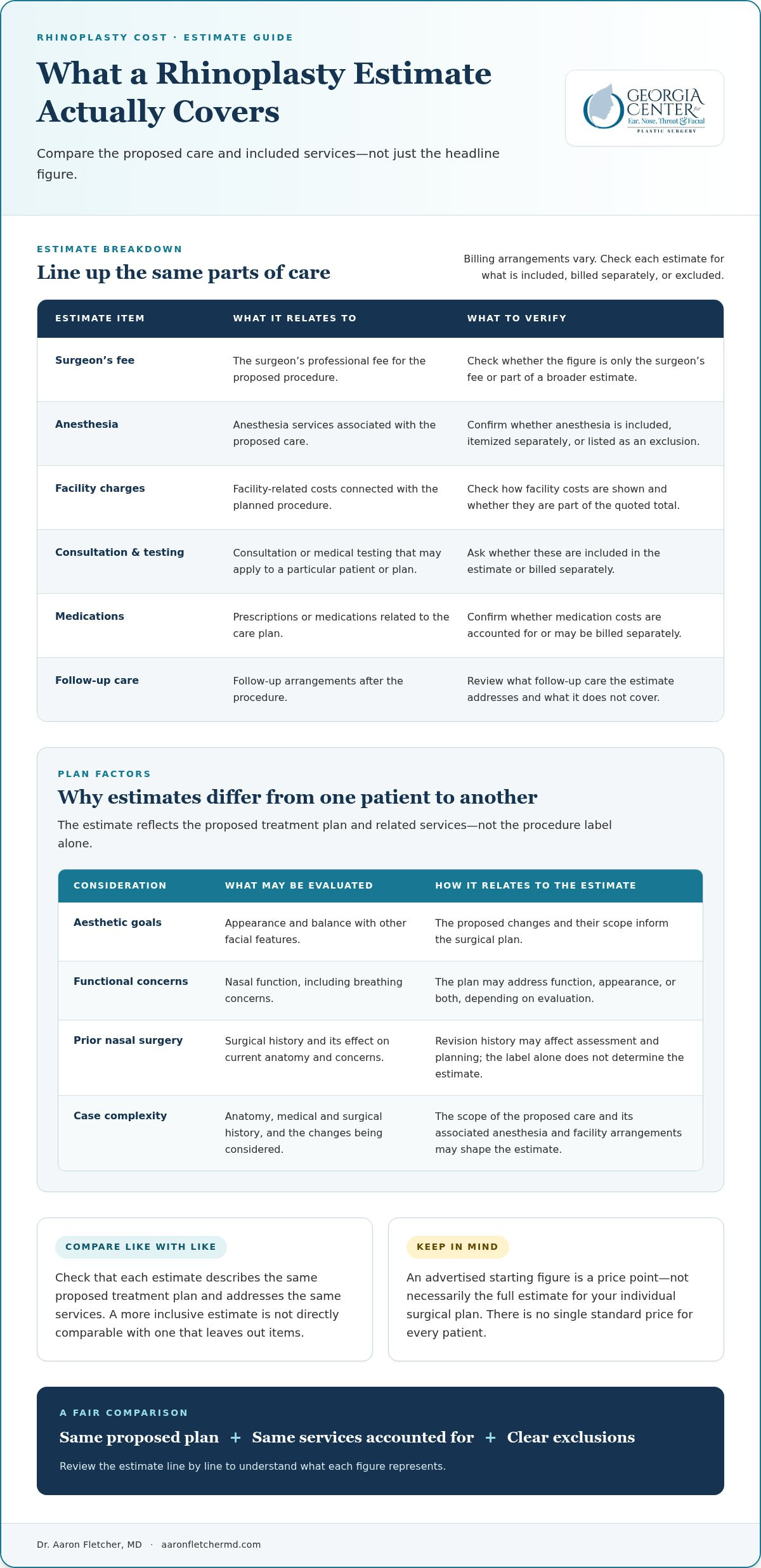
Depending on the plan and billing arrangements, an estimate may separate the surgeon’s fee from anesthesia and facility charges. Each component relates to a different part of care, so a headline figure that leaves one out is not directly comparable with a more inclusive estimate.
Other items may apply to a particular patient or plan, such as a consultation, medical testing, medications, or follow-up care. Their inclusion and billing can vary, so don’t assume every estimate covers the same items. Review the document line by line: note what is included, what may be billed separately, and whether exclusions are stated.
An advertised starting figure describes a price point, not necessarily the full estimate for your individual surgical plan.
Why is there no single rhinoplasty price for every patient?
Nasal anatomy, personal goals, and the scope of planned changes all inform the surgical plan. A patient seeking a specific aesthetic adjustment may have different needs from someone whose concerns also involve nasal function. The estimate reflects the proposed care, not just the procedure’s name.
Primary and revision rhinoplasty can involve different considerations. A prior procedure may affect the clinician’s assessment of anatomy and the changes being considered, but the label alone doesn’t determine the estimate. An individual evaluation is essential to understanding the plan and its associated costs.
Dr. Aaron Fletcher, MD, is a board-certified otolaryngologist and facial plastic surgeon with nearly a decade of surgical experience. He provides rhinoplasty care with treatment planning informed by each patient’s goals. A clear estimate should show how the recommended plan relates to your priorities and which associated services it accounts for.
Which factors can change a rhinoplasty cost estimate?
The name of a procedure doesn’t tell the whole story. A rhinoplasty plan depends on the changes being considered, the patient’s anatomy, and whether the goals are aesthetic, functional, or both. The same broad procedure label can describe treatment plans with different surgical scopes.
During evaluation, the surgeon considers the areas to address, the patient’s medical and surgical history, and the complexity of the case. Breathing concerns may call for additional assessment of nasal function, while prior surgery can introduce further planning considerations. Anesthesia and facility arrangements may also contribute to the overall estimate, depending on the proposed plan.
An individual rhinoplasty cost estimate depends on the treatment plan and the care associated with carrying it out. The American Society of Plastic Surgeons explains that a surgeon’s fee is only one part of procedural expenses in its overview of the average cost of rhinoplasty. For your estimate, the relevant question is how the planned care applies to your circumstances.
How do aesthetic and functional goals affect the plan?
Aesthetic goals may focus on the nose’s appearance and its balance with other facial features. Functional concerns, such as difficulty breathing, are assessed as part of the clinical evaluation. Depending on the patient’s anatomy and needs, a proposed plan may address appearance, function, or both. Symptoms alone don’t establish a diagnosis, determine the treatment plan, or guarantee insurance coverage.
As a board-certified otolaryngologist and facial plastic surgeon, Dr. Aaron Fletcher, MD, considers facial form and nasal function in rhinoplasty planning. The rhinoplasty guide to form and function offers further context on balancing these considerations.
Can revision rhinoplasty affect the estimate?
Previous nasal surgery can change the anatomy and influence what the surgeon needs to assess when planning further treatment. The details vary from person to person, so “revision” alone doesn’t determine the surgical scope or estimate. The clinician evaluates the individual case, including prior procedures, current concerns, and the changes being considered.
At a consultation, share your surgical history and describe what you hope to address. This can help clarify the proposed plan. Dr. Aaron Fletcher’s nearly decade of surgical experience informs an individualized discussion of rhinoplasty goals and treatment planning. Bring questions about the scope, anesthesia, and facility arrangements to make the conversation more useful.
How should you compare rhinoplasty estimates fairly?
To compare estimates fairly, look beyond the total and check whether each one describes the same proposed treatment plan. An estimate that covers a broader scope or includes services absent from another may look higher without being a like-for-like comparison. The goal is to understand what each figure represents, not to rank care by price alone.
What should you check in a rhinoplasty estimate?
Check whether professional and facility-related components are itemized, grouped, or listed as exclusions. Note what the estimate says about follow-up arrangements and when payments are due. For a useful comparison, write down each estimate’s included services and exclusions side by side. Bring unclear terms or charges to your consultation so you can understand how they relate to the plan. The American Society of Plastic Surgeons outlines common cost components in its rhinoplasty cost information.
| Estimate item | What to compare |
|---|---|
| Surgeon | Is the surgeon’s fee itemized or grouped with other charges? |
| Anesthesia | Is an anesthesia charge identified, and is it included in the total? |
| Facility | Are facility-related charges stated separately or incorporated? |
| Follow-up | Does the estimate describe planned follow-up care or related charges? |
| Exclusions and payment timing | What is specifically excluded, and when are payments due? |
Why is the lowest advertised figure not always comparable?
A promotional starting figure may be based on limited assumptions or a narrower procedure scope. It may not describe the treatment plan that follows an individual evaluation. That alone doesn’t show whether an estimate is complete or appropriate. First understand the services and assumptions behind each figure.
For example, one estimate might list surgeon, anesthesia, and facility charges separately, while another groups some of these components together. Different presentation can make figures appear unlike even when some elements overlap. Estimates for different plans may also include genuinely different services. Compare the proposed scope and inclusions side by side, then clarify exclusions or unfamiliar terms during your consultation.
A useful question is: “Does this estimate reflect the same treatment plan, and what costs could be separate?” This keeps the discussion focused on the details that shape your rhinoplasty cost, rather than a headline figure alone. A consultation with Dr. Aaron Fletcher is an opportunity to discuss your goals and proposed plan. Learn more about rhinoplasty care and consultation.
Does insurance cover rhinoplasty, and what should you ask?
Insurance questions often depend on why surgery is being considered. Aesthetic goals, such as changing the appearance of the nose, are distinct from functional concerns involving breathing or nasal structure. If both are part of the proposed care, the insurer may assess them differently. Coverage isn’t guaranteed by symptoms or by the procedure’s name.
Eligibility can depend on the medical indication, supporting documentation, the terms of your specific plan, and the insurer’s review. Requirements and decisions vary, so treat any estimate of coverage as provisional until your insurer explains how your benefits apply. This distinction can also affect your expected rhinoplasty cost and potential out-of-pocket responsibility.
Can insurance cover functional rhinoplasty?
An insurer may evaluate care intended to address a documented functional concern differently from surgery pursued solely for cosmetic reasons. A breathing complaint alone doesn’t establish medical necessity or ensure payment. Clinical findings and documentation, plan rules, and the insurer’s determination all matter. Review your benefits and discuss what documentation may be relevant as part of your care conversation.
What financial questions should you bring to consultation?
A consultation with Dr. Aaron Fletcher can help connect your goals and clinical findings to a proposed treatment plan. To make the financial discussion clear, consider asking:
- Which parts of the proposed care relate to my aesthetic goals, and which address clinical findings?
- What documentation may be needed for my insurer to review any functional component?
- Does my plan require prior authorization, and how can I confirm its requirements?
- Which estimate components are included, and are any services or charges excluded?
- When are payments due, and how would my responsibility be determined if coverage is denied or limited?
Contact your insurer directly to confirm benefits, documentation rules, authorization requirements, and potential patient responsibility before relying on expected coverage. A practice discussion can clarify the proposed care and estimate, while the insurer determines how your plan applies. To discuss your goals and treatment plan, schedule a rhinoplasty consultation.
How does a rhinoplasty consultation clarify your personal cost?
A consultation connects your priorities and clinical findings to a proposed treatment plan. By discussing what you hope to change, reviewing your medical and surgical history, and evaluating your nose, the surgeon can consider which options may be appropriate. That individualized plan provides the context for understanding your rhinoplasty cost, rather than relying on a general price that may not reflect your needs.
A few notes can make the conversation more focused. Consider bringing:
- Your main aesthetic priorities, including the changes that matter most to you.
- Any breathing concerns or other functional symptoms you want to discuss.
- Relevant medical history and details of previous nasal procedures.
- Questions about estimate components, insurance requirements, and follow-up arrangements.
What should you prepare before discussing rhinoplasty cost?
Be specific about what you would like to address, while remaining open to the surgeon’s assessment of what is appropriate. If you’ve had prior nasal surgery, share when it occurred and what was done, if you know. A written list of financial questions also makes it easier to clarify unfamiliar estimate terms and understand what may be separate from the proposed plan.
What should you expect after discussing your goals?
The surgeon considers your goals alongside your anatomy, health history, and examination findings. Not every requested change will necessarily be suitable, so the consultation is a chance to discuss options and the reasoning behind a recommended approach. If a plan is proposed, its estimate is specific to that plan and associated care. No general estimate can replace an individualized evaluation.
Dr. Aaron Fletcher, MD, a board-certified otolaryngologist and facial plastic surgeon, plans rhinoplasty with attention to aesthetic goals and functional concerns. Take time to review the options, ask follow-up questions, and consider whether the proposed plan feels right for you. A consultation is a discussion, not a requirement to make an immediate decision.
To discuss your goals and possible options, schedule a rhinoplasty consultation.
Make your next step an informed one
A useful rhinoplasty estimate reflects the treatment plan and related care, not simply a procedure name or advertised starting figure. Compare estimates by checking that they address equivalent plans and clearly explain included services, exclusions, and payment timing. If functional concerns are part of your goals, insurance decisions depend on documentation, your plan’s terms, and insurer review.
A consultation can bring these details together. Dr. Aaron Fletcher is a board-certified otolaryngologist and facial plastic surgeon with nearly a decade of surgical experience. Discussing your priorities, medical history, and examination findings can help clarify which options are appropriate and what questions to resolve before deciding.
Take the time you need to understand the proposed approach and its financial details. Schedule a rhinoplasty consultation with Dr. Aaron Fletcher to discuss your goals and individualized treatment options.
Frequently Asked Questions
How much does rhinoplasty cost in 2026?
There isn’t one rhinoplasty cost that applies to every patient in 2026. The estimate depends on the proposed surgical plan and related care, including which professional and facility services apply. An advertised starting figure may not represent an individual treatment plan. A consultation and review of the estimate’s inclusions and exclusions can help you understand the costs relevant to your goals and clinical evaluation.
What is usually included in a rhinoplasty cost estimate?
An estimate may include separate or grouped charges for the surgeon, anesthesia, and facility. Depending on the plan, it may also address consultations, testing, medications, or follow-up care. Inclusions and billing arrangements vary, so don’t assume every estimate covers the same services. Review the itemized details, note exclusions, and ask how any unfamiliar charge relates to the proposed treatment plan.
Can insurance cover rhinoplasty for breathing problems?
Possibly, but breathing concerns alone don’t guarantee coverage. An insurer may evaluate care for a documented functional problem differently from surgery pursued for aesthetic reasons. Coverage depends on the medical indication, supporting documentation, your plan’s terms, and the insurer’s review. Ask which records or prior authorization may be required, and confirm benefits and potential out-of-pocket responsibility directly with your insurer before relying on expected coverage.
Does revision rhinoplasty cost more than primary rhinoplasty?
Not automatically in every case. Previous surgery can change nasal anatomy and add planning considerations, which may affect the scope of proposed care. However, the word “revision” alone can’t determine an individual estimate or establish a particular cost difference. The surgeon evaluates the patient’s history, current anatomy, goals, and clinical findings to develop a plan. Ask how those factors shape the estimate for your case.
Why do rhinoplasty estimates vary between patients?
Estimates vary because patients have different anatomy, priorities, medical histories, and proposed surgical scopes. One plan may focus on aesthetic changes, while another may also address functional concerns. Revision history and case complexity can also influence clinical planning. Anesthesia and facility arrangements may contribute to the estimate as well. Comparing figures is most useful when they reflect equivalent treatment plans and clearly describe included services.
What questions should I ask about rhinoplasty cost?
Ask whether the estimate covers the treatment plan you discussed and which surgeon, anesthesia, and facility charges are included. Clarify follow-up arrangements, exclusions, and payment timing. If functional concerns may be part of care, ask what documentation or authorization may be relevant, then verify your plan’s requirements with your insurer. These questions can help you understand both the proposed care and potential financial responsibility.
Is a lower rhinoplasty price always a better value?
Not necessarily. A lower advertised figure may reflect a narrower procedure scope or omit services included in another estimate, so the totals may not be comparable. That alone doesn’t determine the quality or suitability of care. Compare the proposed treatment plan, included professional and facility services, follow-up arrangements, and exclusions. Understanding what each estimate represents is more useful than choosing by headline price alone.