
Could a familiar daily habit affect how comfortably your eyelids heal? It’s understandable to look for a clear list of restrictions after surgery, yet online advice can give conflicting timelines. Knowing what to avoid after eyelid surgery means looking beyond a generic schedule and considering your procedure, healing progress, and surgeon’s instructions.
This guide covers common activities and habits that may need to be limited during recovery, including exercise, eye makeup, and certain medicines. It also explains how to prepare practical questions about when to resume them. Your treating surgeon’s individualized plan takes priority over general advice online, so use it to make decisions specific to your care.
You’ll also learn which symptoms deserve prompt attention and how to keep your recovery instructions easy to follow. A written plan can help you distinguish routine questions from changes that call for professional guidance.
Key Takeaways
- Use your surgeon’s instructions to decide when to resume everyday activities instead of relying on a universal recovery timeline.
- Consider how exertion and daily routines may affect healing, then follow the activity restrictions set for your recovery.
- Review medicines, supplements, alcohol, nicotine, and diet with your surgical team. Don’t change prescribed medicines without their guidance.
- Follow your surgeon’s directions for resuming eye makeup, contact lenses, driving, showering, and screen use.
- Know which changes call for prompt contact with your surgical team and which urgent symptoms need emergency attention.
What to Avoid After Eyelid Surgery in the First Days of Recovery
Recovery instructions are easier to use when you apply them to ordinary tasks: carrying groceries, picking something up from the floor, or deciding whether to exercise. The goal is to protect the healing area without assuming every patient has the same restrictions. Keep your written postoperative instructions somewhere easy to reach. General examples can help you identify questions, but they don’t replace your surgeon’s plan.
Which activities may need to wait?
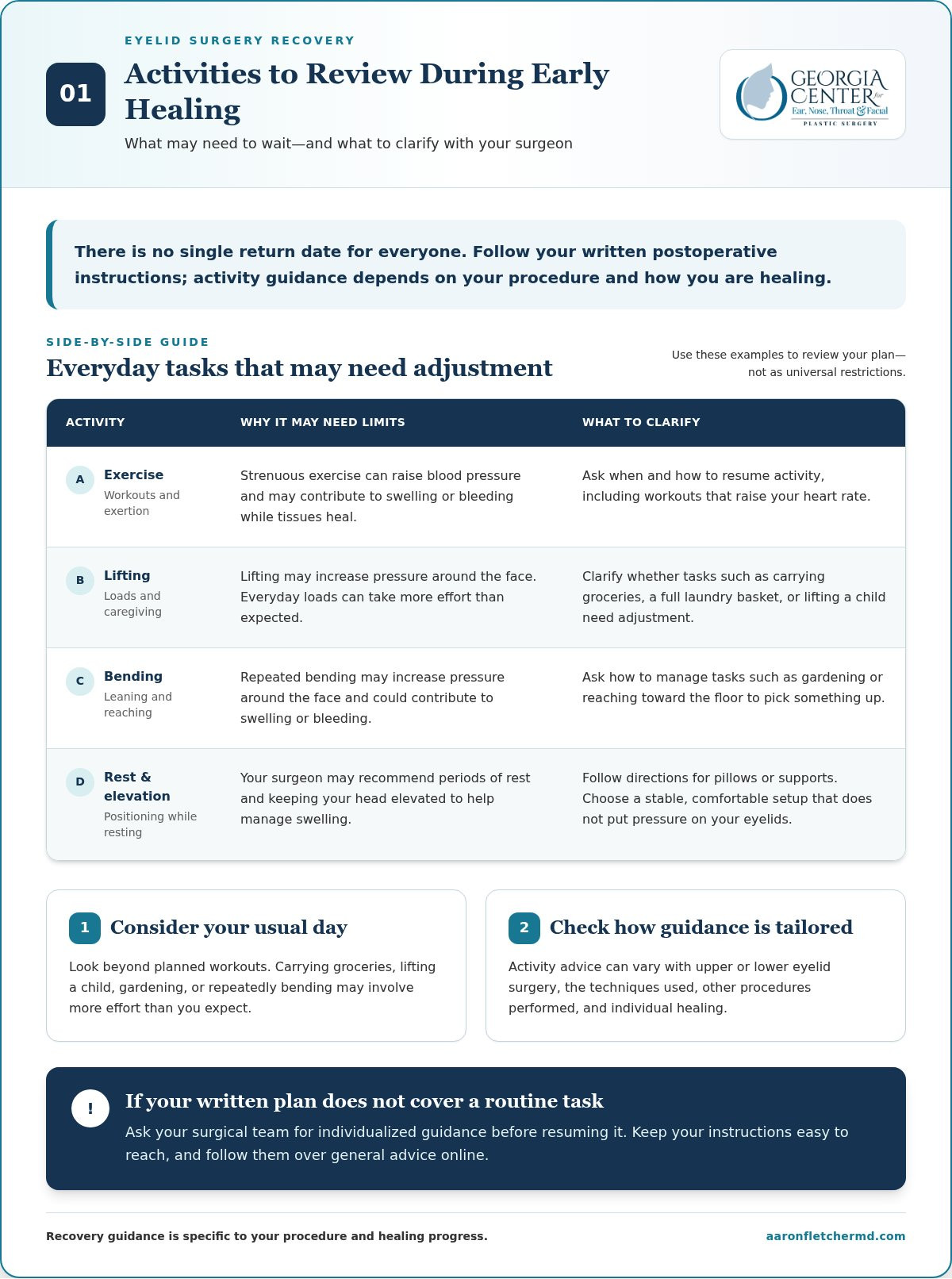
Surgeons commonly restrict strenuous exercise, heavy lifting, and repeated bending early in recovery. Exertion can raise blood pressure, while bending and lifting may increase pressure around the face. These activities could contribute to swelling or bleeding, so your surgeon may advise limiting them while tissues heal. The restrictions depend on the procedure and your progress.
Consider the effort involved in your usual day, not just planned workouts. Carrying a full laundry basket, lifting a child, gardening, or repeatedly bending to pick up items may take more effort than expected. Use this list to review your instructions and prepare questions, not as a universal prohibition:
- Exercise: Ask when and how to resume activity, including workouts that raise your heart rate.
- Lifting: Clarify whether household loads or caregiving tasks need to be adjusted.
- Bending: Ask how to manage tasks that require leaning forward or reaching toward the floor.
There isn’t one return date that applies to everyone. Upper or lower eyelid surgery, the techniques used, other procedures performed, and individual healing can all affect activity guidance. For general background on the procedure and its variations, see Blepharoplasty (Eyelid Surgery), but follow your surgeon’s instructions for your operation. If a routine task isn’t covered in your written plan, ask your surgical team for individualized guidance before resuming it.
Why rest and head elevation may be recommended
Your surgeon may recommend periods of rest and keeping your head elevated to help manage swelling. Follow the directions you were given, including how to arrange pillows or other supports if elevation is recommended. Choose a stable, comfortable setup that doesn’t put pressure on your eyelids, and avoid a sleeping position that conflicts with your instructions.
Before resting, place essentials within easy reach so you’re less likely to lift, stretch, or bend unnecessarily. If a position causes discomfort or you’re unsure how to elevate your head, ask your surgical team rather than improvising. Your written postoperative instructions take precedence over general advice online.
Activity restrictions are intended to reduce avoidable strain on the healing surgical area while your surgeon guides your return to normal routines.
Medication, Alcohol, Smoking, and Diet: What to Review With Your Surgeon
Medication and lifestyle advice after eyelid surgery can vary, so broad online lists aren’t a substitute for a plan based on your health and procedure. If you’re unsure what to avoid after eyelid surgery, review medicines, supplements, alcohol, nicotine, and eating habits with your surgical team. Don’t start, stop, or change a prescribed medicine on your own, even if you’re concerned it could affect healing.
Medication and supplements need individualized instructions
Some medicines and supplements may affect bleeding risk or interact with treatment. The right guidance depends on what you take, why you take it, and your surgeon’s assessment. Provide a complete, current list, including prescriptions, nonprescription medicines, vitamins, herbal products, and items you use only occasionally. Include the dose and how often you take each one so your team can review the full picture.
General medication information can identify topics to discuss, but only your surgical team can give you a medication plan tailored to your care. Don’t use a general list to decide what to pause or restart. If your instructions don’t address a medicine you use, ask your surgical team before changing how you take it. The American Society of Plastic Surgeons’ Eyelid Surgery Recovery Guidelines offer general recovery information, but your own instructions take priority.
To make a medication review more useful, have these details ready:
- The name and dose of each prescription and nonprescription medicine.
- All vitamins, herbal products, and other supplements you use.
- Any recent changes to your medication routine or new symptoms to report.
Alcohol, nicotine, and nutrition during healing
Discuss alcohol and nicotine with your surgeon before resuming use. Advice may depend on your health, procedure, and stage of recovery, so don’t treat a timeline found online as a personal instruction. Be direct about your usual use so your team can account for it when advising you.
A balanced pattern of meals and adequate fluids can support general wellbeing during recovery, but no particular food or supplement can guarantee faster healing. Choose nourishing foods you can comfortably manage, and follow any dietary instructions related to your health or surgery. Don’t add supplements to try to accelerate recovery without discussing them first, since they may also matter when reviewing medicines and bleeding risk.
Keeping your questions together can make follow-up discussions more focused: what to continue, what to hold, and when to revisit each decision. For further information about individualized blepharoplasty guidance, explore Dr. Aaron Fletcher’s practice resources. Use your treating surgeon’s directions for decisions about your care.
Eye Care and Daily Routines: When to Avoid Makeup, Contacts, and Driving
Everyday routines raise practical questions after eyelid surgery: Can you put on eye makeup, wear contact lenses, or drive to an appointment? The answer depends on how your eyelids are healing and the instructions you received. Use the guidance below to identify what to discuss, not as a universal schedule. Your surgeon’s directions determine when to resume each activity.
Makeup, contact lenses, and eye products
Applying or removing makeup and handling contact lenses can involve touching or stretching the eyelids. Healing incisions and sensitive tissues affect when it’s appropriate to resume these routines. Avoid unapproved products on or near an incision, and follow your surgeon’s specific instructions for makeup, contact lenses, ointments, and other eye care. If your plan doesn’t address a product, ask before using it.
Driving, screens, showering, and returning to routine
Driving requires clear, comfortable vision and the ability to respond safely. Blurry vision, impaired alertness, or medication effects can make driving unsafe. Don’t drive until your surgeon has given you specific clearance and you can operate a vehicle safely. General recovery information, including the Mayo Clinic Blepharoplasty Information, can provide context, but it doesn’t replace your postoperative plan.
Screen use and showering aren’t automatically prohibited for every patient. Your instructions may explain how to wash near the surgical area, protect incisions, or ease back into activities that feel tiring. If screen use causes discomfort, take a break and follow any guidance your surgeon provided. Check your written instructions for each routine and ask your surgical team about anything they don’t address.
| Routine activity | Why a pause or adjustment may matter | Instruction source to follow |
|---|---|---|
| Eye makeup | Application or removal may touch or tug on healing tissues. | Your surgeon’s directions for incisions and eye products. |
| Contact lenses | Putting them in or taking them out involves handling the eyelids. | Your surgeon’s specific clearance and instructions. |
| Driving | Blurred vision or medication-related impairment may affect safe driving. | Your surgeon’s clearance and your ability to see and respond safely. |
| Showering | Water, cleansing, or drying near the surgical area may need special care. | Your written instructions for washing and incision care. |
| Screen use | Looking at a screen may be uncomfortable or tiring during recovery. | Your comfort and any guidance from your surgical team. |
Think of “what to avoid after eyelid surgery” as a personal checklist, not a fixed set of dates. Resume routines gradually, one activity at a time, and use your surgeon’s guidance to decide when each is appropriate.
How Long Should You Avoid Activities After Eyelid Surgery?
There isn’t one countdown that fits every recovery. Swelling and bruising can change as healing progresses, and how your eyelids look on a particular day doesn’t by itself determine whether an activity is safe. Use your written instructions and follow-up visits as decision points instead of relying on a general timeline. This makes it easier to understand what to avoid after eyelid surgery while keeping your plan specific to your care.
Use milestones rather than a universal countdown
Restrictions may differ depending on whether surgery involved the upper eyelids, lower eyelids, or both, as well as your healing progress and surgical approach. A timeline intended for one patient group or institution shouldn’t be treated as a recommendation for everyone. Your surgeon can assess your recovery and advise when a restricted activity may be appropriate to resume.
Use this staged checklist to organize your questions and next steps:
- Early recovery: Follow written limits on activity, eye care, and rest. Keep the instructions accessible, and don’t assume that feeling better means every restriction has ended.
- Follow-up review: Bring questions about specific tasks, such as returning to exercise, lifting, or driving. Your surgeon can consider your healing and clarify which restrictions still apply.
- Gradual return: Resume activities only as directed. Follow any limits on intensity, and pause if a task causes discomfort or seems to worsen your recovery.
A follow-up is an opportunity to discuss your progress, not a date when all restrictions automatically disappear. If swelling or bruising looks different from what you expected, describe the change to your surgical team rather than using appearance alone to decide whether to increase your activity.
What to do if you accidentally break a restriction
Recovery isn’t always perfectly predictable, and an accidental lift or bend isn’t a reason to blame yourself. Stop the activity, return to your instructions, and follow your surgical team’s directions for questions or concerns. If you notice a new or worsening symptom, report it promptly instead of trying to diagnose the cause on your own.
Note what happened, when it occurred, and whether you’ve noticed a change since. This gives your care team useful context. Use the contact process in your postoperative instructions for routine questions about restarting an activity. A symptom that feels concerning or is getting worse deserves prompt attention. For urgent situations, follow the guidance you were given rather than waiting for a routine check-in.
For a clearer understanding of the procedure and the factors that shape an individualized recovery discussion, explore blepharoplasty with Dr. Fletcher. Your treating surgeon’s recommendations remain the guide for recovery decisions.
When to Call Your Surgeon and Follow a Safer Recovery Plan
Knowing what to avoid after eyelid surgery also means knowing when a change deserves medical attention. Some variation in swelling and bruising can occur during recovery, but you shouldn’t have to decide alone whether a symptom is expected. Your discharge instructions should explain how to reach your surgical team and what to do if a concern feels urgent. Follow that guidance, especially if symptoms are new, worsening, or affecting your vision.
Symptoms that deserve prompt medical guidance
Contact your surgical team promptly about concerning changes such as increasing or severe pain, significant bleeding, rapidly worsening swelling, fever, or drainage that looks like pus. These signs don’t establish a diagnosis, but they warrant guidance from a clinician familiar with your surgery. Describe what changed and when it began, since timing and severity matter.
Sudden vision changes, severe symptoms, or bleeding that seems significant require urgent attention. Follow your postoperative instructions for immediate evaluation, and seek emergency medical care for symptoms that are severe or rapidly worsening. Don’t wait for a routine follow-up if you have a sudden change in vision or another urgent symptom. Online information can’t determine the cause or assess how quickly you need care.
Make your postoperative plan easy to follow
A clear plan can help you act without searching through scattered messages when a question comes up. Keep your written discharge instructions, medication guidance, follow-up details, and surgical team’s contact information together and easy to access. If someone is helping during recovery, let them know where these materials are and how to find the instructions for concerns.
For routine questions, write down the activity or symptom you want to discuss, when it occurred, and whether it has changed. At follow-up, this record can help you explain what you’ve noticed and clarify which directions still apply. If a concern becomes urgent before that visit, use the contact and escalation instructions in your postoperative plan rather than waiting to bring it up later.
- Keep close: Your written care instructions and the contact details provided by your surgical team.
- Record: New or changing symptoms, including when they started and whether they are improving or worsening.
- Ask: Questions about unclear directions or when to resume an activity, then follow the answer specific to your care.
General recovery checklists can help you prepare, but your surgeon’s discharge instructions and follow-up assessments remain the primary reference for your situation. For broader information about eyelid surgery and Dr. Fletcher’s blepharoplasty care, explore his blepharoplasty resources. If a symptom feels urgent, prioritize prompt medical evaluation over online reading.
Carry Your Recovery Plan Forward
As you continue healing, let your postoperative plan guide decisions instead of trying to match your progress to someone else’s timeline. If questions arise about what to avoid after eyelid surgery, write them down and bring them to your follow-up or raise them with your surgical team according to your instructions. Keeping your questions and care directions together can make the next steps easier to manage.
For a closer look at blepharoplasty care, explore information from Dr. Aaron Fletcher, a board-certified otolaryngologist and facial plastic surgeon whose practice provides eyelid surgery. Explore blepharoplasty care with Dr. Aaron Fletcher.
Follow your individualized guidance as you heal. To learn more about blepharoplasty care with Dr. Fletcher, explore the practice’s resources.
Frequently Asked Questions
Can I watch TV or use my phone after eyelid surgery?
You can use a phone or watch television if it feels comfortable and your surgeon hasn’t instructed otherwise. Start with brief periods, adjust screen brightness if it bothers you, and take a break if your eyes feel strained or tired. Don’t let screen use interfere with prescribed eye care or rest. If looking at a screen triggers new or worsening symptoms, pause and follow your surgical team’s guidance.
Is blurry vision normal after eyelid surgery?
Temporary blurry vision can occur after eyelid surgery, but don’t assume every change is part of routine healing. Eye ointment or drops may affect clarity, and your surgical team can help interpret your symptoms. Sudden, substantial, or worsening vision changes need prompt medical attention. Don’t drive while your vision is blurred, and use the contact or urgent-care instructions in your discharge plan to decide what to do.
What happens if I accidentally bend over after eyelid surgery?
If you bend over once, pause and return to the activity limits in your postoperative instructions. An accidental movement doesn’t automatically mean a complication has occurred, so try not to panic or diagnose yourself. Notice whether you develop a new or worsening symptom, such as increased discomfort or bleeding, and report it using your surgical team’s contact instructions. If symptoms are severe or rapidly worsening, seek urgent medical evaluation.
Can I fly after eyelid surgery?
Ask your surgeon before booking or taking a flight, since appropriate travel timing depends on your procedure, healing, and follow-up plan. Consider whether you’ll be able to attend scheduled reviews and access medical guidance if a concern arises while away. If you already have travel planned, share the dates and destination with your surgical team so they can advise you based on your care. Don’t use another patient’s flight timeline as your clearance.
Can I sleep on my side after eyelid surgery?
Whether side sleeping is appropriate depends on your surgeon’s instructions and how to avoid pressure or friction on the healing eyelids. Follow any positioning guidance you received rather than assuming a particular sleeping position is right for everyone. If you shift positions while asleep, avoid rubbing your eyes when you wake and check your instructions for advice. Ask your surgical team how to make your usual sleep setup comfortable without disturbing the surgical area.
When can I wash my hair after eyelid surgery?
Follow your surgeon’s directions for when and how to wash your hair, since instructions can depend on incision care and your procedure. Until you have clear guidance, avoid letting water, shampoo, or vigorous drying disturb the healing area. You might ask whether someone can help with washing if reaching or rinsing feels awkward. Don’t apply cleansers or other products near the incisions unless your surgical team has approved them.
Is swelling and bruising expected after eyelid surgery?
Swelling and bruising are common after eyelid surgery, and their appearance can change as you heal. The amount and pattern vary, so compare your progress with your surgeon’s instructions rather than photos or timelines online. Keep track of changes that concern you. Contact your surgical team if swelling or bruising is rapidly worsening, accompanied by significant bleeding or severe pain, or otherwise feels alarming. Seek urgent evaluation for sudden vision changes or severe symptoms.