
A brow lift can make hooded-looking eyes appear more open when a low brow is pushing tissue over the upper eyelid. A brow lift for hooded eyes repositions the brow, but it doesn’t remove excess eyelid skin or correct a drooping eyelid itself. Those causes call for different considerations.
If your eyes look tired or feel obscured by sagging tissue, you may wonder whether a brow lift for hooded eyes will address the problem. The key is identifying where the droop begins: at the brow, in loose eyelid skin, or in the eyelid’s position.
This article explains what a brow lift may improve, what it can’t fix, and how brow ptosis differs from excess upper-eyelid skin and true eyelid ptosis. You’ll also learn how those distinctions guide the choice between brow and eyelid surgery, including when both may be considered.
Key Takeaways
- A brow lift may reduce hooding when a low brow is the source by repositioning tissue above the eyelid.
- Upper blepharoplasty is designed to address redundant upper-eyelid skin, while true eyelid ptosis involves the eyelid’s position.
- Noticing whether gentle brow elevation changes the hooded appearance can help you understand the role brow descent may play.
- Recovery often takes about two weeks, while swelling and bruising generally improve over the first one to two weeks.
Can a Brow Lift Fix Hooded Eyes?
A brow lift for hooded eyes may help when a descended brow presses skin toward the upper eyelid. By elevating the brow, surgery can reduce that hooded appearance and open the facial expression. It won’t remove excess eyelid skin or correct a drooping eyelid itself, so identifying the source of the hooding matters.
Recovery usually takes about two weeks. Swelling and bruising often peak during the first several days, then improve over one to two weeks. Many people return to work and light activity 10 to 14 days after surgery. Strenuous exercise, heavy lifting, and rigorous physical activity are typically restricted for several weeks. Follow the aftercare instructions for incision care and activity, since healing needs time even when the incisions are hidden.
Early appearance isn’t the final result. Some visible improvement after an endoscopic lift may appear three to seven days after surgery, while optimal results may take two to three months. Brow position can continue settling into a more natural appearance for about six months. Results are long-lasting, though aging and gravity continue to affect facial tissues. Traditional brow-lift results may last 10 to 15 years; endoscopic results are estimated to last at least five to seven years, sometimes longer.
Like other procedures, brow lifting has risks, including pain, infection, and scarring. During recovery, contact your healthcare provider immediately for a fever above 100 degrees Fahrenheit. Report concerning changes rather than waiting for a routine follow-up.
In the United States, cost depends on factors such as the surgical approach, anesthesia, facility, and whether other procedures are combined; a quote is provided after a request. Cosmetic surgery is generally not covered by insurance, while coverage may be considered when treatment is medically necessary, such as for functional vision concerns; plan terms and medical documentation affect the decision.
Choosing between a brow lift and upper blepharoplasty
The right procedure depends on whether hooding begins at the brow, eyelid skin, or both. Each operation changes a different structure, so identifying the source helps guide the choice.
Addressing Excess Eyelid Skin
Upper blepharoplasty removes redundant upper-eyelid skin through incisions typically placed in the natural eyelid crease. It may also address underlying muscle and fat. This approach suits hooding caused by excess skin rather than a descended brow. Removing skin alone may under-correct the appearance or create a pulled effect if brow descent remains untreated.
Combining Both Procedures
A brow lift repositions a descended brow, while upper blepharoplasty removes excess eyelid skin. Combining them may address both sources of heaviness in one treatment plan. For example, a low brow and redundant skin can each contribute to hooding, so treating only one may leave the other visible. An internal browpexy adjusts brow position through a small upper-eyelid incision and is often combined with eyelid surgery.
One useful comparison is to gently lift the brow: if the fold eases, brow descent may contribute. If loose skin still drapes over the crease, eyelid surgery may address that tissue more directly. Neither procedure changes the eye’s basic shape, though lifting can make opening the eyes feel easier.
An in-person examination assesses brow position, eyelid skin, fat pads, and eyelid mechanics. If the brow is already raised to compensate for true eyelid drooping, lifting it further may look unnatural; ptosis repair may be more relevant.
To choose a qualified brow lift surgeon near you, look for board certification and training relevant to facial plastic surgery, plus a careful assessment of brow position and eyelid function. Dr. Aaron Fletcher is a board-certified otolaryngologist and facial plastic surgeon. His brow lift and blepharoplasty approach can help you understand how these procedures address different concerns.
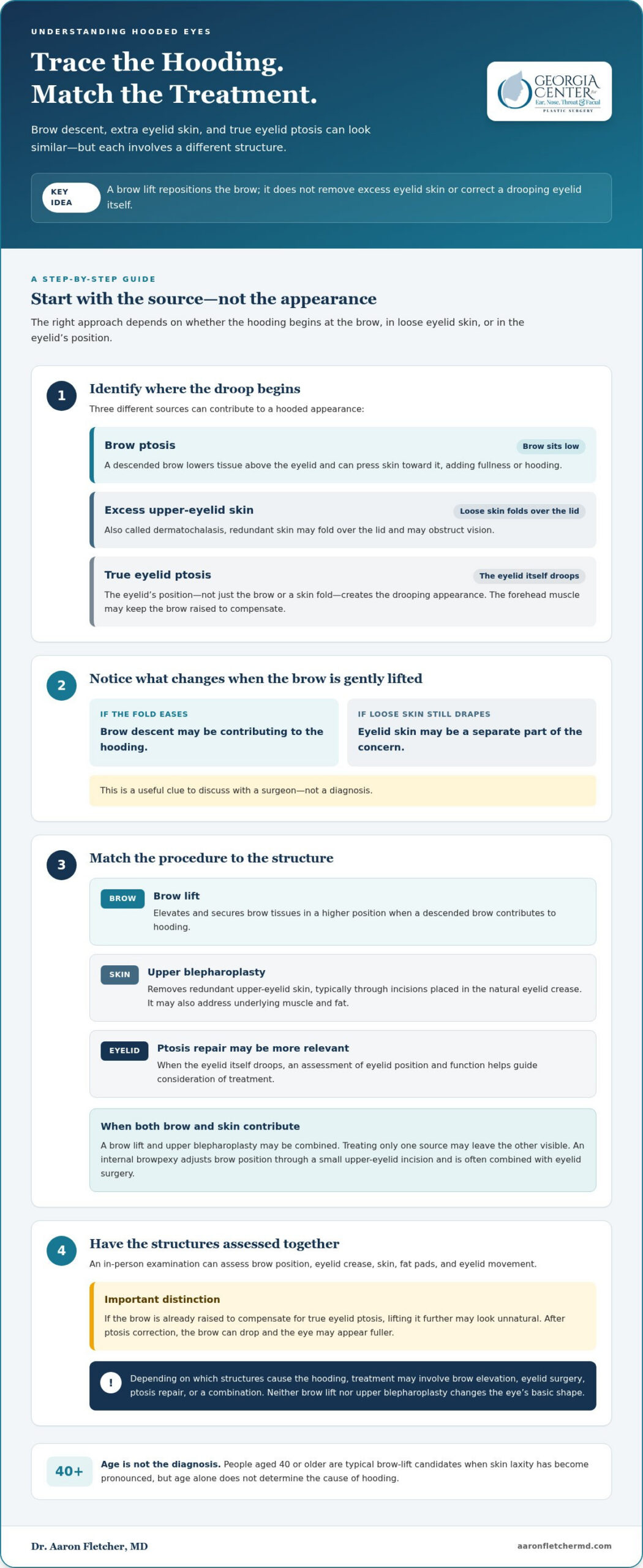
Distinguishing brow ptosis from excess upper-eyelid skin and true eyelid ptosis
A good candidate for a brow lift has hooding substantially caused by a descended brow. People aged 40 or older are typical candidates when skin laxity has become pronounced, but age alone doesn’t determine the cause.
Brow-Related Hooding and Eyelid Hooding
Brow ptosis means the brow has descended, while eyelid hooding can arise from low eyelid skin or extra skin. Gently lifting your brow with your fingertips can offer a useful clue: if the eye looks more open, brow position may contribute. This isn’t a diagnosis, but it gives you a specific change to discuss with a surgeon.
Brow Drooping and Excess Skin
Excess upper-eyelid skin, called dermatochalasis, is loose tissue that folds over the lid and may obstruct vision. Brow descent lowers the tissue above the eyelid, adding pressure or fullness. The distinction matters because removing skin won’t lift a low brow. An endoscopic brow lift repositions the brow, while eyelid surgery addresses redundant skin.
Clues of Eyelid-Origin Hooding
True eyelid ptosis occurs when the eyelid itself droops, rather than the brow or a skin fold creating that appearance. A low eyelid margin, deep sulcus, or unusually high brow can accompany ptosis; a person may have one or several features. The brow may sit high because the forehead muscle is working to compensate for the drooping eyelid.
During an examination, the surgeon assesses brow position, the eyelid crease, skin, fat pads, and eyelid movement. A brow already raised to compensate for ptosis may look unnatural if lifted further. After ptosis correction, the brow can drop and the eye may appear fuller. Depending on which structures cause the hooding, treatment may involve brow elevation, eyelid surgery, ptosis repair, or a combination.
How a brow lift may address hooded eyes
A brow lift may reduce hooding when the brow sits low and pushes tissue over the upper eyelid. During surgery, the surgeon elevates and secures brow tissues in a higher position. If excess eyelid skin or a drooping eyelid causes the hooding, lifting the brow alone won’t correct the underlying problem.
During an endoscopic procedure, the surgeon makes three to four small incisions hidden in the hairline. A camera guides the surgeon’s view of deeper support structures as they lift and secure the brow tissues. This approach can reposition a descended brow without changing the eye’s overall shape. The aim is a more open appearance, not a different expression.
Other techniques address different areas. A temporal brow lift targets the outer brow, while a direct lift uses incisions above the brows to reposition sagging tissue and may remove excess skin. Some brow lift techniques may involve an incision near the hairline as part of forehead rejuvenation. The appropriate method depends on brow position, hairline, and where the hooding occurs.
A consultation can help you understand which structures create a heavy appearance. The surgeon assesses brow position, eyelid skin, and how the eyes move. If the brow is raised to compensate for true eyelid ptosis, further elevation may not produce a natural result. A brow lift targets the brow, not the eyelid muscle or loose eyelid skin.
The key distinction is the source of the fold: brow lifting addresses descended tissue above the eye, while eyelid procedures address eyelid concerns. For an individualized discussion of brow position and surgical options, schedule a brow lift consultation.
Dr. Aaron Fletcher, MD: Facelift
Dr. Aaron Fletcher, MD offers facelift surgery for people seeking to address facial aging beyond the brow and upper eyelids. A facelift focuses on the facial areas treated by that procedure; it doesn’t reposition a low brow or correct eyelid ptosis. If hooding is your main concern, brow lift surgery or blepharoplasty may be more relevant options to discuss.
The distinction matters when several areas contribute to a tired appearance. A thoughtful assessment considers whether the concern comes from brow position, excess eyelid skin, or broader facial changes, then matches the procedure to the area involved. Dr. Fletcher also offers rhinoplasty and sinus surgery, which address different concerns.
To discuss which facial procedure aligns with your concerns, contact Dr. Aaron Fletcher, MD.
Choose a Next Step That Fits Your Goals
Before deciding on a brow lift for hooded eyes, consider what you want to change and which concern matters most in daily life. A focused conversation can help you describe your goal, understand the options, and consider whether the proposed approach addresses the area you have in mind. You don’t need to arrive with a procedure already chosen.
Dr. Aaron Fletcher, MD offers blepharoplasty and facelift surgery, as well as rhinoplasty. These procedures address different concerns, so discussing your priorities can keep the plan focused on your needs rather than a procedure name. The next step is to share what you’re noticing and what outcome you hope to explore.
Contact Dr. Aaron Fletcher, MD to begin a thoughtful conversation about your goals. A clear understanding of your priorities can make the path forward feel more manageable.
Frequently Asked Questions
How can a brow lift help with sagging eyelids?
A brow lift can ease sagging eyelids when the brow’s downward position contributes to the heavy fold. One practical clue is whether brow descent makes you raise your forehead to see comfortably. Repeated forehead effort can contribute to tension headaches and deeper forehead lines. If the eyelid margin itself sits low, brow elevation alone won’t correct the underlying eyelid position.
What Are the Different Types of Brow Lift (Endoscopic vs Traditional)?
An endoscopic brow lift uses three to four small incisions hidden in the hairline, with a camera helping the surgeon see deeper support structures. A coronal lift uses an incision at the hairline and can remove extra skin during forehead rejuvenation. The endoscopic approach is described as less invasive than the coronal approach, with minimal scarring and a faster recovery period.
What Is the Difference Between Brow Ptosis and Dermatochalasis?
Brow ptosis is a lowered brow, while dermatochalasis is loose, redundant skin on the upper eyelid. The distinction matters if the brow has risen to compensate for a drooping eyelid. After eyelid ptosis is corrected, the brow may drop and the eye can look fuller. These changes show why brow height and eyelid position are assessed together.
Are non-surgical treatments (like fillers or Botox) a good alternative to surgery?
Botox and fillers may offer temporary, limited support, but they don’t replace surgery for pronounced skin laxity. Botox relaxes targeted muscles and may subtly elevate the brow by around 1-2 mm; its effect typically lasts 3 to 4 months. Filler-based brow or temple support generally lasts six months to over a year, depending on the product.
What is a brow lift, and can it improve hooded eyes?
A brow lift is a surgical procedure that elevates brow tissue to change its position. It can improve hooding when a descended brow pushes skin toward the upper eyelid, and may also soften vertical frown lines known as the “11s.” A temporal brow lift focuses on the outer brow, making it relevant when drooping is concentrated near the brow’s tail.
Brow lift vs upper blepharoplasty for hooded eyes: which is better?
Neither procedure is universally better; the right choice depends on which tissue creates the hooding. For example, a low brow with a separate fold of loose eyelid skin may warrant consideration of both procedures. A brow lift changes brow position, while blepharoplasty addresses eyelid tissue. The surgical plan should match the specific change you want, rather than treating every heavy-looking eyelid alike.