
Persistent blockage on one side of your nose can make ordinary breathing feel unexpectedly difficult. If you’re trying to understand what a deviated septum feels like, you may notice uneven airflow, congestion, or trouble breathing through your nose, especially at night. Snoring, mouth breathing, and recurring sinus infections can also be part of the picture.
It’s understandable to wonder whether your symptoms point to a structural problem or something temporary, such as swelling from a cold or allergies. A deviated septum is a shift in the wall that separates the nostrils, but its effects vary. Some people notice few symptoms; others find that nasal blockage disrupts sleep and daily comfort.
This article explains what the septum is and how a deviation can affect breathing, snoring, mouth breathing, and sinus infections. You’ll also learn why recurring infections may be linked to narrowed nasal passages, what an evaluation can involve, and when persistent symptoms warrant attention.
Key Takeaways
- A deviated septum can be present from birth or develop after a nose injury, and its effects range from barely noticeable to persistent nasal blockage.
- Understanding how the septum separates the nostrils can help explain why airflow may feel uneven, even when the nose’s appearance seems unchanged.
- Nighttime congestion may contribute to mouth breathing, snoring, and disrupted sleep; colds or allergies can make nasal blockage more noticeable.
- Recurring sinus infections may be associated with narrowed nasal passages, so notice whether congestion and infection symptoms repeatedly occur together.
What Is a Deviated Septum?
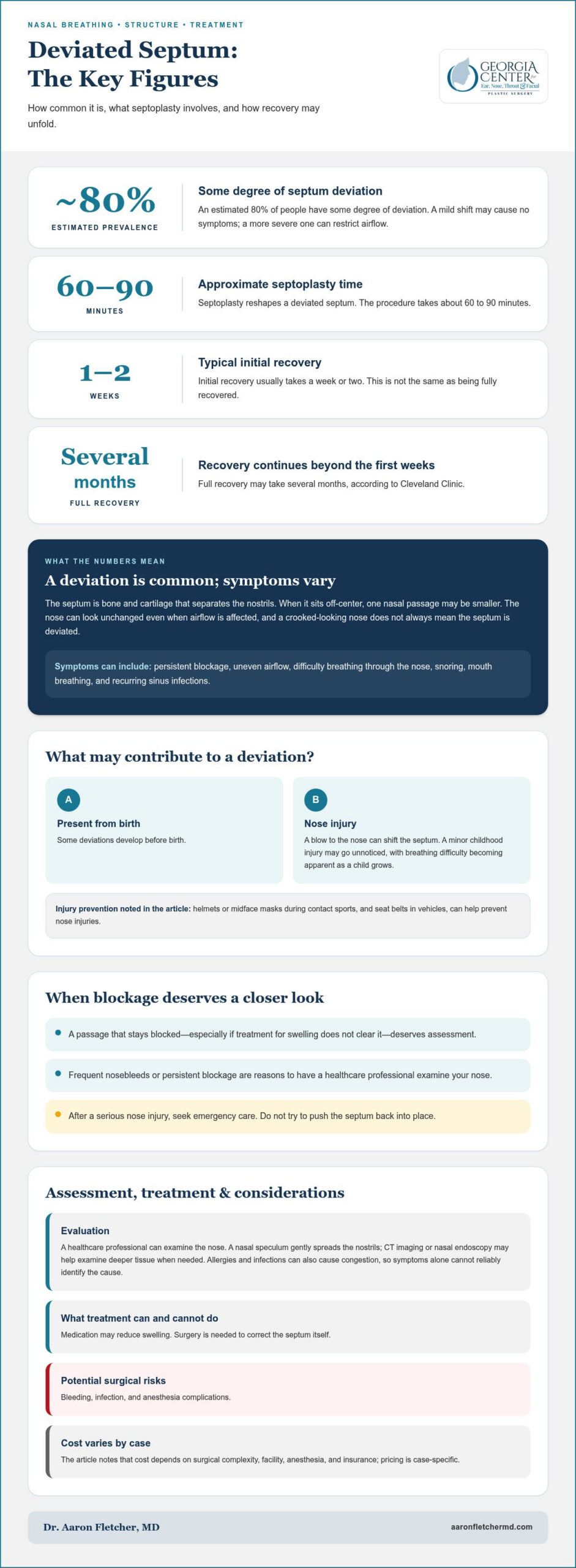
Septoplasty reshapes a deviated septum, and the procedure takes about 60 to 90 minutes. Potential surgical risks include bleeding, infection, and anesthesia complications. Initial recovery usually takes a week or two, while full recovery may take several months, according to Cleveland Clinic. A typical U.S. cost varies with surgical complexity, facility, anesthesia, and insurance; the price depends on the case and is given after a quote request.
The nasal septum is the bone and cartilage dividing the nostrils. A deviation means it sits crooked or displaced, making one nasal passage smaller. Around 80% of people are estimated to have some degree of septum deviation, though a mild shift may cause no symptoms. A more severe deviation can restrict airflow, particularly if swelling from a cold or allergies narrows the passage further.
Some deviations develop before birth, while others follow an injury that shifts the septum. A minor childhood injury may go unnoticed, with breathing difficulties becoming apparent as a child grows. Contact sports and motor vehicle crashes can cause a blow to the nose. Helmets or midface masks during contact sports, and seat belts in vehicles, can help prevent nose injuries.
A crooked-looking nose doesn’t always mean the septum is deviated, and a deviated septum may not change the nose’s appearance. An injury can also affect airflow without causing an obvious external change. Don’t try to push the septum back into place after trauma; seek emergency care after a serious nose injury. For persistent blockage or frequent nosebleeds, a healthcare professional can examine your nose and determine whether the deviation contributes to your symptoms. Medication may reduce swelling, but surgery is needed to correct the septum itself.
What is a Nasal Septum Anyway?
The nasal septum is the partition inside your nose, made of cartilage and bone, that separates the nostrils. A deviation can narrow one or both nasal passages, but allergies or infection can also cause congestion and obstruction.
The Nasal Septum’s Structure
The septum runs between the nostrils and helps direct airflow through your nose. Its front portion is flexible cartilage, while deeper sections include bone. When the septum is off-center, the space on one side may be smaller, making it harder to breathe through that nostril. Because the nasal cavity extends inward, blockage can affect airflow beyond what you can see from the outside.
Airflow and Nasal Obstruction
A deviated septum can narrow a nasal passage and create a persistent sense of blockage. Congestion may become more noticeable when allergies or a cold cause nasal tissues to swell. A runny nose can accompany obstruction, but drainage alone doesn’t show that the septum is misaligned. Notice the pattern: a passage that stays blocked deserves assessment, especially if treatment for swelling doesn’t clear it.
Allergies and sinus infections can resemble septum-related symptoms because both can cause congestion. Allergies may swell the nasal passages, while infection-related swelling and irritation can narrow them further. Symptoms overlap, so the sensation alone can’t reliably identify the cause. A healthcare professional can examine your nose with a nasal speculum, which gently spreads the nostrils. CT imaging or nasal endoscopy can help examine deeper tissue when needed.
Notice whether blockage remains mainly on one side or changes with allergy symptoms, a cold, or infection. That history gives a specialist useful context, but it doesn’t replace an examination. If allergy symptoms seem to accompany congestion, allergy testing and treatment can address that possible contributor while the nasal structure is assessed.
Snoring and mouth breathing
A narrowed nasal passage can make it difficult to breathe through your nose, especially during sleep. Changes in airflow may contribute to mouth breathing, snoring, or other noisy breathing.
Breathing Changes and Noisy Symptoms
When a deviated septum restricts airflow, you may breathe through your mouth to compensate. At night, this can contribute to snoring and dry mouth. Waking with a sore throat is another possible sign of mouth breathing during sleep.
Whistling can happen as air moves through a narrowed opening, while swelling from allergies or a cold can make nasal breathing feel more difficult. A deviated septum is one possible cause of noisy breathing, not the only one. These symptoms alone don’t identify the cause.
Sleeping Position and Easier Breathing
Some people sleep on a particular side because the position seems to ease airflow through the less obstructed nostril. This adjustment may make breathing more comfortable, but it doesn’t correct the septum or explain the blockage.
Notice whether your position changes the sensation of airflow and whether symptoms also occur when you’re awake. A blocked nostril that persists despite treatment, or frequent nosebleeds, warrants assessment by a healthcare professional.
Snoring can have causes beyond nasal obstruction. A deviated septum doesn’t cause sleep apnea, but it can worsen the condition. If breathing pauses during sleep, or daytime tiredness accompanies loud snoring, discuss these symptoms with a healthcare professional rather than assuming the septum is responsible.
The normal nasal cycle can make congestion seem to shift from one nostril to the other. Note whether blockage consistently affects the same side, changes with allergies, or improves when you change sleeping position. These details help distinguish a recurring pattern from occasional nighttime congestion and give a specialist useful context for an evaluation.
Relief from nasal blockage may make sleep more comfortable, but persistent symptoms still deserve attention. A healthcare professional can consider nasal airflow alongside sleep symptoms and other possible causes, including swollen nasal tissues. A broader assessment matters because the right next step depends on what is restricting breathing, not simply on whether you snore.
Recurrent sinus infections
Repeated sinus infections can be associated with a deviated septum, especially when the deviation narrows a nasal passage. Narrowing may interfere with normal mucus drainage, allowing mucus containing bacteria to become trapped and contribute to infection. During an infection, swelling and irritation can narrow the passage further and increase blockage. This can create a cycle in which congestion accompanies recurring sinus symptoms, although infections alone don’t prove that a septal deviation is responsible.
Look for a recurring pattern rather than treating each episode as proof of one cause. Note whether nasal obstruction returns in the same area, whether congestion worsens during infections, and whether it eases between episodes. Snoring may occur alongside nighttime blockage, but it doesn’t establish a connection between a deviated septum and sinus infections. A healthcare professional can assess your nasal structure and consider other causes of repeated symptoms.
Medication can reduce swelling inside the nose, but it doesn’t correct a deviated septum. If treatment eases congestion but obstruction continues, that difference may help clarify whether swelling or the underlying structure is contributing. Septoplasty reshapes the septum; an ENT specialist may recommend it when a severe deviation affects quality of life and medication doesn’t provide relief. The decision depends on the obstruction, symptoms, and response to treatment.
Keep a brief record of recurring episodes, including when congestion appears and whether it persists after other symptoms improve. That history gives a specialist practical context for evaluating the nasal passages and sinuses. If recurrent infections and ongoing blockage are affecting daily comfort, schedule an assessment for sinus surgery to discuss whether a surgical approach fits the underlying problem. Sinus surgery and septoplasty address different structures, so evaluation should distinguish the sinus issue from septal obstruction.
Dr. Aaron Fletcher, MD: Facelift
Dr. Aaron Fletcher, MD offers sinus surgery when an evaluation identifies a sinus condition that may benefit from surgery. Recurring infections and persistent congestion can warrant assessment to determine whether the sinuses or another cause is driving symptoms. Sinus surgery treats sinus conditions; it is not the same as septoplasty, which corrects a deviated septum.
If nasal blockage, recurring infections, or breathing difficulties affect your daily comfort, an evaluation can help clarify the underlying issue and appropriate treatment options. If you’re also concerned about your nose’s appearance, rhinoplasty may be relevant to discuss. The right approach depends on the specific concern being addressed.
For more information, contact Dr. Aaron Fletcher, MD, or visit aaronfletchermd.com.
Choose a Clear Next Step for Your Breathing
Understanding what a deviated septum feels like can help you describe your symptoms, but it can’t identify the cause on its own. Consider what you want to improve: comfortable nasal breathing, fewer recurring disruptions, or a change in nasal appearance. These concerns can overlap, but they may call for different evaluations and treatment approaches.
If appearance is also a concern, rhinoplasty may be relevant to discuss alongside functional nasal concerns. An assessment can clarify which issue is affecting you and whether a surgical option fits your goals. You don’t need to arrive with a diagnosis. A clear account of what you notice and how it affects daily life is a useful starting point.
Contact Dr. Aaron Fletcher, MD to discuss your concerns and possible next steps. A thoughtful evaluation can help you move forward with greater clarity and confidence.
Frequently Asked Questions
How do I know if I need septoplasty instead of just managing symptoms?
Septoplasty may be considered when a severe deviation continues to affect quality of life and medication hasn’t relieved the problem. The key distinction is whether treatment controls symptoms or structural blockage remains. An evaluation can assess the septum, the degree of obstruction, and how symptoms respond to medication. A mild deviation with manageable symptoms may not require surgery.
When Should You Start to Worry?
Arrange an assessment if a blocked nostril doesn’t clear with treatment or nosebleeds happen frequently. A useful practical step is to note which side feels blocked and whether the problem persists after congestion from a cold or allergies improves. After a traumatic nose injury, don’t try to push the septum into place. Seek emergency care after a serious injury.
When should I see my healthcare provider?
See a healthcare provider when ongoing nasal blockage interferes with breathing or frequent nosebleeds occur. A primary care clinic, such as Sage Creek Medical Center, can provide an initial evaluation of your nasal symptoms and help determine if specialized care is needed. Bring a concise symptom history: when the blockage began, whether it stays on one side, and what treatments you’ve tried. This can help distinguish a persistent structural concern from temporary swelling. A professional examination, rather than an at-home airflow test, is needed to assess the septum.
What are common symptoms of a deviated septum?
Common symptoms include nasal obstruction, difficulty breathing through the nose, noisy sleep, and recurring sinus infections. If you’re wondering what a deviated septum feels like, you may also notice nosebleeds or one-sided facial pressure. Symptoms vary from person to person, and a crooked-looking nose alone doesn’t establish that the septum is deviated. Focus on how symptoms affect you rather than using appearance as a measure.
What does nasal blockage from a deviated septum feel like?
People wondering what a deviated septum feels like may describe air moving less freely through one nostril, or one side staying stuffy when they aren’t sick. The sensation can shift as the normal nasal cycle changes airflow between nostrils, so blockage that alternates sides doesn’t establish a deviation by itself. Persistent obstruction on the same side is useful information to share during an examination.
Can a deviated septum cause headaches, facial pain, or nosebleeds?
A deviated septum may contribute to one-sided facial pain if a compressed or swollen nasal passage creates pressure. It can also dry the surface of the nasal septum, increasing the chance of nosebleeds, particularly when obstruction is severe. These symptoms have other possible causes, so they don’t identify a septal deviation on their own. Frequent nosebleeds or persistent facial discomfort warrant professional assessment.