
What if the secret to a refined facial profile isn’t just about how your nose looks, but how it functions? For many, the decision to explore surgery nose jobs stems from a desire to resolve long-standing self-consciousness or the exhaustion of living with chronic nasal congestion. You deserve a solution that addresses both the aesthetic silhouette and the internal structural integrity of your airway. It’s common to feel a sense of trepidation regarding surgical outcomes, especially when your goal is a result that looks natural and preserves your unique identity.
We understand that you’re looking for more than just a change in appearance; you’re seeking a better quality of life. This comprehensive guide provides the clinical expertise and empathetic guidance necessary to understand modern rhinoplasty in 2026. You’ll discover how the intersection of respiratory science and facial artistry can transform your daily experience. We’ll preview the latest surgical methodologies, clarify the recovery process, and explain how a meticulous, dual-specialty approach ensures you achieve both clearer breathing and a balanced, confident smile.
Key Takeaways
- Discover how modern rhinoplasty achieves facial balance through precise refinements to the nasal bridge and tip, moving beyond a “one-size-fits-all” approach toward personalized harmony.
- Learn why the most successful surgery nose jobs prioritize functional health, correcting internal structures like the septum and turbinates to ensure you breathe as well as you look.
- Demystify the surgical experience by exploring the differences between open and closed techniques and understanding the meticulous steps taken in the operating room to ensure patient safety.
- Prepare for your transformation with a detailed recovery roadmap that outlines what to expect during the critical first 14 days and the subsequent months of subtle refinement.
- Understand the clinical advantage of selecting a surgeon with dual certification in both Otolaryngology and facial plastic surgery to address the nose as a complex, integrated organ.
Defining Rhinoplasty: More Than Just a ‘Nose Job’
While the term “nose job” is a common colloquialism, the medical community utilizes the term Rhinoplasty to describe the intricate surgical reshaping of the nose. This procedure is one of the most complex in facial plastic surgery because it requires a precise balance between structural integrity and visual aesthetics. Modern surgery nose jobs have evolved significantly from the reductive techniques of previous decades. Today, the focus has shifted toward structural preservation. This means your surgeon works to modify and reinforce the existing framework of bone and cartilage rather than simply removing tissue. This philosophy leads to more stable, long-lasting results and avoids the “pinched” appearance often associated with older methods.
Common Reasons for Seeking Nasal Surgery
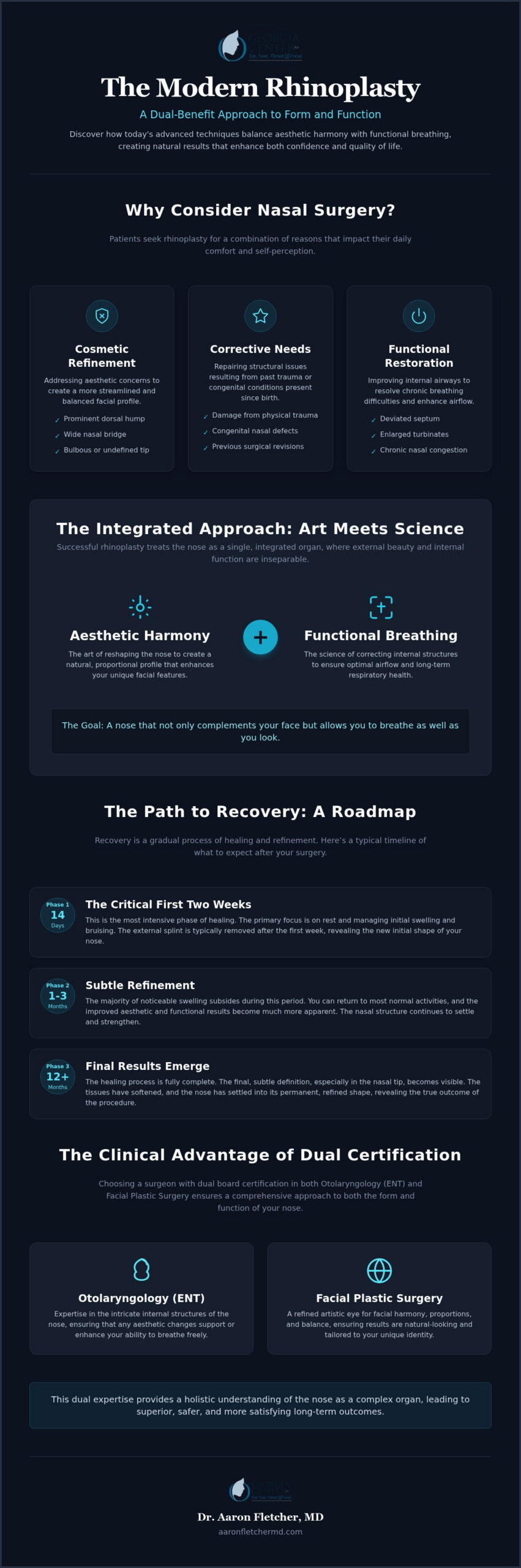
Most patients seek nasal surgery for a combination of reasons that impact their daily comfort and self-perception. These motivations generally fall into three categories:
- Cosmetic Refinement: Addressing concerns such as a prominent dorsal hump, a wide nasal bridge, or a bulbous tip to create a more streamlined profile.
- Corrective Needs: Repairing damage caused by physical trauma or addressing congenital defects that have been present since birth.
- Functional Restoration: Correcting a deviated septum or enlarged turbinates to resolve chronic congestion and improve airflow.
By addressing these issues simultaneously, a surgeon can ensure that the patient doesn’t just look better, but actually breathes better too. This holistic approach is essential for a successful outcome that prioritizes your long-term health.
The Concept of Facial Balance
The nose doesn’t exist in isolation; it’s the central anchor of your face. A skilled surgeon evaluates how the nasal structure interacts with your eyes, cheeks, and jawline. For instance, a nose that appears “too large” may actually be the result of a recessed chin. In such cases, a practitioner might discuss the benefits of chin augmentation to achieve a more harmonious profile. Achieving facial balance requires a meticulous eye for detail and a deep understanding of human anatomy.
The ultimate goal of modern surgery nose jobs is to create a result that looks entirely natural. You want a nose that looks like it belongs to you, enhancing your features without drawing attention to the fact that you had a procedure. By considering these proportions, we ensure the outcome complements your unique ethnic identity and your overall facial structure, leading to a boost in self-confidence that feels authentic and earned.
Aesthetic Harmony vs. Functional Breathing: The Dual-Benefit Approach
A common misconception is that you must choose between a nose that looks attractive and one that functions efficiently. In reality, the most successful surgery nose jobs are those that treat the nose as a single, integrated organ. When we refine the external silhouette, we must simultaneously protect or improve the internal airway. This is where the expertise of a surgeon who is board-certified in both Otolaryngology (ENT) and facial plastic surgery becomes invaluable. They possess a granular understanding of how microscopic changes to the nasal bridge or tip will impact the airflow through your septum and turbinates. Improving the exterior should never come at the cost of your ability to breathe comfortably.
Cosmetic Rhinoplasty: The Art of Reshaping
Aesthetic refinement is about achieving a profile that feels balanced and proportional. Many patients seek to address a prominent dorsal hump or a wide nasal bridge that they feel distracts from their eyes. We also focus on the nasal tip; refining it can create a more delicate, defined appearance without the “operated-on” look. Correcting asymmetry is equally vital. By aligning the nose with the facial midline, we create a sense of harmony that boosts self-confidence. For those seeking a comprehensive overview of rhinoplasty, it’s clear that these artistic changes rely on a solid structural foundation that supports the skin and soft tissue over time.
Functional Rhinoplasty: The Science of Breathing
While the visual results are often what patients notice first, the internal improvements are what they feel every single day. Functional rhinoplasty focuses on the science of airflow. A deviated septum, where the wall between your nostrils is displaced, can cause significant breathing obstructions. We also address nasal valve collapse, which occurs when the narrowest part of the airway is too weak to stay open during inhalation. By managing the size of the turbinates and straightening the septum, we ensure that the internal passage remains clear. When planning surgery nose jobs, we consider how structural changes to the exterior will interact with these internal valves. Improving these structures often leads to better sleep and a reduction in chronic congestion. If you’re struggling with both aesthetic and respiratory concerns, exploring rhinoplasty options with a dual-certified expert can provide the comprehensive resolution you deserve.
The Surgical Process: Advanced Techniques in Nasal Reshaping
The choice between an open or closed approach depends on your specific anatomical goals and the degree of reconstruction needed. An open rhinoplasty involves a small, discreet incision across the columella, which is the tissue between the nostrils. This provides the surgeon with a comprehensive view of the nasal structures, making it the gold standard for complex reconstructions or intricate tip work. Conversely, a closed rhinoplasty places all incisions within the nostrils. This approach is often suitable for patients requiring minor refinements to the bridge. We carefully evaluate your nasal anatomy to determine which technique will yield the most natural and predictable result.
Structural Preservation Techniques
Modern surgery nose jobs have moved away from the reductive “scooping” methods of the past. Instead, we employ structural preservation techniques that focus on maintaining and reinforcing the nasal scaffold. By using your own cartilage as grafts, we can provide long-term support to the nasal tip and bridge, preventing the “pinched” or collapsed appearance that can occur years after a less sophisticated procedure. This structural approach ensures that your results remain stable and your breathing stays clear for a lifetime.
Precision is further enhanced by the use of piezo ultrasonic instrumentation. This advanced technology uses ultrasonic vibrations to reshape nasal bones with extreme accuracy while leaving the surrounding soft tissues and blood vessels undisturbed. By minimizing trauma to the internal structures, we significantly reduce postoperative bruising and swelling. This methodical blend of high-level technology and surgical expertise allows for a more refined outcome and a smoother transition into the recovery phase.
The Path to Recovery: What to Expect After Surgery
The conclusion of your procedure marks the beginning of a transformative healing journey. While the most visible phase of recovery from surgery nose jobs occurs within the first 14 days, the internal tissues continue to refine for much longer. Adhering strictly to postoperative protocols is the most effective way to protect the delicate structural work performed in the operating room. Most patients report that the sensation is more akin to heavy congestion rather than sharp pain, though your experience will depend on the extent of the reconstruction. This period requires a methodical approach to self-care, ensuring that your body has the stability it needs to heal correctly.
The First 72 Hours: Critical Healing
The first three days are the most intensive part of the process. You’ll need to keep your head elevated at a 30 to 45 degree angle, even while sleeping, to minimize initial swelling. External splints and internal dressings provide essential support during this window; please don’t attempt to adjust them. One of the most important rules is to avoid blowing your nose. This creates internal pressure that can disrupt the healing of the septum or sutures. Instead, use saline sprays as directed to manage the feeling of stuffiness safely. This sensation is often caused by internal mucosal swelling rather than actual obstruction, and it gradually improves as the initial inflammation subsides.
Long-Term Milestones: From Months to a Year
The timeline for modern surgery nose jobs is designed for stability rather than speed. By the two-week mark, most patients feel comfortable returning to non-strenuous work or social engagements. While the majority of bruising subsides within 7 to 14 days, your nose will still appear slightly full due to residual swelling. You can typically resume strenuous exercise after four to six weeks. It’s vital to remember that the final refinement of the nasal tip can take up to 12 months. This period requires patience as the skin settles over the new framework. Many patients find the emotional journey just as significant as the physical one, as they gradually adjust to their improved profile in the mirror. Seeing your final results is a gradual revelation, not an overnight change.
If you have questions about the specific recovery steps for your procedure, you can consult with our team for personalized guidance.
Choosing Excellence: Why Surgeon Specialization Matters
Selecting the right practitioner is perhaps the most critical decision in your journey. While many general plastic surgeons perform surgery nose jobs, a specialist focuses exclusively on the intricate structures of the face and neck. The nose is a complex organ where millimeters matter. A generalist may possess a broad range of skills, but a specialist brings a deeper level of familiarity with nasal anatomy. This specialization ensures that every adjustment is made with a profound understanding of how it will affect the overall facial harmony and long-term stability. You deserve a practitioner who views your procedure as a unique architectural challenge rather than a routine task. This level of dedication to specialized care is exemplified by practices like Dr. Kalantarian (Dr K) Plastic Surgery Orange County, where the focus remains on achieving precise, natural results through expert facial plastic surgery.
The most significant advantage comes from choosing a surgeon who is double board-certified. This means they are experts in both the aesthetic refinement of the face and the internal health of the respiratory system. Understanding sinus surgery anatomy is vital because the internal and external structures of the nose are inseparable. A facial plastic surgeon with ENT training doesn’t just look at the surface. They possess a scholarly, meticulous approach that prioritizes your ability to breathe as much as your desire for a refined profile. This dual perspective provides peace of mind, knowing that your functional health is in the hands of an industry leader who values comprehensive care and technical precision.
Reviewing a surgeon’s “Before and After” gallery is an essential step in your research. These images provide a window into the surgeon’s aesthetic philosophy and their ability to produce natural-looking results across diverse patient profiles. Look for outcomes that resonate with your personal goals. Do the noses look “operated on,” or do they blend seamlessly with the patient’s other features? This visual evidence helps you determine if the surgeon’s artistic vision aligns with your own, ensuring a result that feels both authentic and transformative.
Your Consultation: Building a Partnership
A consultation is more than just an appointment; it’s the foundation of a clinical partnership. It’s your opportunity to ask detailed questions about their experience with surgery nose jobs and their specific approach to your unique anatomy. We encourage you to be thorough during this dialogue. Consider asking the following:
- How often do you perform functional and cosmetic rhinoplasty simultaneously?
- What specific preservation techniques do you use to ensure long-term structural support?
- How do you use digital imaging to help me visualize my potential results?
Transparency and education are the hallmarks of a practitioner who is truly invested in your well-being. Digital imaging tools are particularly valuable for setting realistic expectations and ensuring you and your surgeon are in complete alignment before entering the operating room. This collaborative process is designed to instill confidence and clarity at every step of your journey. Schedule a consultation with Dr. Aaron Fletcher to explore your options.
Embarking on Your Path to Facial Harmony
Achieving a harmonious facial profile requires more than just an aesthetic eye; it demands a deep understanding of respiratory health and structural integrity. As you consider the possibilities offered by modern surgery nose jobs, remember that the most successful outcomes are those that look entirely natural and allow you to breathe without restriction. By prioritizing preservation-based techniques and choosing a practitioner with expertise in both facial plastic surgery and reconstructive science, you ensure a result that honors your unique identity while improving your daily quality of life. It’s a significant investment in your self-esteem and your long-term well-being.
Dr. Aaron Fletcher, a board-certified otolaryngologist and expert in facial plastic and reconstructive surgery, is dedicated to providing meticulous care that balances medical precision with artistic refinement. His dual certification ensures that every aspect of your nasal function is protected while achieving the aesthetic symmetry you desire. We invite you to begin this transformative process with a guide who values transparency and clinical excellence. Book Your Rhinoplasty Consultation with Dr. Fletcher to explore how a personalized surgical plan can help you achieve the clarity and confidence you deserve. Your journey toward a balanced, functional, and beautiful profile starts with a single, expert conversation.
Frequently Asked Questions
Is a nose job painful?
Most patients are surprised to find that recovery is less about sharp pain and more about significant congestion. You’ll likely feel a sensation of pressure or a “heavy” head cold for the first few days. We utilize general anesthesia during the procedure to ensure you’re completely comfortable. Post-operative discomfort is typically well-managed with prescribed or over-the-counter medications and the consistent use of cold compresses.
How long does the swelling last after rhinoplasty?
While major swelling and bruising typically subside within 10 to 14 days, the complete resolution of inflammation is a gradual process. You’ll see a significant change in your profile within three months. However, the final refinement of the nasal tip often takes a full year to settle into its permanent shape. It’s vital to remain patient as your body meticulously heals and the skin adapts to the new framework.
Can a nose job fix my breathing problems?
Yes, modern surgery nose jobs often address internal structural issues like a deviated septum or enlarged turbinates. By combining aesthetic refinement with functional correction, we can improve airflow and reduce chronic congestion. This dual approach is a hallmark of a surgeon with ENT training, ensuring you don’t have to sacrifice breathing for beauty. Correcting these internal obstructions frequently leads to better sleep and increased daily energy levels.
What is the difference between cosmetic and functional rhinoplasty?
Cosmetic rhinoplasty focuses on the external appearance, such as straightening a bridge or refining a bulbous tip. Functional rhinoplasty addresses internal obstructions that hinder breathing, such as a deviated septum or nasal valve collapse. Many procedures performed today are a hybrid of both, providing a comprehensive solution for patients seeking better facial balance and improved respiratory health. We treat the nose as an integrated organ where form and function are inseparable.
Will I have visible scars after a nose job?
Scarring is typically minimal and well-concealed, regardless of the technique used. In a closed rhinoplasty, all incisions are made inside the nostrils, leaving no external marks. In an open rhinoplasty, a tiny incision is made across the columella, the narrow strip of tissue between the nostrils. This usually heals into a faint, nearly invisible line that is very difficult to detect once the tissues have fully matured over several months.
At what age can someone get a rhinoplasty?
Rhinoplasty is generally performed once the nose has reached physical maturity to ensure stable results. This typically occurs around age 15 or 16 for females and age 17 or 18 for males. Operating before the nasal structures have finished growing can lead to unpredictable changes later in life. We assess each young patient individually to ensure they are both physically and emotionally ready for the transformative nature of the procedure.
Does insurance cover the cost of a nose job?
Insurance coverage depends on the primary intent of the procedure and your specific policy. Purely cosmetic changes are not covered by insurance providers. However, if the surgery addresses a documented medical necessity, such as a deviated septum causing breathing obstruction or a nasal fracture, insurance may cover the functional portion of the operation. You should consult with your provider and our office to understand your specific benefits and requirements.
How do I know if I need a revision rhinoplasty?
Revision surgery may be necessary if you experience persistent breathing issues or are dissatisfied with the aesthetic outcome after the one-year healing mark. It’s essential to wait for all swelling to resolve before making this decision. If the structural integrity of the nose was compromised in a previous procedure, a specialist in secondary surgery nose jobs can help restore both form and function. We prioritize a stable, natural result that resolves previous complications.